
Yes—guest posts can drive meaningful referral traffic for SaaS products when the publisher reaches your buyers, the article addresses a relevant problem, and the link offers a useful next step. Judge the placement by qualified signups, product activation, or sales conversations—not visits alone; a published backlink does not guarantee any of those outcomes.
- Guest post referral traffic for SaaS deserves investment when publisher audiences match your buyers and visits produce qualified actions.
- Google Analytics 4 can track campaign visits; connect those visits to product activation and CRM outcomes.
- Choose guest posting topics around buyer problems, not opportunities to insert exact-match backlinks.
- NO-BS Marketplace connects SEO professionals and agencies with verified publishers; assess each placement against your SaaS referral goals.
Why this matters
A SaaS guest post can serve separate objectives: reaching prospective users and earning a backlink. Keep the scorecards separate. Ranking movement does not establish that the article sent visitors, and referral sessions do not establish that those visitors became customers.
For your 2026 campaign, define what meaningful traffic means before approving publishers. Use this guide to track which guest posts drive real referral traffic as the measurement starting point, then connect the traffic report to your product and sales records.
Do guest posts drive meaningful referral traffic for SaaS products?
They can, but the strongest case comes from your own referral and conversion records—not a publisher's domain rating. A useful placement connects a reader's immediate question to something your SaaS product genuinely helps them do.
Compare article formats by the job they perform. None earns a referral forecast simply by being published.
| Guest post format | Best for | Referral advantage | Limitation |
|---|---|---|---|
| Workflow tutorial | Buyers investigating a specific task | Gives readers a practical reason to explore a relevant feature | Attracts poor-fit visitors if the workflow does not match the product |
| Category comparison | Buyers evaluating approaches or tools | Connects the article to an evaluation decision | Requires fair treatment of alternatives and publisher approval |
| Industry explainer | Buyers learning about a business problem | Introduces the problem before presenting a next step | Reader intent can remain informational |
| Expert commentary | Building familiarity with a specialist audience | Establishes context for a relevant brand mention | A byline link alone gives readers little reason to visit |
Choose the format that matches the buyer's task, not the format that accommodates the most links. A detailed tutorial is a poor choice when your product cannot perform the workflow it describes.
Before commissioning an article, write down the target reader, the problem, the destination page, and the action you want after the visit. If those elements do not connect, revise the brief before approaching a publisher.
How should you measure a SaaS guest post campaign?
Build the reporting path before publication. Otherwise, you risk collecting sessions without the context needed to distinguish a useful placement from an irrelevant audience.
1. Define qualification
Choose an outcome that reflects your business model: a relevant demo request, an activated account, or another documented product milestone. Do not treat every email submission as a qualified lead.
Record the qualification rule in the campaign brief. Sales-led SaaS teams should include buyer fit; product-led teams should include evidence that the visitor reached a useful product experience.
2. Verify the audience
Review the publisher's relevant articles, editorial focus, and intended readership. Ask for evidence tied to the section or content type where your post will appear, rather than relying entirely on sitewide traffic.
Separate observed data from estimates. If the publisher cannot substantiate readership, do not turn an authority score into an expected visitor count.
3. Match the destination
Send the reader to the page that fulfills the link's promise. A workflow article needs a destination explaining that workflow, not a homepage that makes the reader start again.
Keep the next step proportional to intent. Someone learning a process needs useful detail before a demanding sales conversation makes sense.
4. Validate tracking
Agree on consistent campaign tagging where the publisher permits it. Use recognizable source, medium, and campaign values, and test that the destination retains the information you need.
In Google Analytics 4, distinguish session acquisition from first-user acquisition. A guest post visit and a person's original acquisition source answer different questions; neither view should stand in for your entire customer journey.
5. Review outcomes
Follow identified leads or accounts into your CRM or product reporting, subject to consent and your privacy requirements. Record whether the visitors met your qualification rule, not just whether a form fired.
Document the attribution window used in your 2026 report. Compare placements using consistent definitions, and separate directly attributed outcomes from assisted interactions.
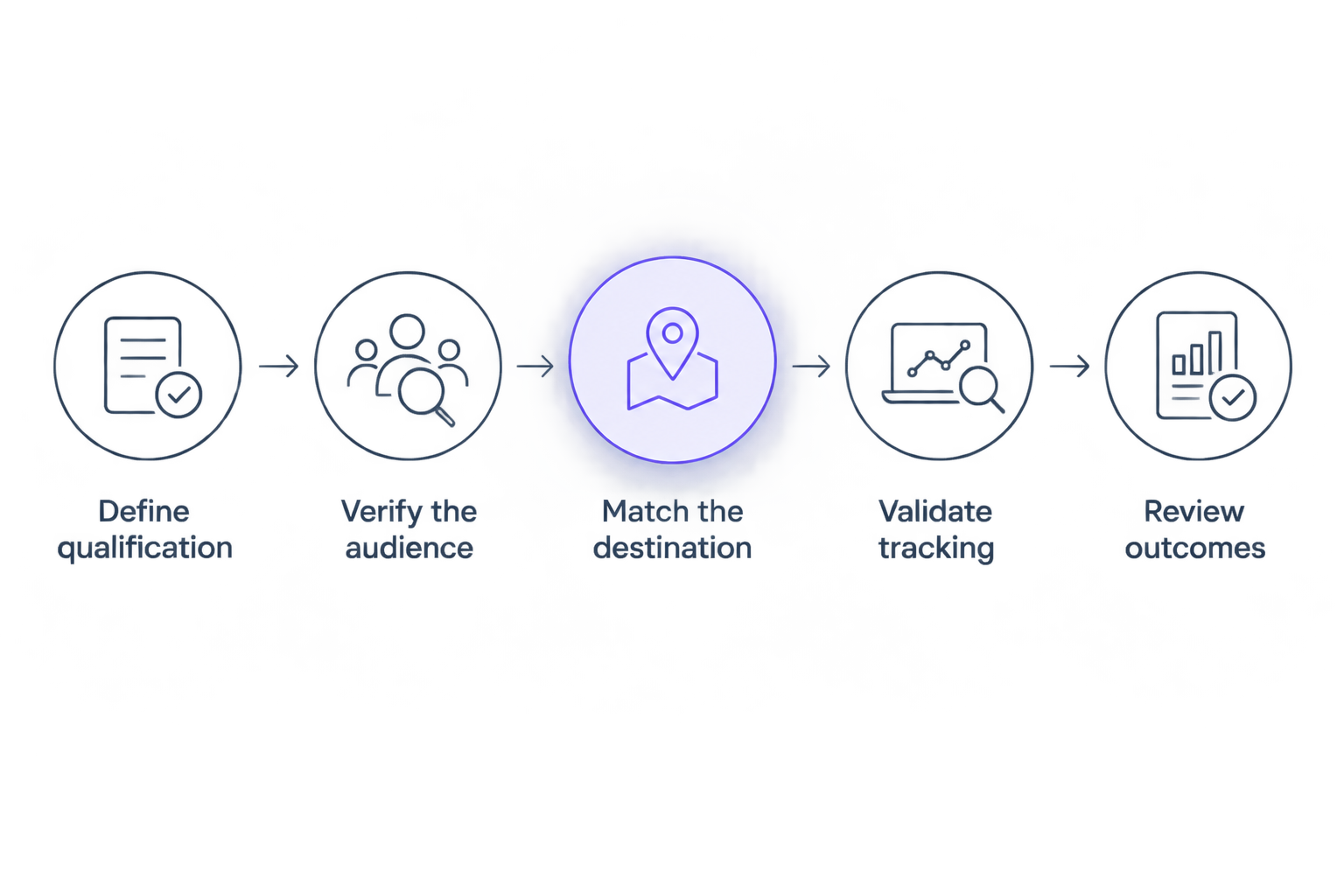
A useful placement record includes the published article, destination, campaign identifiers, publication date, qualified actions, and sales or activation status. Keep editorial delivery checks alongside—but separate from—business results.
Why guest post referral traffic varies
Guest post referral traffic for SaaS depends on more than whether a link exists. Assess these factors before publication, then use observed results to decide what deserves another test.
- Audience fit. Match the readership to the buyer's role, business problem, and relevant market. Broad business coverage is not evidence that your target users read the section.
- Article readership. Distinguish sitewide visibility from readership of comparable articles. Ask what supports the publisher's expectations for your specific placement.
- Reader intent. A troubleshooting reader and a software evaluator need different next steps. Build the article and destination around the same intent.
- Link context. Explain what the reader gets by following the link. A generic brand mention does not communicate the same purpose as a relevant resource.
- Distribution. Confirm any agreed newsletter, social, or on-site promotion in writing. Do not assume an article receives promotion because it appears on a recognizable domain.
- Destination experience. Check the page, signup path, and message before launch. A relevant referral still needs a clear route to the promised information or action.
Do not convert this checklist into a fabricated traffic forecast. Use it to reject weak placements and identify the assumptions your campaign needs to test.
What counts as meaningful referral traffic for a SaaS product?
Meaningful referral traffic produces visitors who meet your qualification criteria and take a relevant next step. The definition depends on what your product needs from a prospective customer—not on a universal session target.
For a sales-led product, review the quality and progression of referred opportunities. For a self-service product, examine signup quality and product activation. Keep these outcomes distinct when reporting mixed acquisition motions.
A visit is evidence of attention; it is not evidence of product fit. If a placement sends readers who never meet your target profile, more of the same traffic does not solve the problem.
Use your 2026 acquisition baseline as a reference where comparable data exists. Avoid declaring a winner from isolated conversions or comparing an educational guest post with a high-intent channel without acknowledging the difference in audience intent.
How do you write a guest post that earns relevant clicks?
Give the reader a complete answer on the publisher's site, then offer a destination that extends it. Withholding the essential explanation behind a promotional link weakens the article's usefulness.
Start the brief with a real buyer task. For example, a SaaS product that supports an approval workflow belongs in an article about that workflow only if the destination demonstrates the relevant capability. That is a topic-selection rule, not permission to invent product features.
Use descriptive anchor text that matches what the destination contains. Explain why following the link helps, and let the publisher retain editorial control over the wording and placement.
Avoid turning the article into a sales page with an educational introduction. Include limitations, prerequisites, and situations where the proposed approach does not fit. Those details help readers decide whether your product deserves further investigation.
Can nofollow or sponsored links still send useful visitors?
Yes. A nofollow or sponsored link remains a link a reader can follow; its search qualification is separate from the visitor's reason to click.
For paid placements, Google's published spam policies call for qualifying paid links with rel="sponsored"; nofollow is also acceptable. Do not make a referral campaign depend on a promise that payment will buy ranking credit.
Keep sponsorship disclosure separate from link qualification. Readers need clear disclosure of the commercial relationship, while search engines need the appropriate link attributes. In a 2026 campaign brief, specify both requirements before publication rather than negotiating them after the article goes live.
Where a guest posting platform fits
NO-BS Marketplace is best for SEO professionals and agencies seeking publisher placements through a link building and guest posting platform. Its stated offering connects those buyers with verified publisher sites for content and placements.
The NO-BS Marketplace link building platform provides a sourcing route, not proof that a particular publisher reaches your SaaS buyers. Assess the audience, article concept, destination, disclosure, and measurement plan before approving a placement.
That distinction is the benefit and the limitation: access to publisher placements supports execution, but sourcing alone does not establish referral performance. Ask for placement-specific evidence instead of treating platform access as a traffic guarantee.
FAQ
Do guest posts bring SaaS customers or just backlinks?
Guest posts can bring SaaS customers when the article reaches relevant buyers and the destination supports their next step. Measure qualified leads, activation, and customer outcomes separately from backlink delivery.
How much referral traffic should a SaaS guest post generate?
There is no universal referral traffic target for a SaaS guest post. Set expectations using substantiated readership evidence and your own placement results, not domain rating alone.
Should I send guest post visitors to my SaaS homepage?
Send guest post visitors to the page that fulfills the article's promise. Use the homepage only when it is the clearest destination for that specific reader and topic.
Can Google Analytics 4 track guest post results?
Google Analytics 4 can track campaign visits and configured key events when the implementation captures them. Connect those records to product or CRM outcomes before calling the placement a customer acquisition success.
Are sponsored guest posts useful for referral traffic?
Sponsored guest posts can send referral visitors when readers find the article and have a reason to follow its links. Disclose the sponsorship and qualify paid links appropriately; neither requirement prevents a reader from clicking.
Does NO-BS Marketplace guarantee SaaS referral conversions?
Do not treat NO-BS Marketplace publisher placements as guaranteed SaaS referral conversions. Evaluate each publisher against your buyer profile and measure the resulting visitor behavior and qualified outcomes.
Should I stop guest posting if visitors do not convert?
Pause expansion until you identify whether the problem is audience fit, article intent, the destination, or measurement. Keep any documented backlink objective separate rather than using it to excuse an unproven referral objective.
One last thing
Ask a publisher what readers gain by following your proposed link. If the answer is only that the anchor mentions your product category, the referral case is unfinished.
For your next 2026 placement, approve the reader benefit before approving the anchor text. A useful backlink and a useful referral path are different deliverables; require a clear rationale for each.