Link Insertions Made Simple, Fast, and Effective
Your link gets placed into an existing, published page on a third party site. The content is already live, already indexed, and already carries whatever authority it has built over time, so you're adding your link to a page that's already doing its job.
Explore Marketplace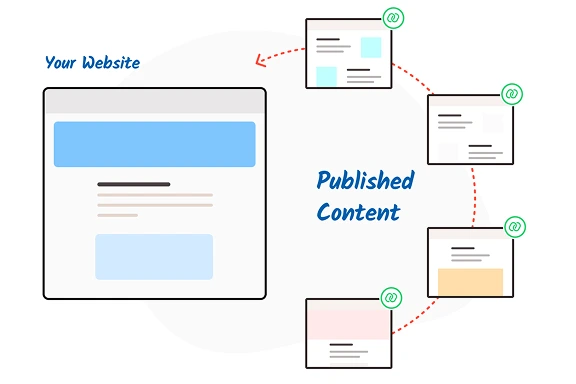
Direct Access to 110,000+ Human-Vetted Publishers
Browse it free. No card, no sales call.
Explore the Marketplace0
Links Published
2014
Placing Links Since
0
Human-Vetted Publishers
0
Named Client Reviews, 2 on Video
Trusted by





What Link Insertion Is
A relevant page is identified, a paragraph is updated to include your link, and the placement is recorded. No new article gets written because the page already exists, and you can see exactly where your link is going before you commit.
- Used when you want a backlink on an existing page
- Targets pages with authority, traffic, or strong topical relevance
- Faster than creating and publishing new content
- No need to wait for indexing or content aging
- More predictable results compared to new placements
- Places your link on content that’s already proven to perform
How Link Insertion Orders Work
Step 1
Share your target
Provide your target URL and topic boundaries.
Step 2
Match & review pages
Relevant pages are selected, and you can review their quality before proceeding.
Step 3
Place the link naturally
The anchor text is added smoothly within the existing content.
Step 4
Go live & get details
Your link goes live, and you receive the placement URL and details.
Place Your Links on Pages That Already Rank, Index, and Carry Authority
Explore NO-BS MarketplaceChoosing the Right Pages
The quality of your results depends on where your links are placed
Prioritize Topic Relevance
- The page should closely relate to your target URL
- Content must naturally align with your product or service
- Avoid placements on unrelated topics, even if metrics look strong
- Relevance matters more than domain rating
- Think: does this page make sense for your link?
Ensure Natural Fit
- The link should blend smoothly into an existing paragraph
- It should not feel forced or out of place
- Minimal or no rewriting of content should be needed
- The surrounding context should support the link naturally
- If it feels unnatural, it likely is
Match the Promise
- The anchor text should reflect what the page delivers
- Your target page must meet user expectations
- Avoid misleading or vague placements
- Keep alignment between sentence intent and landing page
- Build trust with both users and search engines
Evaluate Before You Place
- Always review the page before ordering
- Check content quality and readability
- Look at traffic and engagement signals
- Ensure the page is indexed and active
- Confirm it’s a strong, relevant fit for your goals
Anchors That Fit the Paragraph
Anchor text should read like a natural part of the sentence it lives in. Forced or over-optimized anchors stand out immediately, both to human readers and to search engines that have been penalizing unnatural anchor patterns for over a decade.
Good anchors match the sentence's intent, and if you have to restructure the paragraph to make your anchor work, it's the wrong anchor. Keep it readable and the placement will hold up over time.
Get Started Now
Homepage Links and Deep Links
Both are available in this workflow, and the right choice depends on your goal.
Approach
- Build overall brand authority and trust
- Signal a general endorsement of your entire website
- Useful for strengthening domain-level signals
- Help improve visibility across multiple pages
- Best for long-term brand growth
Quick Guidance
Use homepage links when you want to build overall brand authority
Approach
- Point directly to a specific page
- Strengthen topical relevance for target keywords
- Support ranking for commercial or landing pages
- Drive more targeted SEO impact
- Best for focused growth and conversions
Quick Guidance
Use deep links when you want to rank a specific page
Link insertion and AI visibility
AI systems evaluate pages as potential sources, and a page that's already established, already indexed, and already carries authority is exactly the kind of page AI models pay attention to when assembling answers.
Links on trusted, well-regarded pages strengthen credibility signals
Builds authority by association with proven content
More effective than relying on newly published pages
Leverages existing trust instead of waiting to earn it

Results Speak Louder Than Words

Michael Hutton
Managing Director,
improveposition.co.uk
NO-BS is different. The fact that they allow us to see the publishers in advance was a complete win for us.
We know what makes a good link prospect - we just need someone to provide us with the opportunities so we can then implement our own quality control and NO-BS does exactly this with maximum transparency.
In addition to this, their customer support is seriously the best we have experienced. That is why we have stopped working with all other link suppliers and now solely use NO-BS for all our client outreach projects.

Justin Thomas
Founder of JourneyEngine

Suganthan Mohanadasan
Digital Marketing Consultant
I have been using NO-BS for the past months. The team does legitimate outreach compared to a few other shady link marketplaces. They offer a unique pricing model and connect us with the webmaster directly. They are also transparent about their overall process.

Mike Quayle
Managing Director - Marketeering Group
We’ve worked with NO-BS for years, and we’re always happy with the service! Adding link building to our retainers with clients has helped us 3x our large retainers, and completely transformed how quickly we’re able to demonstrate SEO results. We wouldn’t be able to run our SEO as efficiently as we do without support of NO-BS. An easy-to-use self-service system, rock solid support, and an ever-growing publisher database all make NO-BS our preferred link building vendor!

Austin Cline
Founder, sitemap.io
We've been using the No-BS Platform for several years now and have consistently gotten good links for our clients. What we love is the control we have over the website and content topics.
For larger brands, this is important because they're very careful who links back to their website. No-BS give us a safe but effective way to build links at scale while still growing our clients' organic traffic.

Olga Rusnak
Head of Marketing - Cedalo
What I like about NO-BS is that this company takes over all the link-building hassle off my shoulders. It is an actual marketplace where I can buy links or insertions in a couple of clicks, provide instructions, and, in about a month, get a Do-Follow backlink to my site. It involves minimum effort from my side. The rest of the activities, such as communicating with the donors, including agreeing on a topic and paying them, and managing the creation of guest blog posts, are all performed with due diligence by the NO-BS company.

Brent Carnduff
Director, advisorrankings.io
I've offered Link Building for a number of years, but have always struggled with pricing and the time it takes. No-BS has removed those hurdles.
I now easily move my clients into on-going link building retainers, obtain quality links for them, and have grown my business. I highly recommend their services.

Sireesha Narumanchi
Founder, Crowd Work News
Thanks to the entire team at NO-BS for providing authentic and quality link building services with the utmost care. Good luck in their journey.

Ryan Stewart
WEBRIS

Paul Skirbe
Principal, skywardstrategies.com
Nobsmarketplace is a delight to use and has streamlined our entire link building operation. I always hated the lack of transparency in where we were in obtaining a link. With Nobs, I can see everything and how much further we need to go. Helps me communicate with clients in a far less stressful way. Keep up the good work.

Dave Nillson
Director - The Converted Click
We’ve found it difficult in the past to find quality and reliable services in outreach, guest blogging and content creation. I can honestly say that NO-BS has been an incredible service and digital partner in our journey. Response times are excellent and the content is extremely well written and relevant to any niche we have thrown at the team.

Daniel Paviour
Snr SEO consultant,
commonground.digital
No BS Marketplace has been incredibly useful in driving additional link building opportunities for the team. With a small team, our resources won't stretch to manual link building so NO-BS provides a great way to drive link building in a quick and secure way.
We know these links also drive traffic to our sites.