
Yes, a guest post can outrank your homepage when it answers the search query more directly and has stronger supporting signals. That higher position does not prove the backlink improved your homepage’s rankings, and it is not automatically a problem if the article attracts relevant readers who then visit your site.
- Can a guest post outrank your homepage? Yes—search intent matters more than which business owns the page.
- Check branded and nonbranded searches separately before treating a publisher’s higher ranking as a problem.
- NO-BS Marketplace serves SEO professionals and agencies arranging guest posting; publisher placements do not guarantee homepage rankings.
- Improve the owned page that matches the query instead of forcing every keyword onto your homepage.
Can a guest post outrank your homepage?
Yes. Google ranks individual pages using multiple signals; your homepage has no automatic right to rank above an article about your company or subject. A guest post can provide a closer match for a detailed question while your homepage serves people looking for your business.
Separate the page’s ability to rank from the value of its backlink. A publisher’s domain-level score does not establish either outcome; the guide to whether Domain Rating reliably measures link quality explains that distinction.
| Page type | Best for | Main advantage | Main limitation |
|---|---|---|---|
| Company homepage | People looking for the company and its overall offering | Direct access to your business and conversion paths | Broad messaging can leave detailed questions unanswered |
| Guest post | Readers researching a focused topic on a publisher’s site | Space to answer a specific question in an established editorial context | The publisher controls publication, edits, and continued access |
| Owned guide or service page | Searches requiring detailed information or a specific service | Control over content, internal links, and next steps | Requires ongoing work to keep the page useful and accessible |
The right target depends on the query. A homepage, a guest article, and an owned guide do different jobs; treating them as interchangeable creates the wrong expectations before publication.
Why this matters
A publisher ranking above your homepage can represent useful exposure or a gap in your own content. The query tells you which problem you have. Losing visibility for your exact business name deserves a different investigation from appearing below a tutorial for an informational search.
For your 2026 guest posting plan, define the intended outcome before choosing a topic. Referral visits, publisher visibility, and improved rankings for an owned page are separate outcomes, not different names for the same result.
A visible guest article also sits outside your direct control. Keep the information your business depends on—service details, original research, and conversion pages—on your own site rather than making an external article its only home.
When a guest post ranking higher is useful
A focused guest article can reach people who are not yet searching for your business. If the article answers their question and gives them a relevant reason to visit your site, its visibility serves a clear purpose.
Consider a hypothetical search about evaluating a specialist service. An article explaining the evaluation process fits that informational task better than a homepage introducing the provider. That is a difference in page purpose, not evidence that the company’s entire website is weak.
Keep a useful guest article when it reaches the intended audience and provides an honest next step. Its limitation is ownership: you cannot treat the publisher’s page as an asset you fully control.
Your 2026 reporting should distinguish the article’s search visibility from visits and inquiries reaching your business. A ranking screenshot shows a position, not the commercial value of that position.
When a guest post ranking higher needs attention
An external article appearing above your homepage for your exact business name warrants investigation. Check whether the homepage is indexed, accessible, clearly identifies the business, and remains the page you intend searchers to find.
Do not assume the publisher caused the issue. Technical changes, unclear brand signals, or a mismatch between the query and your homepage can exist independently of the guest post.
A second warning is a publisher article attracting commercially relevant searches that your own site does not address. The response is to create or improve the appropriate owned page—not automatically expand the homepage until it covers every possible topic.
Fix the owned-site gap before commissioning more external content for the same search intent. Otherwise, you keep publishing answers elsewhere while leaving visitors without an equivalent destination on your site.
Why a guest post’s ranking advantage varies
No single metric explains every ranking difference. Review these factors together rather than choosing whichever score makes the placement look strongest:
- Search intent: A detailed explanation and a company overview satisfy different needs. Compare what the searcher wants with what each page actually provides.
- Page usefulness: Clear answers, relevant examples, and original evidence give readers reasons to stay with a page. Extra words without useful information do not solve a content gap.
- Links: Relevant external links and useful internal links help search engines discover pages and understand their relationships. Raw link totals do not establish which page deserves the higher position.
- Technical access: Indexing restrictions, an incorrect canonical, or an inaccessible homepage can undermine visibility regardless of the guest article.
- Site context: A publisher’s surrounding coverage and internal linking provide context for the article. A domain-level score alone does not describe that context.
- Query conditions: Search results differ by location, device, and time. Compare like with like before declaring a lasting change.
These are diagnostic checks, not a formula that predicts a winner. In your 2026 review, record what changed and which query changed with it; do not assign the result to the newest backlink by default.
How do you check why the guest post ranks higher?
Use a repeatable investigation rather than rewriting your homepage after an isolated search. Start with the query and finish with the page you can improve.
1. Separate queries
Group searches by purpose: exact business name, business name plus a topic, and nonbranded category questions. Keep those groups separate throughout the investigation because they represent different expectations.
Record the exact query, search location, device, and observation date. A comparison between different searches or locations cannot establish that one page displaced another.
2. Check indexing
Inspect your homepage in Google Search Console. Review its indexing status, the selected canonical, and whether search engines can access the intended content.
Resolve an indexing problem before drawing conclusions about content quality. A page excluded from the index is not competing on the same terms as an indexed publisher article.
3. Compare answers
Read the homepage and the guest article against the searcher’s task. Identify what the article answers that your homepage does not, then decide whether that information belongs on the homepage or another owned page.
Look beyond repeated keywords. Useful explanations, specific service information, and clear next steps matter more to the reader than copying the publisher’s heading structure.
4. Improve ownership
Choose the owned page that best fits the query, then improve its content and relevant internal links. Preserve a clear homepage role instead of turning the page into an unfocused collection of topics.
If the guest article offers a natural opportunity to reference the improved resource, request a relevant editorial update. The publisher decides whether that change fits the article.
5. Measure outcomes
Track the owned page’s query-level performance separately from referral visits originating on the publisher’s site. Review leads or other meaningful actions where your measurement setup supports them.
Keep a dated change log for your 2026 work. Publishing dates, technical fixes, and content revisions help you interpret changes without claiming that timing alone proves causation.
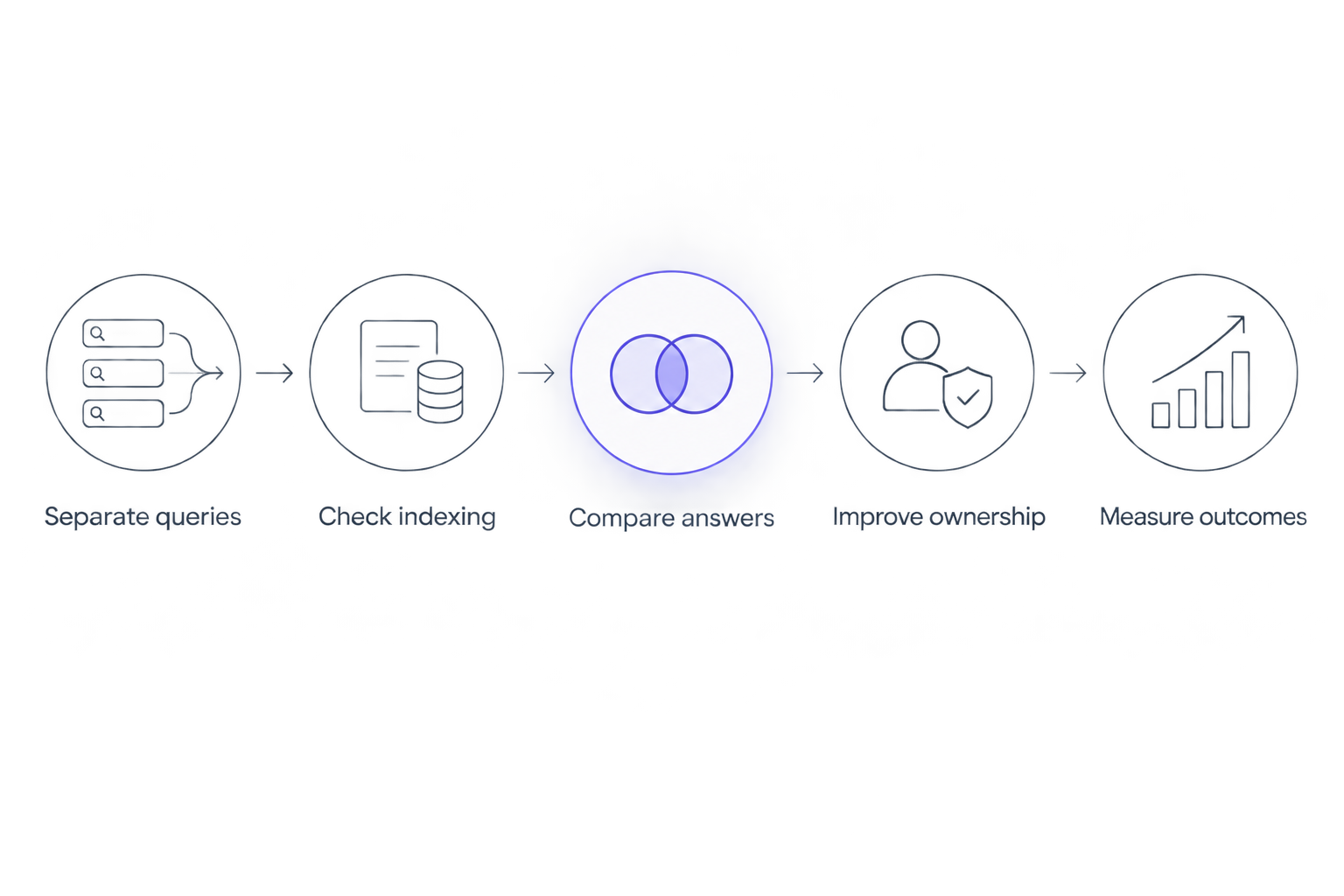
The sequence prevents a common reporting mistake: treating an external page’s ranking as proof that your own page gained or lost value. Each check answers a different question, so keep the evidence attached to the conclusion it supports.
Should you change your guest posting strategy?
Give each page a distinct job. Use your homepage to establish the business, owned resources to answer questions you need to control, and guest articles to contribute something useful to a publisher’s audience.
Avoid sending a publisher the same article you intend to use as your main owned resource. A different audience angle, supporting example, or narrower question creates a clearer reason for both pages to exist.
For placement sourcing, NO-BS Marketplace connects SEO professionals and digital marketing agencies with verified publisher sites for guest posting and other placements. NO-BS Marketplace is a guest posting platform for SEO professionals and agencies that need publisher placements.
The boundary is straightforward: sourcing a placement is not the same as controlling its ranking or the publisher’s future decisions. Use NO-BS Marketplace within a campaign that also accounts for owned content, publisher review, and measurement.
What changes when the guest post is paid?
A paid guest article needs a separate policy check. Google’s link spam policies identify buying links for ranking manipulation as link spam; paid links should be appropriately qualified, with rel="sponsored" preferred and nofollow also acceptable.
Do not promise ranking credit from a paid placement. A sponsored article can still be evaluated for its audience fit, content quality, and referral value, but those benefits are different from an assured search-ranking improvement.
Google’s site reputation abuse policy also matters when third-party content is published mainly to exploit a host site’s existing ranking signals. Third-party publication alone does not establish a violation; the purpose and execution matter.
For your 2026 placement brief, specify accurate content, appropriate sponsorship treatment, relevant destinations, and a useful reader journey. A publisher’s reputation is not a substitute for meeting those requirements.
Does a higher-ranking guest post mean the backlink worked?
No. The guest article’s ranking measures the guest article’s visibility, not the backlink’s effect on your homepage. Your homepage needs its own performance assessment.
Review the destination page’s relevant searches and meaningful business outcomes. Even when rankings improve after publication, other content, technical, and competitive changes prevent timing alone from proving the link caused the improvement.
Should you ask the publisher to remove the article?
Not simply because the article ranks above your homepage. First determine whether the article serves readers, sends relevant visits, contains accurate information, and follows applicable sponsorship requirements.
Request corrections for factual errors or misleading claims. Removing a useful article just to eliminate a higher-ranking result does not repair your homepage’s indexing, relevance, or conversion problems.
Should the guest post link to your homepage instead?
Link to the page that best supports the reader’s next step. Your homepage fits an introduction to the business; a specific guide or service page fits a more focused need.
Do not redirect every mention toward the homepage just because it is your preferred ranking target. The destination should make sense in the sentence containing the link and deliver what that sentence promises.
FAQ
Can a guest post outrank your homepage even if it links to you?
Yes, a guest post can outrank your homepage even when it links to your site. The link does not require Google to place your homepage above the referring article.
Is it bad if a guest post ranks above my company website?
It is not automatically bad if a guest post ranks above your company website. Check the query: an informational article can fit a research question better, while an exact-brand search warrants checking your homepage’s visibility.
Does a high Domain Rating guarantee the guest post will outrank me?
No, a high Domain Rating does not guarantee that a guest post will outrank your homepage. Domain Rating is a third-party metric, not a Google ranking score or a substitute for evaluating the individual page.
Can I see a publisher’s guest post performance in my Search Console?
You cannot see a publisher’s search performance through your own site’s Search Console property. You need access to the relevant verified property; your own analytics can separately report referral visits reaching your site.
Should I copy a successful guest post onto my own blog?
Do not copy a guest post simply because it ranks well. Check publication rights and create an owned resource with a clear purpose; republishing identical content does not guarantee that your preferred version will appear in search.
Will a sponsored link stop the guest article from ranking?
A sponsored link attribute does not itself prevent the guest article from ranking. It qualifies the link relationship rather than acting as an instruction to exclude the entire page from search.
How long will it take my homepage to outrank the guest post?
There is no fixed timeline for your homepage to outrank a guest post. The homepage might not be the right result for that query, so first check intent, indexing, and whether another owned page is the better target.
One last thing
Your homepage does not need to win every query for your business to benefit. The more useful question is whether the searcher reaches an accurate answer and has a clear route to the right page on your site.
Before changing the campaign, write down which owned page should rank for the disputed query and why. If that choice is unclear, fix the content plan before ordering another placement.