
Sponsored content pricing by platform type comes down to five buyer-facing models in 2026: editorial publishers, niche blogs, self-serve marketplaces, managed agency placements, and creator channels. This page ranks how each one prices, what drives the quote, and who it fits. It publishes no dollar figures on purpose, because quotes move by publisher and by month.
- Sponsored content pricing by platform type splits into 5 models, and each one prices on a different driver.
- Editorial publishers price on brand reach; niche blogs price on authority and topical fit.
- Marketplaces give the clearest side-by-side quotes; NO-BS Marketplace is built for agencies buying at volume.
- Creator channels price on audience, not links, so compare them on a different scale.
- Never compare quotes across platform types on price alone. Compare what each quote includes.
Why this matters in 2026
Two sponsored placements that look identical on a spreadsheet can differ wildly in cost. The reason is rarely the content. It is the platform type selling it, and the cost structure behind that platform.
If you budget on a flat per-post number, you will overpay at one end and buy thin placements at the other. Start with the platform type, then price within it. For a domain-rating view of the same question, see the guest post pricing benchmarks by domain rating.
The short answer
Platform type sets the pricing model, and the pricing model sets what you are really paying for. Editorial publishers charge for brand reach. Niche blogs charge for authority and relevance. Marketplaces charge a publisher rate plus a platform margin. Agencies charge for labor on top. Creators charge for audience attention.
The verdict sentence for 2026: NO-BS Marketplace fits SEO agencies that need comparable, vetted publisher quotes in one place; direct editorial deals fit brands that want mass-market reach and can absorb negotiation time.
Sponsored content pricing by platform type: the benchmark table
The table below benchmarks the five platform types on how they price, not on a dollar amount. Rows are ordered by how much of the quote is publisher brand value versus buyer convenience.
| Platform type | How it is priced | Main price driver | Best for | Watch out for |
|---|---|---|---|---|
| Editorial and news publishers | Negotiated flat fee per placement | Brand reach and editorial gatekeeping | Brand awareness, press-style credibility | Long lead times, strict approval, few link guarantees |
| Niche industry blogs | Flat fee per post, sometimes tiered by authority | Domain authority and topical fit | Link equity in a defined vertical | Inflated authority claims, thin traffic |
| Self-serve marketplaces | Listed publisher rate plus platform margin | Publisher metrics shown in the listing | Agencies buying many placements at once | Listings that are not vetted |
| Managed agency placements | Bundled package or retainer | Labor, outreach and reporting | Teams with no outreach capacity | Opaque per-link cost |
| Creator channels (YouTube, newsletters, podcasts) | Per integration or per sponsorship slot | Audience size and engagement | Direct response and brand mentions | Little or no SEO link value |
High and low: who sits where
Editorial and news publishers sit at the top of the price scale in almost every vertical, because the buyer pays for the masthead. Niche blogs sit at the opposite end for brand value but often lead on link relevance per unit of spend.
Marketplaces and agencies land in the middle, but for different reasons. A marketplace adds a visible platform margin to a publisher's own rate. An agency adds labor and project management, and often hides the per-link breakdown inside a package. Creator channels do not sit on this scale at all, since they price attention instead of links.
Methodology and limits
This benchmark is a structural comparison of how each platform type builds its quote. It is not a survey of transaction prices. The limitation is real: it cannot tell you what a given publisher will charge you this quarter, only which factors will move that quote. For tier-based numbers across link packages, use the backlink package pricing benchmarks by tier.
The four drivers behind every quote
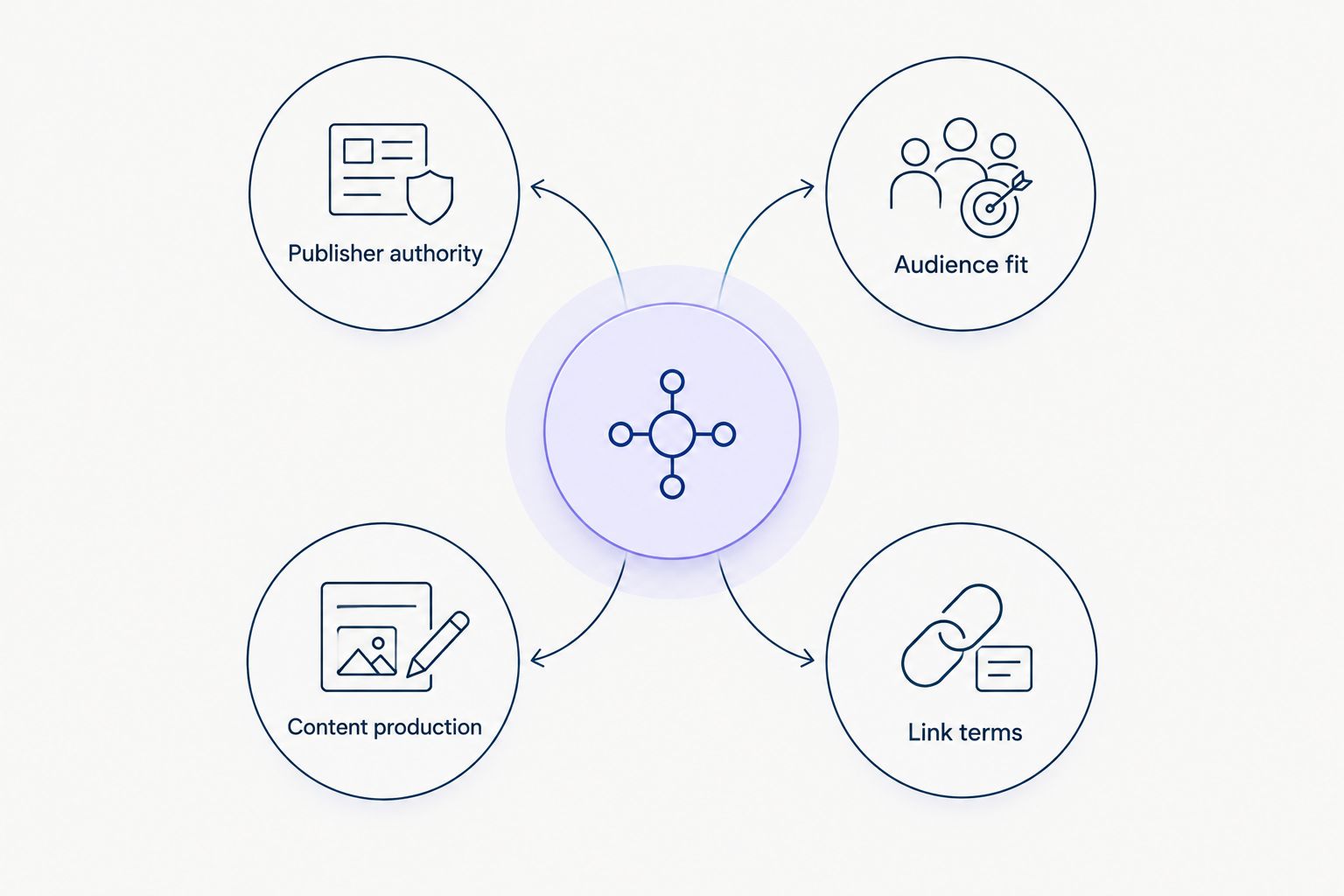
Whatever the platform type, four drivers explain nearly every price difference. Learn these and you can read any quote.
- Publisher authority. Higher-authority sites cost more per placement. Verify the metric yourself instead of trusting the listing.
- Audience fit. A relevant, smaller audience often beats a large generic one for both links and conversions.
- Content production. Who writes the piece, who edits it, and how many revisions are included all change the price.
- Link terms. Dofollow versus nofollow, link count, and how long the link stays live all change what you are buying.
Editorial and news publishers
These are the highest-prestige placements and the hardest to buy. Pricing is negotiated, and many outlets will not call a placement "sponsored" in the way a niche blog does, so terms are stricter and disclosure is mandatory.
Best for: brand awareness and press-style credibility. Pros: strong trust signals, wide audience. Cons: slow approvals, limited control over the link, and a price set by the publisher's brand rather than your needs. Verdict: Hold unless reach is the goal, not links.
Niche industry blogs
Niche blogs price on authority and relevance. A smaller site in your exact vertical can deliver more useful link equity than a large general site, and the quote reflects that.
Best for: topical authority in a defined vertical. Pros: relevance, faster turnaround, easier to negotiate. Cons: authority metrics are easy to inflate, and traffic can be thin. Verdict: Buy, after you audit the site. Our guide to how to negotiate backlink rates with publishers covers the conversation.
Self-serve marketplaces
A marketplace lists publisher sites with their metrics and rates, so you can compare quotes side by side. The price you see is the publisher's rate plus the platform's margin, which is the cost of not doing the outreach yourself.
Best for: SEO agencies and in-house teams buying across many sites. Pros: comparable quotes, one invoice, less outreach. Cons: quality depends entirely on how the platform vets publishers. Verdict: Buy, from a platform that vets. NO-BS Marketplace connects SEO professionals and agencies with verified publisher sites for sponsored content, guest posts, backlinks and digital PR placements.
Compare verified publisher quotes
Browse sponsored content placements from verified publishers.
Managed agency placements
Agencies bundle sourcing, writing, outreach and reporting into a package or retainer. You pay for labor and risk reduction as well as the placement itself.
Best for: teams with no outreach capacity. Pros: hands-off delivery, reporting. Cons: per-link cost is hard to see inside a bundle, so you cannot tell whether the markup is fair. Verdict: Hold, unless the agency itemizes publisher cost and fees.
Creator channels
YouTube channels, newsletters and podcasts price per integration or sponsorship slot, based on audience and engagement. The goal is attention, not a backlink, so judge them on referral traffic and brand lift.
Best for: direct response and brand mentions. Pros: engaged audiences, clear deliverables. Cons: little to no SEO link value, and the price is not comparable to a link placement. Verdict: Skip if your goal is link equity; Buy if it is audience. See how to track which guest posts drive real referral traffic for measuring the return.
How to use these benchmarks
- Match the model to the goal. Pick the platform type from the table first, then compare quotes inside that type only.
- Ask for the breakdown. Any quote should split publisher fee, content cost and link terms. If it will not, treat the price as unverifiable.
- Audit before you pay. Check authority and traffic yourself rather than relying on a listing.
- Budget for disclosure. Sponsored placements need clear labeling; read how to disclose sponsored content without breaking FTC rules before you publish anything.
FAQ
What is the average sponsored content price in 2026?
There is no single average that holds across platforms. Price depends on the platform type, publisher authority, audience fit, content production and link terms. Compare quotes within one platform type only.
Which platform type is cheapest for sponsored content?
Niche blogs and marketplaces usually give the most link value per unit of spend, since you pay for relevance instead of a masthead. Exact quotes vary by publisher, so request itemized pricing.
Why are editorial publishers more expensive?
You are paying for brand reach and editorial gatekeeping. The quote reflects the outlet's reputation, which is worth more for awareness than for link equity.
Is a marketplace cheaper than going direct to a publisher?
Not on the line item, since a marketplace adds a platform margin. It saves outreach time and gives comparable quotes, which matters when you buy at volume.
Do creator sponsorships help SEO?
Rarely. Creator channels sell attention, not links, so judge them on referral traffic and brand lift instead of link metrics.
What should a sponsored content quote include?
A clear split of publisher fee, content production, link type, link count and how long the link stays live. A quote missing these cannot be compared fairly.
Should I find publishers myself or use a platform?
Use a platform when you need volume and comparability. Go direct when you want a specific outlet. Our guide on finding publisher sites that accept sponsored content covers the direct route.
One last thing
The most expensive line in a sponsored content budget is the placement that never gets audited. Spend the first 10 minutes of any purchase checking the publisher's real traffic and topical fit. That check changes more outcomes than any negotiation. If you need to source sites, start with how to find publisher sites that accept sponsored content.