
Yes—repeatedly buying backlinks from the same network is risky when the placements form part of a paid scheme intended to manipulate rankings. Changing domains or suppliers does not fix that underlying problem, while properly qualified sponsored links are treated differently under Google's policies. The practical distinction in 2026 is between reusing a purchasing platform and repeatedly relying on the same publishers, ownership group, or manipulative placement practices.
- Is it risky to buy backlinks from the same network? Yes, when purchases create manipulative paid-link patterns.
- Google's paid-link rules matter more than how many suppliers appear on your invoices.
- NO-BS Marketplace connects SEO professionals with verified publishers; that does not establish any placement's compliance.
- Review publisher overlap, editorial relevance, link attributes, and commercial purpose before repeating an order.
Is it risky to buy backlinks from the same network repeatedly?
Yes. Repetition deserves scrutiny, but buying links for ranking credit is the central policy risk—not supplier loyalty alone. Google Search Central's spam policies identify buying or selling links for ranking purposes as link spam. Paid advertising and sponsorship links should be qualified with rel="sponsored"; Google also accepts rel="nofollow" for this purpose.
Start by separating a marketplace from the publishers behind its listings. If you suspect the latter exist primarily to sell ranking credit, use this guide to spotting a link farm before buying backlinks.
| Arrangement | Best for | Practical advantage | Limitation or risk |
|---|---|---|---|
| Repeat use of a marketplace | Coordinating publisher purchases | Keeps purchasing with a familiar intermediary | Does not establish publisher independence or policy compliance |
| Repeat qualified sponsorship with a relevant publisher | Reaching that publisher's audience | Supports continued exposure to a relevant readership | Requires qualification; ranking credit is not a sound buying premise |
| Paid links across a controlled network for ranking manipulation | No recommended use | Offers centralized placement control | Falls within Google's link-spam concerns |
| Independently earned editorial coverage | Seeking relevant editorial citations | Publishers choose whether and how to cite you | Coverage, anchor text, and links are not guaranteed |
The table describes purchasing and editorial arrangements, not a safety ranking. An independent publisher can sell manipulative links, and shared ownership does not automatically make a publishing group a link scheme.
Why this matters
A supplier report can show different domains without showing genuinely different publishing decisions. Domain diversity and editorial independence are separate checks. Neither excuses paid links intended to pass ranking credit.
For agencies managing 2026 campaigns, that distinction belongs in client reporting. Report where a placement appeared, what you purchased, and how the link was qualified—not just a domain metric and a completed-order status.
There is also a business dependency to assess. If your campaign relies on a single publishing group, your placements depend on that group's decisions about content, link retention, and access. That is a concentration issue even when the sponsorship itself follows search policies.
Reusing a marketplace: inspect the publishers separately
Using the same purchasing platform does not, by itself, establish that every listed website has the same owner. Equally, different listings do not prove independent ownership. Verify the distinction rather than treating the platform's catalog as evidence either way.
NO-BS Marketplace is a link building and guest posting platform connecting SEO professionals and digital marketing agencies with verified publisher sites. That purchasing model helps identify its role, but the individual placement still needs a separate assessment.
NO-BS Marketplace is best for SEO professionals and agencies seeking a platform that connects them with verified publishers. Publisher verification is not a guarantee of rankings, editorial independence, or compliance for every proposed link.
Before repeating a purchase, ask which publisher will carry it, whether you already have placements there, and what editorial and link-qualification conditions apply. Keep unanswered questions open; do not turn a familiar supplier into an automatic approval.
Reusing a publisher: judge the next placement on its own
A relevant publication does not become unsuitable merely because it has mentioned your business before. A further sponsored article needs its own audience purpose, useful content, and appropriate link qualification. Prior publication is not a substitute for those checks.
Ask what the next article adds. A genuinely different topic for the same readership has a clearer publishing rationale than another near-identical article built around the same commercial anchor.
Do not confuse the number of backlinks with the number of referring domains. Additional links from an existing publisher are not additional unique referring domains. Track both measures, but do not convert that accounting distinction into an unsupported claim about how much ranking value each link delivers.
For 2026 planning, approve repeat publisher use because the next placement serves a clear purpose—not because an earlier placement coincided with a ranking increase. Timing alone does not establish causation.
Reusing a controlled link network: reject ranking manipulation
A controlled network becomes a policy problem when its links are created or sold to manipulate search rankings. Buying from different domains within that arrangement does not change the purpose of the links. Neither does routing the purchase through a different reseller.
Inspect the proposed content and terms, not just ownership clues. A promise of ranking credit from paid, unqualified links is more directly relevant to Google's policy than a shared theme, hosting provider, or page layout.
Do not replace an obvious link scheme with a less obvious version of the same scheme. Changing anchors, spacing orders, or mixing in unrelated domains does not make a manipulative purchase compliant.
If the campaign objective is sponsorship, buy for the audience and qualify the links. If the objective is independent editorial coverage, accept that the publisher decides whether a link belongs in the story.
Why repeat-network risk varies
The useful factors concern the arrangement and the publication—not a universal limit on repeat orders. Assess these before approving another placement:
- Commercial purpose: Is the purchase for advertising and readership, or for links intended to influence rankings? Google's policy distinguishes paid promotion from ranking manipulation.
- Link qualification: Confirm whether paid links use
rel="sponsored"orrel="nofollow". A visible sponsorship disclosure and a link attribute perform different jobs. - Editorial control: Establish who chooses the topic, reviews the article, and decides whether the destination belongs in context. Do not assume editorial review from a publisher's appearance.
- Publisher concentration: Identify repeated domains and known ownership groups. This shows dependency; it does not produce a numerical penalty probability.
- Content relevance: Check whether the article serves the publication's readers and whether the linked page supports the surrounding point. Relevance does not exempt a paid ranking scheme from policy.
- Campaign instructions: Review whether your brief demands repeated commercial anchors or unqualified paid links. Fix the instructions rather than asking another supplier to fulfill them.
A shared template or IP address is a reason to investigate, not proof of wrongdoing. Common publishing infrastructure exists outside link schemes. Base rejection on the actual arrangement and supporting evidence.
How do you audit repeat-network purchases?
Use a documented review before placing another order. The purpose is to make a purchasing decision, not to calculate a fictional safety score.
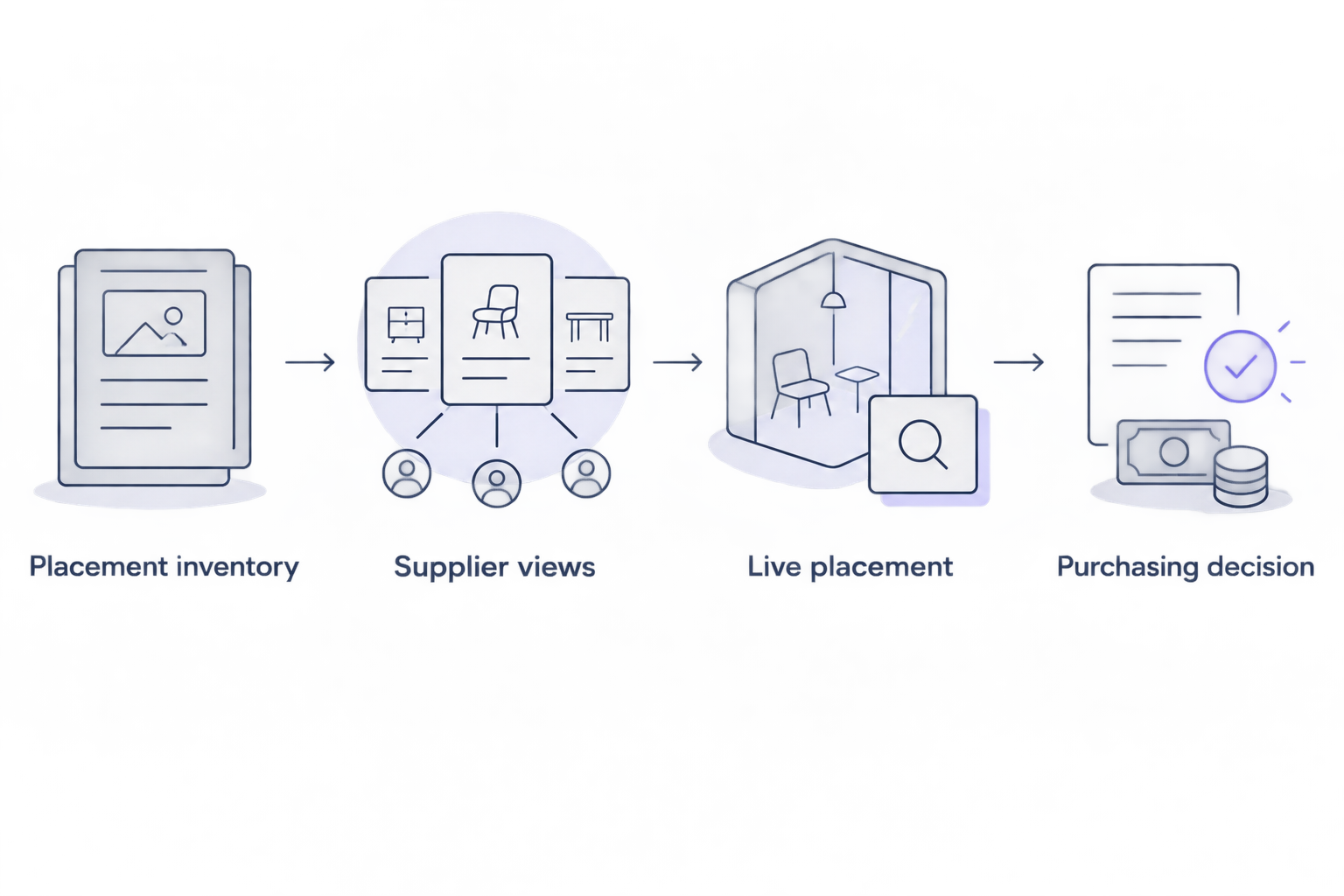
1. Build a placement inventory
Create 1 row per placement, including repeat appearances on the same domain. Record the publisher, live article URL, destination page, anchor text, link attributes, supplier, sponsorship status, and any known ownership information.
Keep facts separate from assumptions. Record ownership as unknown when you cannot verify it; a similar design is not an ownership record. Include removed or changed placements so the inventory reflects what happened after publication.
2. Separate supplier and publisher views
Maintain 2 reporting views: one grouped by supplier and another grouped by publisher domain. Add known publishing groups without guessing connections between sites.
The supplier view shows purchasing concentration. The publisher view shows repeated exposure to the same domains. Comparing them also reveals whether different suppliers have placed content on publishers you already use.
3. Inspect the live placement
Open the article and inspect the link itself. Check that the destination is correct, the surrounding text is relevant, and the agreed qualification is present in the HTML.
Read beyond your paragraph. Assess whether the article has a coherent purpose and whether other outbound links fit that purpose. A completed delivery report is not a substitute for reviewing the published page.
4. Assign a purchasing decision
Use 3 decision labels: approve, investigate, or reject. Approve a proposed sponsorship only when its purpose, publisher fit, and qualification meet your requirements; investigate unresolved facts; reject manipulative ranking arrangements.
Do not treat an unknown as a pass. Pause the next order until you have enough information to decide, and retain the evidence supporting that decision.
Keep this audit attached to your 2026 campaign records. A clear decision trail is more useful than a report that lists completed links without explaining why the next order should proceed.
Does using different suppliers reduce the risk?
Different suppliers do not establish different publishers or compliant links. Compare actual placement domains and known ownership groups before calling a campaign diversified. Then assess each paid arrangement against Google's link-spam policy.
Changing vendors is an operational decision. It is not a remedy for instructions that still request paid links intended to pass ranking credit.
How many backlinks from the same network are safe?
Google publishes no universal safe quota for purchases from the same network. There is no defensible order count, domain count, or waiting period that turns a manipulative paid-link scheme into a compliant campaign.
Set purchasing limits for workload and business dependency if needed. Label them as internal controls, not Google-approved thresholds.
Should you stop ordering if you find publisher overlap?
Pause overlapping orders long enough to establish what you are buying. Overlap alone does not prove a violation, but it removes any basis for claiming those placements add new publisher domains.
Continue only when the proposed placement has a clear audience purpose and appropriate qualification. Reject an arrangement whose selling point depends on paid ranking manipulation.
FAQ
Is buying backlinks from the same marketplace always dangerous?
Reusing a marketplace is not, by itself, proof of a link scheme. Assess the underlying publishers, the purpose of the purchase, and whether paid links are appropriately qualified.
Can Google penalize a site for repeatedly buying network links?
Links bought to manipulate rankings violate Google's link-spam policies and can lead to manual action or algorithmic effects. Repetition does not establish that a particular site has been penalized; check evidence rather than inferring a penalty from a traffic change.
Does using sponsored link attributes remove every risk?
Appropriate qualification addresses Google's requirements for paid links, not every campaign risk. You still need to assess audience fit, content quality, publisher dependency, and what the sponsorship is intended to achieve.
Should I disavow every backlink from a network?
No—network association alone is not a reason to disavow every link. Google recommends the disavow tool only in specific circumstances involving substantial artificial links and a manual action or a likely manual action; it is not routine backlink housekeeping.
Can I use NO-BS Marketplace for repeat guest posting purchases?
NO-BS Marketplace connects SEO professionals and agencies with verified publisher sites for guest posting and other placements. Evaluate each repeat purchase separately; familiarity with the platform does not establish that every proposed placement meets your campaign requirements.
What should an agency tell clients about repeated publisher use?
Tell clients when placements reuse a publisher or known publishing group, and distinguish total backlinks from unique referring domains. Explain the sponsorship purpose and link qualification without promising ranking gains.
Does waiting between orders make paid backlinks safe?
Waiting between orders does not make a manipulative paid-link arrangement compliant. For 2026 campaigns, use scheduling to manage production and approvals—not as a claimed way around Google's policies.
One last thing
Your next supplier can sell you a placement on the same publisher you already used. Audit the proposed destination before treating a new invoice as new diversity.
Ask a final question before approval: would this placement still make sense if it delivered no ranking credit? For sponsorship, a clear answer should concern readers, useful content, and relevant exposure. If the entire rationale disappears without an unqualified ranking link, reject the purchase.