
KEY TAKEAWAYS:
Startups often lack experience, which is necessary for ranking in search results or getting cited in AI summaries.
As E-E-A-T is more cyclical than linear, startups can begin building experience by working on their expertise, authoritativeness, and trustworthiness.
Once experience comes into play, startups can see compounding growth in the other three fundamentals.
Nothing arguably annoys people fresh out of college more than an entry-level job requiring experience. Why bother calling it “entry-level” when it calls for three to five years of related experience? The whole idea behind the term is for novices to build experience over time.
Suddenly, you have a paradox in your hands. You need experience to gain experience.
But this isn’t a rant about discrimination in the job market. See, this paradox exists in the SEO space, namely among startups. We know that experience is one of the four tenets of Google’s E-E-A-T quality framework. How can one achieve that when it’s just starting?
This chicken-and-egg scenario may be an inevitable reality, but it doesn’t mean there’s no way around it. Instead, it boils down to working with the credibility you already have. Once you build upon that, everything else will fall into place.
A Goal Behind Many Hurdles
Google introduced the E-A-T framework in 2014 as its way to push site owners and content creators to step up their content game. As per the acronym, articles, blog posts, and other forms of content must show the author’s expertise, authoritativeness, and trustworthiness. It was a major change that some still struggle to adopt.
Over time, Google realized that E-A-T wasn’t going to be enough. By this definition, I could say that my in-depth guide on fixing a leaky pipe meets all three criteria—even if I’ve never done it in my life. The rise of AI-generated content only reinforces this belief, considering the capabilities of chatbots and other AI tools.
Eight years later, it added another E—experience.

Apart from having a well-written piece and being a credible source, the second E requires the author to have firsthand knowledge. In this case, the aforementioned guide falls short because the author doesn’t do plumbing for a living.
Now, it can be argued that you have some experience (i.e., plumbers require working as an apprentice for years), but that’s the least of your worries. The Internet is home to countless other professionals who have been doing your thing for years or decades. Naturally, Google will prioritize them because they send stronger signals.
Startups, on the other hand, have to start from scratch. They need customers to help earn the necessary experience, but it’ll be hard if their content can’t be found in search results. And sadly, experience is one factor that can help them rank.
Startups will gain experience eventually, but don’t expect it to be quick. The focus for any startup in this situation needs to be on exposure and gaining its first customers. The good news is that it’s possible to make do with the other three criteria for now.
Expertise: Prove You Can Talk About Your Niche
Let’s start with the most obvious. As a startup, most have no idea who you are.
Customers first want to know who they’re asking for expertise. A founder with an extensive resume clearly has an advantage over one without. Now they only have to put their details on their websites and social media profiles.
Experts agree that one powerful signal of expertise is the author bio. It’s the ideal place for the author to explain what qualifies them to talk about their niche. Unfortunately, it’s often taken for granted, with many bios containing only a name and inane words, at most.
It’s time to give author bios the attention they deserve, starting by adding the following: (1)
Name and title: Self-explanatory; if applicable, add formal titles like “Dr.,” “Atty.,” or any postgraduate degrees (e.g., Ph.D., MD).
Clean headshot: Post your most recent picture; it can be casual or formal, as long as there’s no one else but you in the shot.
Personal links: Provide links to your website and social media pages. They can take the form of icon links or be embedded in the author bio body.
Topical credentials: Mention your background, including notable achievements, awards, and industry certifications.
Explanatory blurb: Include a short explanation as to why the author is qualified to talk about topics in the field of their choice.
It also helps to include a list of the author’s latest posts. On that note, the example below from Bankrate takes it one step further by adding the author’s posts on other websites.
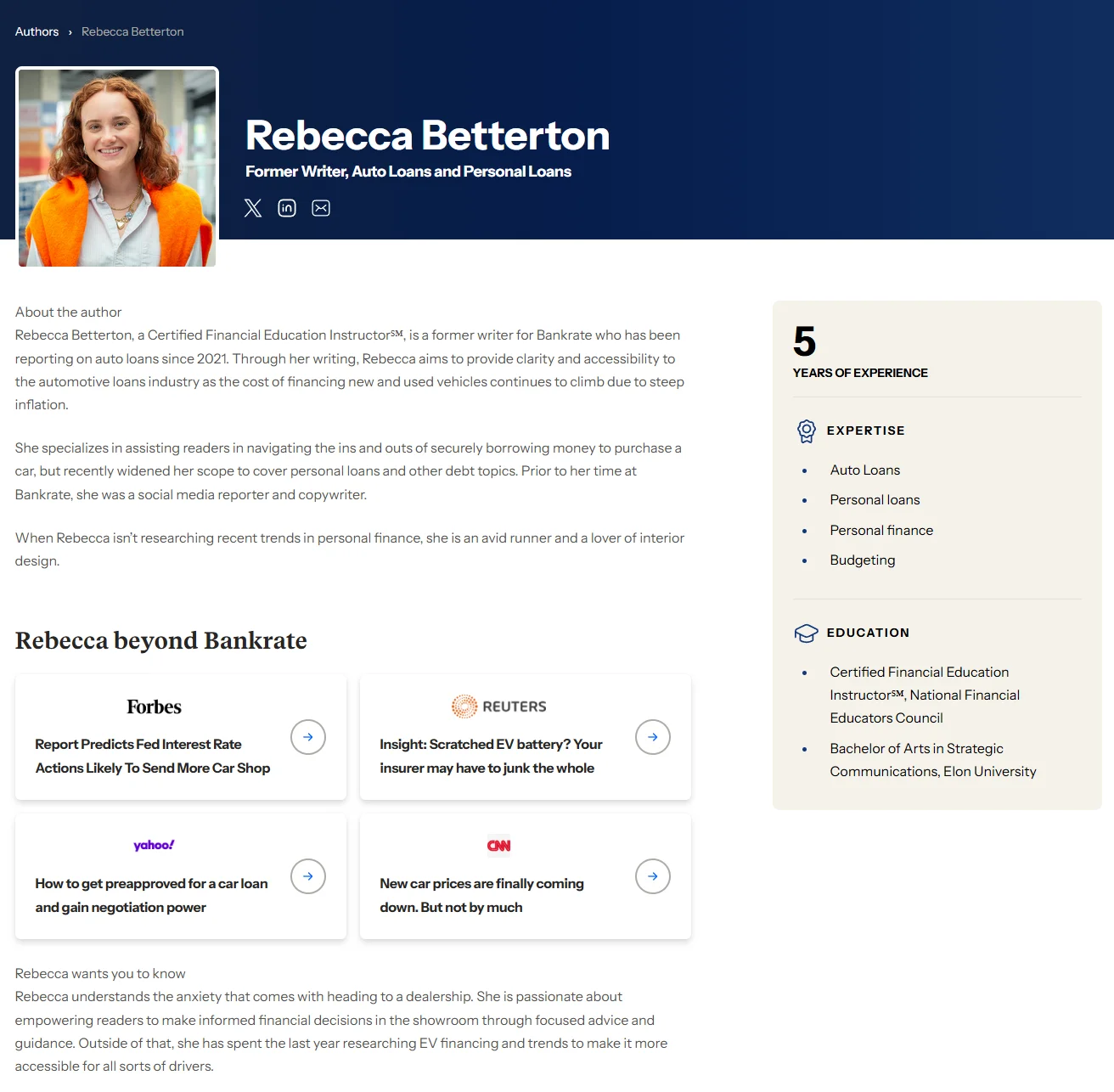
Whatever the type of author bio you’re going for, never use it for SEO. Google has clarified that author bios aren’t a ranking factor, as it isn’t its job to verify an author’s qualifications. Not to mention that people will know if a bio is written for bots. (1)
Authoritativeness: Be a Trusted Source
Here comes the hard part. As a startup, your website isn’t considered an authority yet.
There aren’t many industry professionals who can vouch for your brand, even if you’re the epitome of virtue. Authoritativeness is about proving that people and industry leaders can cite and share your content with confidence. The further it goes on the Internet, the more likely someone will check out your brand.
Content will be the key to this endeavor, but it’ll take more than vanilla topics like “X Tips for Doing This and That.” This calls for publishing original research—studies or surveys that no other competitor has ever thought of, let alone conducted. Other than being informative for your target audience, such content is more likely to be cited by AI.
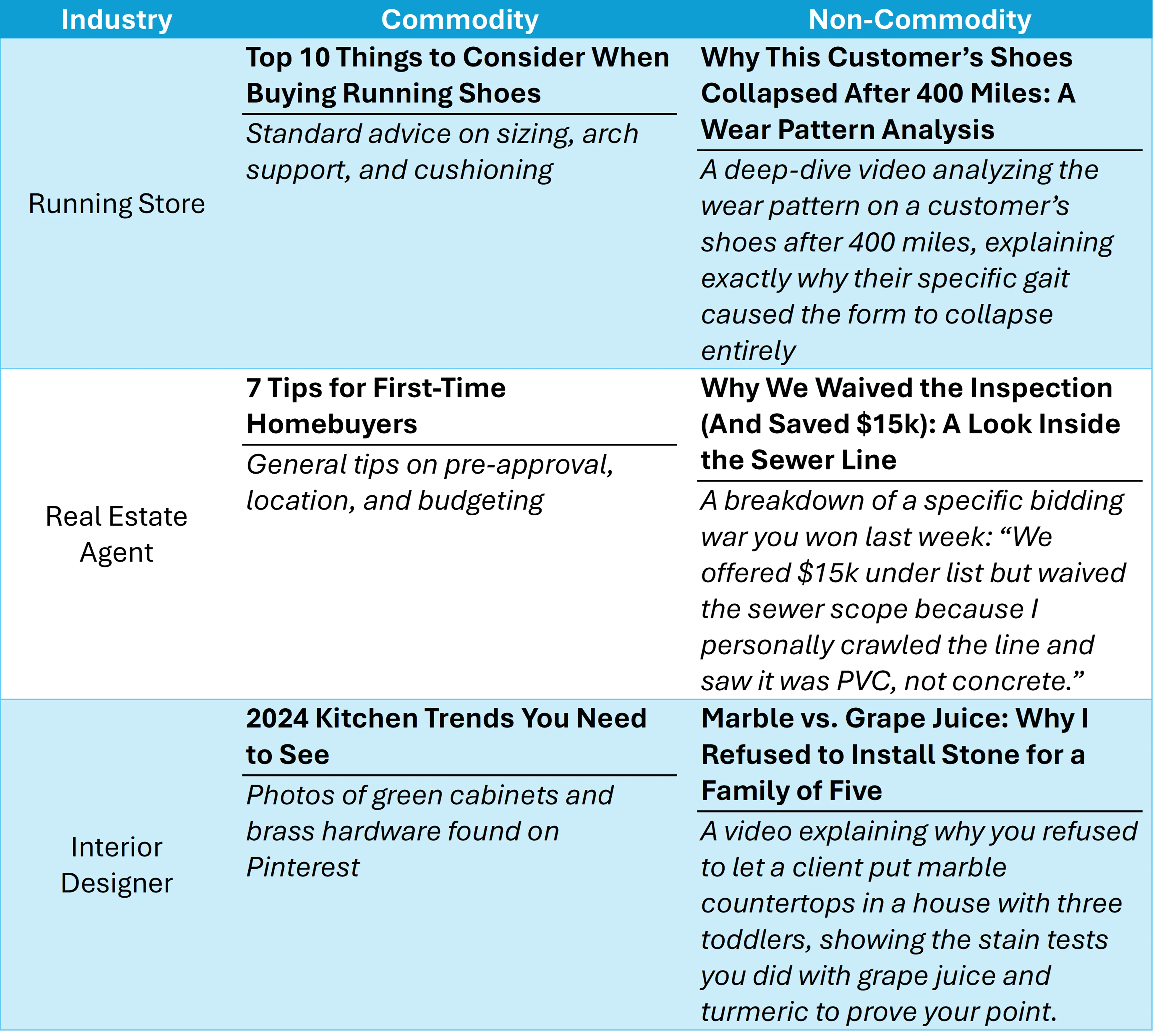
Excerpt from Danny Sullivan’s presentation during Google Search Central Live in Toronto
That said, as a startup, you may struggle with gathering enough data. If you want to conduct a study on, say, customer preferences, you need customers. You’ll find yourself making this type of content eventually, but right now you need to get your name out there.
In this case, building relationships with industry leaders is a good alternative. Attend events where you can speak with established industry experts and build partnerships. Rather than asking for links, invite them to collaborate or be a guest in an experts’ roundup.
Your experiences in these events can make for a good post to jumpstart your startup brand. A good topic would be the things you’ve learned or realized during your time there, such as industry trends and expert insights. More importantly, these posts can serve as jumping-off points for a deeper dive or branching out to other related topics.
However, on-page content alone won’t be enough. New websites often struggle in the first weeks or months after going live (the industry calls this a “sandbox effect,” though whether or not it’s real is debatable). For this, they need digital PR to extend their reach.
Digital PR achieves this by publishing a brand’s content on credible third-party websites or social media platforms. I would’ve said that this is basically enhanced link building, but it’s not because the goal is to build brand visibility. As AI doesn’t care about rankings, humans vetting content is a more viable long-term strategy.
Trustworthiness: Offer Customers Peace of Mind
Every industry has its share of scammers, from counterfeits to get-rich-quick schemes. Not even SEO is immune to them, having lived through claims of getting content at the top rank of search results. No wonder we keep telling people not to believe everything on the Web.
But sooner or later, people will have to put their faith in professionals to solve their issues. Businesses have to show customers that their faith isn’t misplaced.
Experts agree that trustworthiness is the most essential element of the E-E-A-T framework. Showing expertise, building authority—everything you’ve built up to this point culminates in customers trusting you with their needs.
That said, there are a couple of things you can still do to boost trustworthiness. An example is ensuring a safe browsing experience, especially on websites that store user data such as usernames and passwords. The Privacy page should detail how your business manages the customer’s data, as well as how it will respond to a data breach.
Speaking of a data breach, it’s a good idea to be reachable through the proper channels in case of any untoward event. As such, make sure your contact details are up to date, even if the difference is a single letter or number.
The About Us page is arguably one of the most underrated types of content. While it might not help your site rank better, it’s the best place for visitors to know what your brand is and what it stands for. Don’t take it for granted by slapping in random lines and calling it a day.
But above all else, be honest. Lying—no matter how necessary it is to do business—is still the best way for a business’s reputation to go down the drain.
Experience: Keeping the Cycle Running
With your brand looking credible on and off-page, customers should start flooding in. Don’t expect it to happen overnight, however. Keep improving your brand’s E-A-T as you build your customer base, which will also build your experience.
In a way, experience compounds the effects of the other fundamentals.
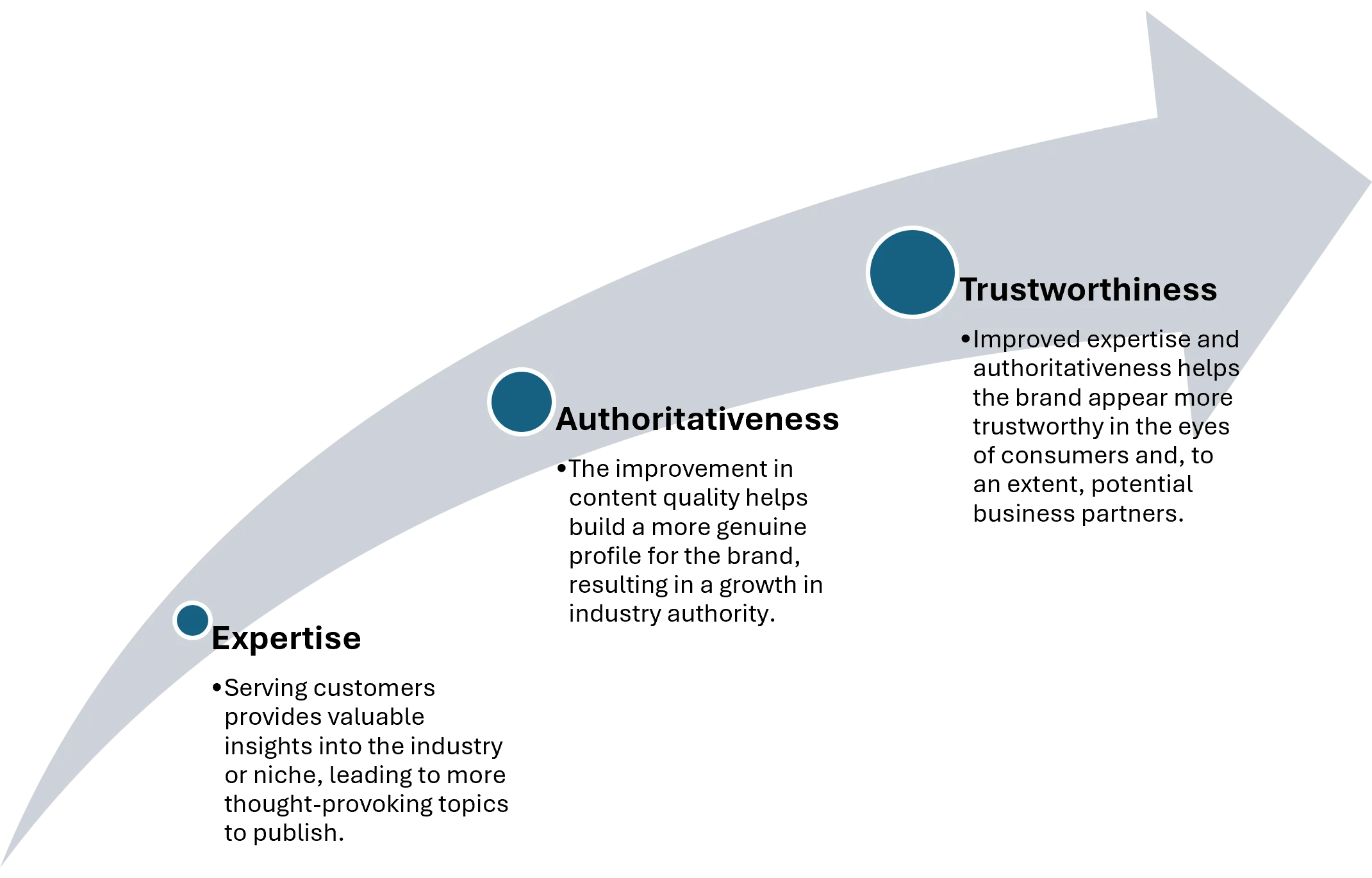
And with boosts in these fundamentals, the brand can gain more customers and continue to gain more experience. As long as it’s consistent in adhering to the guidelines, the growth cycle can only grow from here on out.
Start Small To Make It Big
Startups have it hard, but it doesn’t mean success is impossible. As far as E-E-A-T goes, it boils down to working with what they have to attain the missing link. Prove your expertise, build your website’s authority, and foster trust among your target audience.
References:
1. “The myth of manufacturing author E-E-A-T,” Source: https://searchengineland.com/myth-manufacturing-author-e-e-a-t-440675