
Ah, the humble listicle. For years, this list-type format has been a staple of content creation as it’s easy to write and digest. Before AI, search engines were more or less content (no pun intended) with listicles as long as they followed their content guidelines.
That’s about to change…or has already done so.
For the record, the listicle is still a valid form of content. Google isn’t out to throw it in the black hat bin along with keyword stuffing and link spam. But more often than not, brands take advantage of it by putting themselves in the first spot.
How is that promoting a business’s credibility and expertise? Long-time customers might vouch for that business, but it might appear as a shameless plug to the rest. Not everyone is a fan of that, more so when the content sounds desperate for views.
We’ll explore why this format is more trouble than it’s worth and what alternatives exist.
DISCLAIMER: This post contains references to federal regulations. I am not a lawyer, and NO-BS Marketplace (and its parent company, Reachmark) is not a law firm. As such, any legal information here does not constitute legal advice. Consult a lawyer for such needs.
A Warning from Google—and Even the Law
Google kickstarted 2026 with unusual volatility, with some brands suffering visibility drops from the December 2025 Core Update. Reports indicate that the decline ranged from 30% to 50%, at least for Software-as-a-Service (SaaS) brands. (1)
But for Lily Ray, AI search consultant by day and musician by night, the decline affected a lot of large brands. One such brand with a market value of $8 billion saw its visibility drop by almost half in less than a month. Worse, the blog page, accounting for 77% of the site’s total traffic, was hit the hardest.
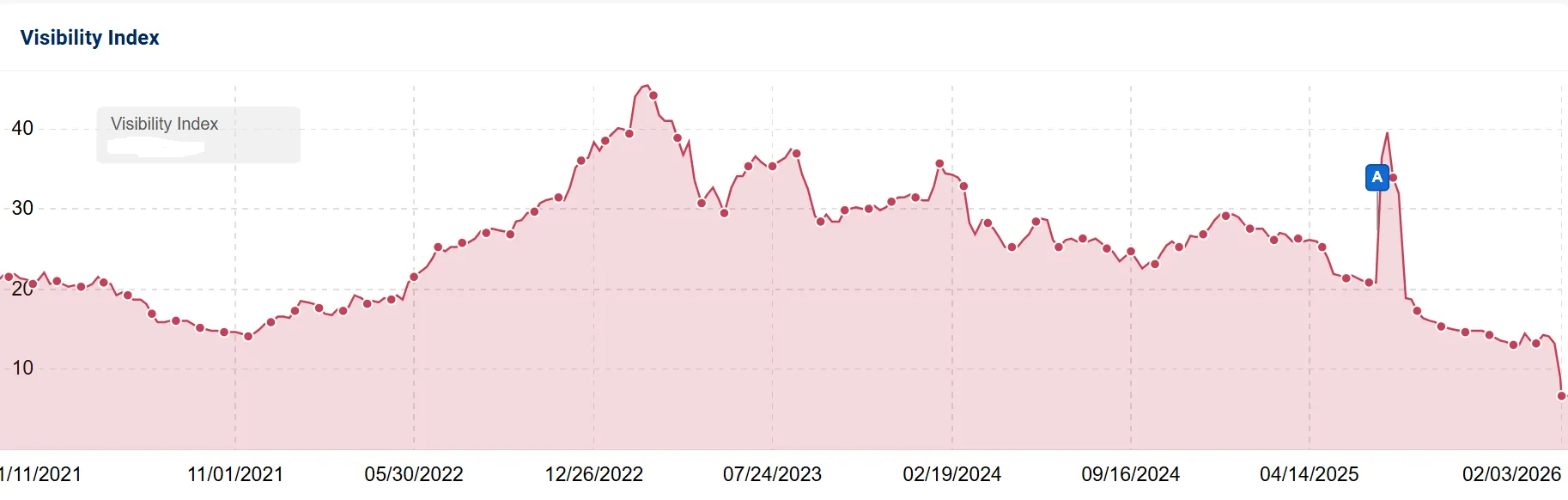
Source: Lily Ray
Looking into the website, Ray discovered that its blog page housed close to 200 self-serving listicles. While comprising 0.6% of its indexed blog posts (estimated at around 30,000), this shows the impact a few pieces of bad content can have on a website. The same trend was also observed among other brands she checked.
But there’s another reason this format is no longer viable. Brands could be penalized under federal law for such content, specifically Part 465 of the Code of Federal Regulations. The practices prohibited under this regulation include: (2)
Creating and publishing fake consumer and celebrity reviews
Buying positive and negative consumer reviews for one’s gain
Reviews and testimonials made by insiders (e.g., the manager)
Passing off company-controlled reviews as independent
Preventing reviews and testimonials under threat of retaliation
Using fake indicators of social media influence (e.g., repetitive comments)
In 2023, a website that ranks clear dental aligners found itself in hot water after authorities found that some of its listicles violated advertising laws. Despite the listicles being branded as editorial content, the site was found to have affiliate relationships with some of the clear aligner brands mentioned. (3)
The website was also asked to revise its advertising disclaimer, which states that: “When you buy products and services through our links, we may earn commissions.” A disclosure that the National Advertising Review Board deemed as “neither clear nor conspicuous.” (3)
Between Google’s crackdown and legal troubles, self-serving listicles are clearly not worth the time and effort. Businesses today have a better chance of getting cited or mentioned by AI by thinking like a journalist.
Make Your Content ‘Irreplaceable’ by AI
Even if the “self-serving” part isn’t a big deal, you don’t want to settle for a normal listicle in today’s search. Remember when I stated earlier that listicles are easy to write and digest? Well, AI can synthesize them with ease, but they won’t necessarily favor it in its summary.
The reason is simple: a normal listicle cites information that’s already well-known. As such, it’s missing one of Google’s fundamentals of content quality (more popularly known as E-E-A-T)—that of experience. “X Things to Consider When Planning a Wedding” doesn’t exactly exude confidence, not when other brands also have the right experience to discuss this.
Long story short, it doesn’t make you stand out from the competition. Your website needs content that’s not just unique but also can’t be summed up in a mere AI-generated brief, prompting people to take a closer look.
You need irreplaceable content—and that’s where non-commodity content comes in.
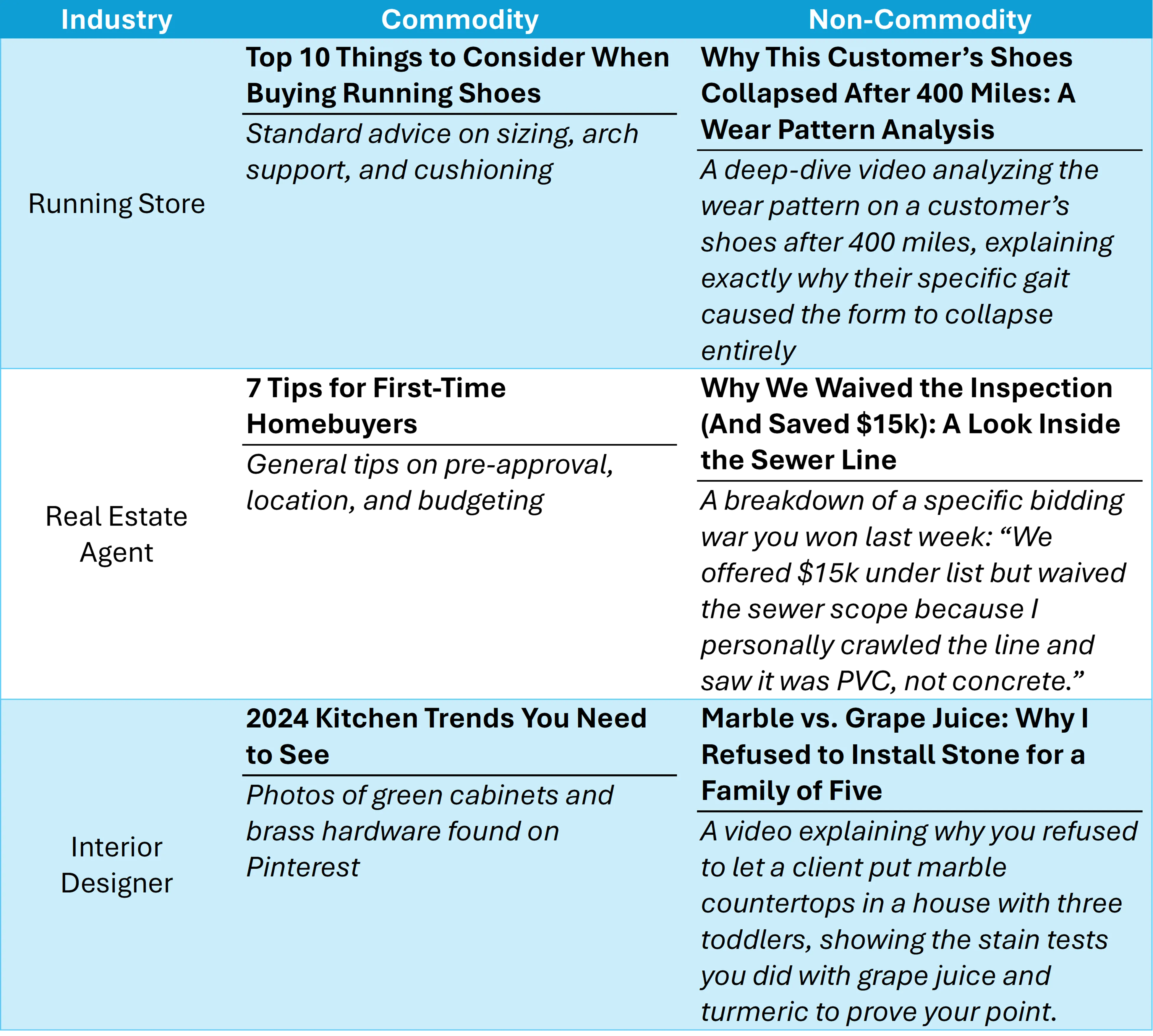
Excerpt from Danny Sullivan’s presentation during Google Search Central Live in Toronto
Non-commodity content adds value by offering a unique take on an otherwise widespread topic. Wear pattern analysis of running shoes may seem technical, but using it to discover why the shoes deteriorated after 400 miles makes it a worthwhile read.
All the while, AI will struggle to replicate non-commodity content. It can’t generate its own case studies, original research, or even expert opinions (and the last time it tried to do that didn’t end well). Instead, it’s more likely to cite the human author of said content.
I should point out that there are no limits as to what non-commodity content can be. It can even be a listicle, provided that it offers a fresh, unique perspective on the topic rather than blatant advertising. Potential topics can be found in the website’s existing content; it’s only a matter of how well you can put a unique spin on them.
Step Up Your Content Game
While listicles are still good in today’s search environment, the same can’t be said for the kind of content we’re used to. Instead of sticking to generic topics, it’s time to step up your content strategy by showcasing your brand’s experience and expertise.
Don’t put yourself at the top of the listicle. Prove you’re worth staying there.
References:
“Google may be cracking down on self-promotional ‘best of’ listicles,” Source: https://searchengineland.com/google-cracking-down-self-promotional-best-of-listicles-468227
“PART 465—RULE ON THE USE OF CONSUMER REVIEWS AND TESTIMONIALS,” Source: https://www.ecfr.gov/current/title-16/chapter-I/subchapter-D/part-465
“National Advertising Review Board Refers Smile Prep’s Clear Aligners Advertising to FTC After Compliance Review,” Source: https://www.lexology.com/library/detail.aspx?g=673ffa7b-c38c-4ac0-8996-2d273447de92