
Yes, sponsored content counts as a backlink when the published article contains a link to your website, but that does not mean Google will credit it toward rankings. In 2026, paid links should use rel="sponsored"; Google also accepts rel="nofollow", and neither attribute promises ranking value.
- Does sponsored content count as a backlink? Yes, but Google does not guarantee ranking credit for paid placements.
- Google recommends rel=sponsored for paid links; nofollow is also acceptable.
- Evaluate sponsored content through audience relevance, referral traffic, and business outcomes—not backlink totals alone.
- NO-BS Marketplace connects SEO professionals and agencies with publishers; placement sourcing does not replace link compliance checks.
Can sponsored content count as a backlink for SEO purposes?
A sponsored backlink is a link, not a guaranteed ranking endorsement. Separate the existence of the backlink from how Google treats it. A backlink checker reporting the link proves neither that Google has indexed the article nor that the link influences rankings.
Google Search Central’s guidance on qualifying outbound links recommends sponsored for advertisements and paid placements. Its link-spam policy also identifies buying links for ranking manipulation as link spam. Apply that distinction to your 2026 campaign reporting:
| Placement or link type | Counts as a backlink? | Main benefit | Main limitation | Best for |
|---|---|---|---|---|
Paid article with rel="sponsored" |
Yes | Disclosed promotion and a route to your website | No guaranteed ranking credit | Paid publisher campaigns |
Paid article with rel="nofollow" |
Yes | Referral access with an accepted paid-link qualification | Does not promise ranking credit | Publishers using nofollow for advertising |
| Paid article with an unqualified link | Yes | A clickable link to your website | Conflicts with Google guidance when purchased to influence rankings | Not recommended as a ranking tactic |
| Independently earned editorial link | Yes | An editorial reference that Google can evaluate | Publication and ranking effects are not guaranteed | Earning relevant editorial citations |
| Sponsored brand mention without a link | No | Brand exposure | No backlink or clickable referral route | Awareness campaigns |
For placement sourcing, NO-BS Marketplace connects SEO professionals and agencies with publisher sites. The same distinction applies regardless of where you arrange publication: a purchased placement is not an earned endorsement.
Why this matters
If your client asks for SEO results and you report only sponsored-link totals, you are measuring delivery rather than impact. Publication is an output. Qualified visits, inquiries, and sales are separate outcomes that require separate measurement.
Use 3 checks before counting a placement as successful: confirm the link exists, confirm the paid relationship is handled correctly, and assess whether the placement reaches the intended audience. None substitutes for another.
A relevant sponsored article can support a marketing campaign without providing measurable ranking gains. Approve the placement for a defensible audience objective, not an assumed transfer of authority.
Links marked sponsored: appropriate for paid placements
Google recommends rel="sponsored" to identify links created through advertising, sponsorships, or other compensation arrangements. The attribute belongs on the link itself; a visible sponsorship label elsewhere on the page does not add it automatically.
Google treats link qualifications as hints when deciding how to analyze links. That does not create a basis for promising that a particular sponsored link will improve rankings.
- Best for: Paid articles, advertorials, and other compensated publisher placements.
- Pro: Identifies the commercial relationship in the link markup.
- Con: Does not provide guaranteed ranking credit or guarantee referral visits.
For your 2026 brief, specify the expected attribute before publication. Do not leave the publisher and account manager working from different definitions of an “SEO backlink.”
Links marked nofollow: accepted, but not a ranking promise
Google still accepts rel="nofollow" for paid links, although sponsored is the more specific label. A publisher can also combine values, such as rel="sponsored nofollow".
A nofollow link remains clickable. Readers can follow it to your website regardless of whether Google uses it in ranking calculations.
- Best for: Paid placements on publishers that qualify advertising links with nofollow.
- Pro: Preserves the reader’s route to your website while qualifying the link.
- Con: A backlink report showing nofollow does not establish SEO impact.
Do not reject an otherwise relevant publication solely because its sponsored links are nofollow. Reject it when the audience, content, or campaign objective does not justify the placement.
Unqualified paid links: not a compliant shortcut
An ordinary HTML link without a qualifying attribute is often called a “dofollow” link. There is no required dofollow attribute; the term generally describes the absence of qualifications such as sponsored or nofollow.
That technical detail does not make a paid link editorial. Google’s spam policies focus on links bought or sold for ranking manipulation, not simply on what the seller calls the article.
- Best for: Uncompensated editorial references—not purchased ranking endorsements.
- Pro: An independently chosen, relevant editorial link gives Google a reference to evaluate.
- Con: Buying the same unqualified link to manipulate rankings creates a policy problem.
Do not ask a publisher to remove sponsored or nofollow attributes to manufacture ranking value. A visible advertising disclosure does not resolve an unqualified paid-link arrangement.
Why sponsored backlink value varies
A link attribute answers only part of the evaluation. These factors determine what a sponsored placement can contribute and what you can substantiate afterward:
- Audience relevance: The article needs readers who have a reason to visit your destination page. Broad reach alone does not establish buyer fit.
- Article usefulness: A clear explanation, relevant example, or useful resource gives readers a reason to engage. A forced promotional paragraph does not establish that value.
- Link placement: A contextual link beside a relevant explanation gives readers a clearer reason to visit than an unrelated insertion.
- Publisher quality: Assess editorial relevance, advertising practices, and the actual article—not just a domain-level score.
- Technical accessibility: Confirm the page loads, the link works, and the destination is correct. A live URL alone does not establish indexing or ranking credit.
- Measurement setup: Without referral and conversion measurement, you cannot connect publication to observed business outcomes.
Before committing, use this guide to audit a publisher site before buying a placement. Publisher review belongs before approval, not after a disappointing report.
How do you check a sponsored backlink before reporting it?
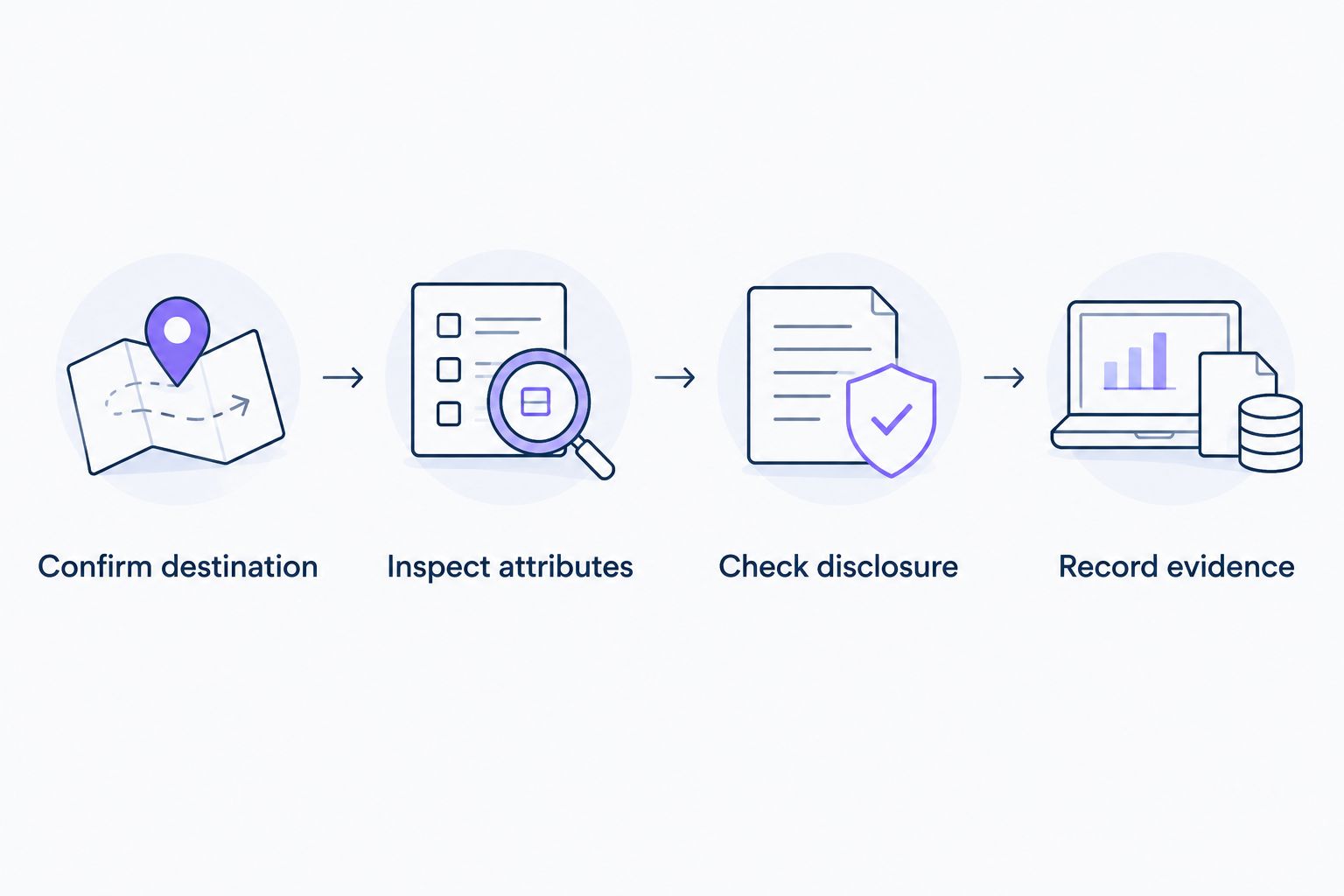
Use a repeatable inspection process for your 2026 placements. Check the published page rather than relying on an order description, a screenshot, or a promised link type.
Confirm destination
Open the article and follow the link. Verify that it reaches the intended page and does not lead to an error, an unrelated destination, or an unexpected redirect.
Inspect the hyperlink itself, not just the visible anchor text. A correctly spelled brand name can still point to the wrong address.
Inspect attributes
Use your browser’s inspection tools to examine the link’s rel attribute. Record whether the link is sponsored, nofollow, both, or unqualified.
Check the actual link to your site. Another link elsewhere in the article can have different attributes, so a page-level assumption is not enough.
Check disclosure
Read the article as a visitor would. Confirm that the commercial nature of the placement is clear rather than buried or disguised as independent coverage.
Keep 2 obligations separate: advertising disclosure addresses the reader’s understanding, while link qualification communicates the paid relationship to search engines. Neither replaces the other.
Record evidence
Save the publication URL, destination URL, link attributes, and inspection date. Add the visible disclosure and the agreed campaign objective to the same record.
These 6 fields create a useful delivery record without pretending to measure ranking impact. Recheck the live page when reviewing campaign performance; the original inspection describes only what was present then.
Does a sponsored label replace the link attribute?
No. The 2 obligations serve different purposes: a visible disclosure informs readers, while a link attribute qualifies the relationship for search engines. A publisher needs to address both where applicable.
For US campaigns, the Federal Trade Commission’s native advertising guidance addresses identifying advertising clearly and prominently. Google Search Central’s outbound-link guidance addresses the link markup; apply each to its own scope in your 2026 review.
Avoid treating a footer disclaimer as automatic approval of every placement. Review the article’s presentation and disclosure where readers encounter the promotional content.
Can a sponsored backlink still bring useful traffic?
Yes. A sponsored backlink gives readers a route to your website even when ranking credit is uncertain. Whether it brings useful traffic depends on the audience, article, destination, and actual reader response.
Measure visits from the referring publication and the actions those visitors complete. If you use campaign parameters, keep naming consistent and check that the final link preserves them.
Do not rename referral results as SEO results. A qualified inquiry from a sponsored article is a valid outcome without claiming the article caused an organic ranking increase.
How should agencies report sponsored backlinks?
Separate delivery, audience response, and organic performance in your 2026 reports. Mixing them into a single “links built” total conceals what the campaign actually achieved.
- Delivery: Published article, working destination, observed attributes, and disclosure.
- Audience response: Measured referral visits and attributable on-site actions.
- Organic performance: Search visibility and organic conversions, reported without assuming a sponsored placement caused changes.
Label sponsorships honestly in white-label reporting. Calling a purchased article an “earned editorial” changes the client’s understanding of the work and its risks.
NO-BS Marketplace is best for SEO professionals and agencies seeking a publisher-placement platform. Its role is connecting buyers with publishers; that does not make every placement suitable for every campaign or remove the need to verify compliance and outcomes.
The practical trade-off is straightforward: marketplace sourcing helps you find placement opportunities, but you still need to assess the publisher, inspect the published link, and measure results. Do not outsource those decisions to a domain score or a sales description.
FAQ
Does sponsored content count as a backlink if the link is nofollow?
Yes, a nofollow link in sponsored content is still a backlink. Google accepts nofollow for paid links, but its presence does not guarantee ranking credit.
Will a sponsored backlink improve my Google rankings?
A sponsored backlink does not guarantee better Google rankings. Evaluate paid placements through relevant exposure, measured referral traffic, and business outcomes rather than promised authority.
Is paying for sponsored content against Google's rules?
Paying for advertising or sponsored content is not inherently against Google's rules. Paid links should be qualified appropriately; buying links to manipulate rankings is covered by Google's link-spam policies.
Does a sponsored article without a link count as a backlink?
No, a sponsored article without a link to your website does not count as a backlink. Record it as a brand mention or advertising placement instead.
Should I ask a publisher to remove the sponsored attribute?
No, do not ask a publisher to remove the sponsored attribute to gain ranking credit from a paid placement. Google recommends that attribute for compensated links and also accepts nofollow.
Can backlink tools show sponsored links?
Backlink tools can report sponsored links they discover, depending on the tool's coverage and reporting. A reported backlink does not prove that Google credits it toward rankings.
Does using NO-BS Marketplace remove the need to check a sponsored link?
No, using NO-BS Marketplace does not replace inspection of the published placement. Confirm the destination, link attributes, visible disclosure, and fit with your campaign objective.
One last thing
Decide what would make the placement worthwhile if it delivered no ranking improvement. If the answer is relevant readers, useful referral visits, or a measurable business action, you have an objective you can evaluate.
If the only answer is an assumed authority boost, change the brief before approving publication. A backlink count cannot rescue an unclear campaign objective.