
Yes, you can combine niche edits and guest posts in one strategy: use niche edits where an existing article genuinely needs your resource, and guest posts where the topic needs a new article. For a 2026 campaign, choose placements by relevance and editorial value, not a fixed ratio; combining formats does not remove the risks of paid links intended to manipulate rankings.
- Can niche edits and guest posts be combined? Yes—assign each format a distinct editorial purpose.
- Niche edits suit existing articles with a genuine resource gap; guest posts suit topics needing new coverage.
- NO-BS Marketplace connects SEO professionals and agencies with verified publishers; placement-level checks still matter.
- Qualify paid links appropriately and measure referral traffic separately from organic search performance.
Can niche edits and guest posts be combined in one strategy?
Yes. Put both formats under the same destination-page plan, publisher standards, anchor review, and reporting process. The difference is where your contribution belongs: inside existing coverage or in an original article.
| Placement type | Best for | Main advantage | Main limitation |
|---|---|---|---|
| Niche edits | Adding a useful resource to a relevant existing article | Uses an established editorial context | You must work within the article's existing topic and structure |
| Guest posts | Explaining a subject that needs original coverage | Gives you room to develop the topic and supporting argument | Requires a useful article, editorial approval, and publication |
Neither format wins automatically. An irrelevant insertion is still irrelevant inside an older article, and a thin guest post does not become useful because it is new.
Keep anchor decisions consistent across both formats. The guide to choosing anchor text when buying backlinks covers a decision that belongs at campaign level, not with separate teams choosing keywords in isolation.
Why this matters
A mixed campaign creates more editorial options, not an automatic ranking advantage. You can place a resource where it answers an existing question, or commission original coverage where the explanation does not yet exist.
The mistake is treating format diversity as proof of quality. Different placement types can still repeat the same weak publishers, forced anchors, and unsuitable destination pages.
For 2026 planning, judge the reason for each link before judging the campaign mix. Your brief should explain what the publisher's reader gains from following the link. If the explanation amounts to improving your rankings, the editorial case is missing.
Niche edits: best for filling an existing resource gap
Choose a niche edit when an existing article already discusses the problem your destination page helps solve. Read the surrounding section, not just the headline. The proposed addition should make that section more useful without changing its purpose.
For example, an article explaining inventory forecasting could reasonably reference a detailed forecasting worksheet. A link to an unrelated service page does not become relevant merely because both websites cover business topics.
The advantage is contextual fit: the discussion already exists. The limitation is that you cannot assume an old article receives visitors, remains accurate, or deserves your association simply because it has been published for years.
Before approving an insertion, check:
- Reader need: Does the linked resource answer a question raised in the paragraph?
- Article condition: Is the existing content accurate and maintained?
- Destination fit: Does the destination deliver what the anchor promises?
- Editorial permission: Has the publisher approved the change?
- Link treatment: Will any commercial relationship receive appropriate disclosure and link qualification?
Reject placements that rely on unauthorized access, hidden changes, or a sentence written only to hold your anchor. Permission and relevance are separate requirements; you need both.
Guest posts: best for a topic that needs new coverage
Choose a guest post when your contribution needs an explanation that an existing article cannot accommodate naturally. Start with the publisher's audience and an editorial question, then decide whether your resource belongs in the answer.
A useful guest post stands on its own. Your link should support a claim, provide a practical resource, or help readers take a relevant next step. Removing the link should not leave an empty article built around a promotion.
The advantage is room to develop an argument and show expertise. The limitation is production: someone must research, write, review, and approve a piece that meets the publisher's standards.
Do not confuse control over a draft with control over publication. Agree on the topic, attribution, disclosure, and link treatment before writing. The publisher should retain editorial judgment rather than accept every commercial request.
Recommend the article because it serves the audience, not because it accommodates an exact-match anchor. That rule applies equally to an agency writing for clients and a brand pitching its own contribution.
How to run both formats in one campaign
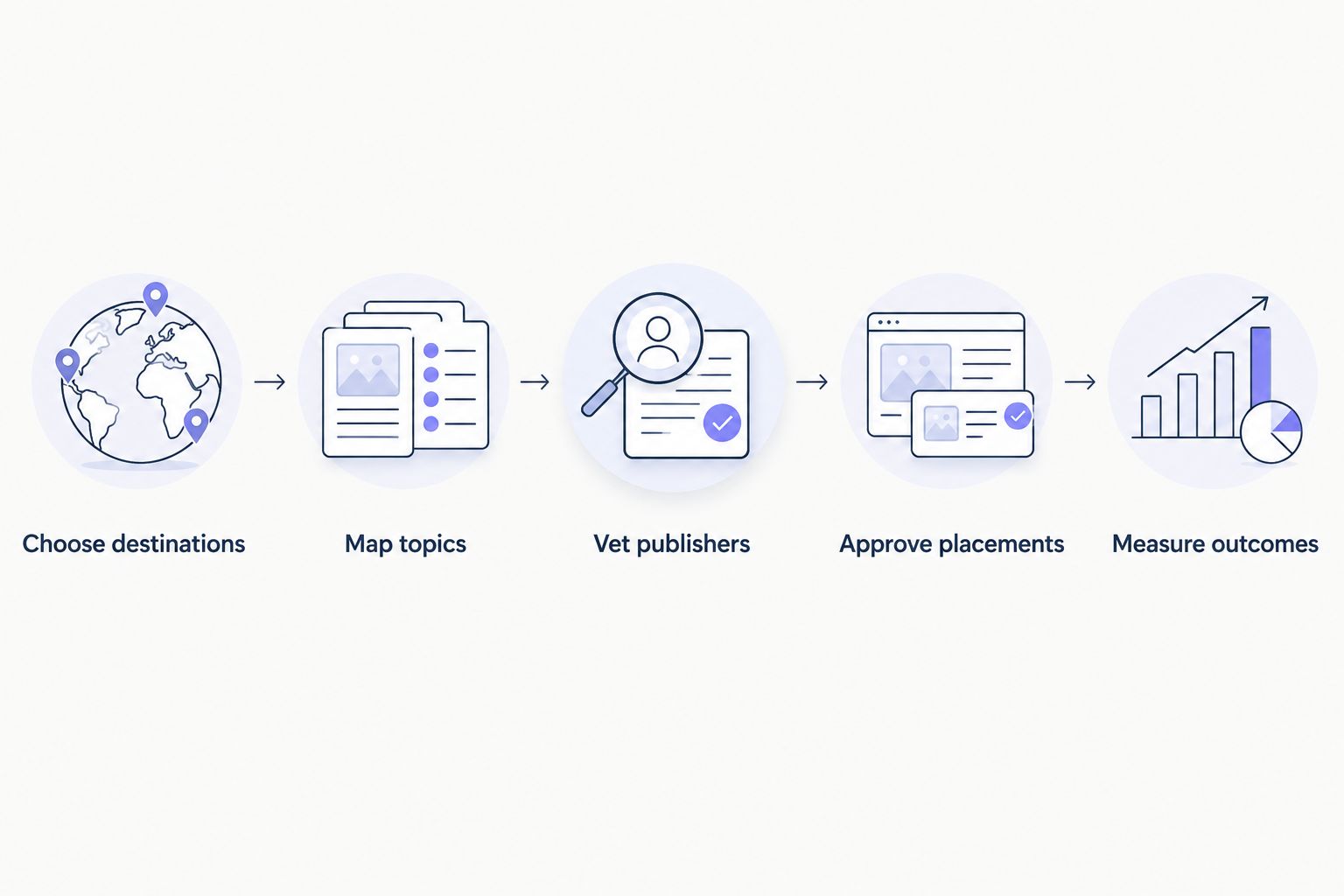
Use this sequence for a 2026 campaign. It keeps the decision about content separate from the decision about placement format.
1. Choose destinations
Start with 1 destination page per initial brief so the editorial purpose stays clear. This is a planning recommendation, not a ranking threshold. Define the intended reader, the problem the page solves, and the action you want a qualified visitor to take.
Check that the destination is accessible, accurate, and useful before prospecting. Links cannot repair a page that fails to answer the question promised by its title or anchor.
2. Map topics
List the questions that make the destination relevant to another publisher's audience. Separate existing coverage from missing coverage. This gives you a reason to consider each format without forcing either into the plan.
An existing article with a genuine reference gap belongs on the niche-edit shortlist. A useful unanswered question belongs on the guest-post shortlist. Some prospects belong on neither.
3. Vet publishers
Review both the website and the proposed article. Check topical consistency, editorial standards, outbound-link context, and whether published content serves an identifiable audience.
Domain Rating is a third-party metric, not a Google approval score. Use it as supporting information rather than permission to ignore an unsuitable page. A relevant publication still needs article-level scrutiny.
4. Approve placements
Review the surrounding text, destination, anchor, commercial disclosure, and link attributes together. A good publisher does not make every proposed insertion or guest-post topic appropriate.
Keep 2 placement types in 1 campaign record rather than separate reporting systems. Label the format so you can compare the work, but apply the same acceptance standards to both.
5. Measure outcomes
Record the live placement, publication or modification date, destination, anchor, link attributes, and placement type. Then monitor referral visits and relevant business actions alongside organic search performance.
Keep the original brief with the record. When a placement disappoints, you need to distinguish an unsuitable audience from a weak destination or an unhelpful article.
Why the right mix varies
There is no universal split to copy. Choose the next placement from the opportunities that meet your standards, not from a quota that requires you to accept a weaker article.
These factors determine the practical mix:
- Existing coverage: Suitable published articles create insertion opportunities; missing explanations create guest-post opportunities.
- Destination depth: A detailed resource supports different editorial references from a narrowly focused sales page.
- Publisher requirements: Editors decide which contributions, changes, and commercial arrangements they accept.
- Content requirements: A short supporting reference and a full explanation need different amounts of editorial space.
- Commercial relationship: Payment affects disclosure and link qualification regardless of the format.
- Observed outcomes: Referral engagement and relevant actions help you assess audience fit after publication.
A fixed split creates an avoidable problem: it turns format into the objective. If your shortlist contains no acceptable niche-edit opportunity, publish no niche edits from that shortlist. The same standard applies to guest posts.
How do you handle paid placements without misreading Google's rules?
For a 2026 campaign, apply Google Search Central's link-spam policies to both formats. Google identifies buying or selling links for ranking purposes as link spam; changing an insertion into a guest post does not change that principle.
Paid advertising and sponsorship links should be appropriately qualified. Google recommends rel="sponsored" for paid placements and also accepts nofollow. Reader-facing sponsorship disclosure is a separate obligation; a link attribute does not explain a commercial relationship to readers.
Do not present an unqualified paid link as the benefit of a placement. Do not promise rankings, indexing, or immunity from search enforcement. Editorial relevance does not create an exception to link-spam rules.
Mix formats to serve different content needs, not to disguise paid links. That distinction belongs in the client brief, publisher agreement, and approval process.
Where a publisher marketplace fits
NO-BS Marketplace is best for SEO professionals and agencies seeking publisher placements through a link building platform. It connects those buyers with verified publisher sites for SEO content, backlinks, sponsored content, and digital PR placements.
The practical benefit of the NO-BS Marketplace link building platform is access to publisher-placement options. The limitation is equally clear: a platform does not replace your destination-page strategy, article-level review, or responsibility for compliant link treatment.
Use NO-BS Marketplace after you have defined the audience, destination, and editorial purpose. Verification is not a promise of rankings or a reason to skip your own checks.
Should niche edits and guest posts point to the same page?
1 destination page can support both formats when each article independently gives readers a relevant reason to visit. You do not need different destinations simply to make the campaign appear varied.
Avoid forcing every placement toward the same commercial page. If an article needs a research source or practical guide, send readers to the resource that actually answers that need. Destination fit comes before the campaign's preferred landing page.
Do you need an equal split between the formats?
2 placement types do not require an equal split. A balanced-looking report is not evidence of a sound editorial strategy.
Approve opportunities on their merits and explain the resulting mix to the client. If one format repeatedly fails your publisher or content checks, stop commissioning it until suitable opportunities exist.
How do you tell whether the combined strategy works?
1 campaign record gives you a consistent basis for comparison, provided it separates placement type, referral outcomes, and search performance. Assess whether the right readers arrive and complete relevant actions, rather than counting published links alone.
For 2026 reporting, use Google Analytics to examine referral activity and Google Search Console to review search clicks and impressions for destination pages. Neither report, by itself, proves that an individual backlink caused a ranking change.
What to report to clients
Separate delivery from outcomes. A published placement is a completed deliverable; referral engagement and business actions describe what happened afterward. Organic search changes need broader context.
Include these distinctions in the report:
- Delivery: What was published or changed, and whether it matches the approved brief.
- Referral performance: Visits and relevant actions attributable to the referring publisher, where tracking supports attribution.
- Search performance: Changes in destination-page visibility, reviewed alongside site changes and other campaign activity.
- Placement condition: Whether the article, link, anchor, and qualification remain as agreed.
For the NO-BS Marketplace link building workflow, keep publisher sourcing separate from outcome evaluation. The same discipline applies regardless of where you arrange a placement.
Do not declare guest posts the winner because one article produced a visit, or niche edits the winner because rankings rose after an insertion. Review the audience, content, destination, and timing before making the next allocation.
FAQ
Can niche edits and guest posts be combined for a new website?
Yes, a new website can use both formats when its destination pages provide useful resources and each placement has a clear editorial purpose. Fix weak content and accessibility problems before commissioning placements.
Are niche edits faster for SEO than guest posts?
Neither format guarantees faster SEO results. An existing article does not guarantee crawling, indexing, referral visitors, or ranking improvement after a link is added.
Does combining guest posts and niche edits make paid links safe?
No, combining formats does not remove paid-link risks. Google's link-spam policies apply to both, and paid placements need appropriate link qualification.
Should I use the same anchor text for niche edits and guest posts?
Choose anchor text for each article's context rather than repeating a campaign keyword mechanically. The anchor should accurately describe the destination and read naturally in the sentence.
Can both placement types link to a commercial landing page?
Yes, both formats can reference a commercial landing page when that page genuinely serves the article's reader. Do not substitute a sales page where the context calls for evidence or an explanatory resource.
What should an agency track across both placement types?
Track the publisher, live placement, destination, anchor, link attributes, publication or modification date, and referral outcomes. Review organic search changes separately without attributing them automatically to individual links.
Is a niche edit better because the article is older?
No, article age alone does not establish relevance, traffic, accuracy, or link value. Review the current article and publisher rather than treating age as an approval criterion.
One last thing
Before approving either format, remove the proposed link from the draft and read the passage again. Does the article still help the reader, and does restoring the link add a useful next step?
If the link is the only reason the content exists, revise the content or reject the placement. That check is more useful than forcing a campaign into a predetermined format split.