
This post is an updated version of our guide on searching for authoritative websites for your content. After going through it myself, I decided that this post from five years ago could use some much-needed updating. After all, that’s one quality every authoritative source shares.
Picture this: you’re looking for something on Google and come across two websites. One is a renowned news publisher, while the other is a blog whose niche is relevant to your query. Both have the content you’re searching for, but they approach the topic differently.
And thus, you ask yourself: “Which of these is more reliable?”
We ask this question more often than you might think, given how loaded the Internet is with content. Not just among readers but also among content creators, as authoritative sources improve the content’s search visibility. How can you expect to convince search engines and AI models that you’re an authority in your niche otherwise?
On that note, what counts as an “authoritative source?” Fortunately, finding one is easy.
Top-Level Domain
The most common and arguably viable way to spot an authoritative website is by checking its top-level domain (TLD). This is the part of a website’s URL that comes after the domain name that indicates the type of website.
Our website—along with more than 160 million others—uses the .com TLD. Originally used for commercial sites, it evolved to include non-commercial ones, thanks in large part to the dot-com bubble. Other commercial TLDs have since taken the role, such as .biz and .net.
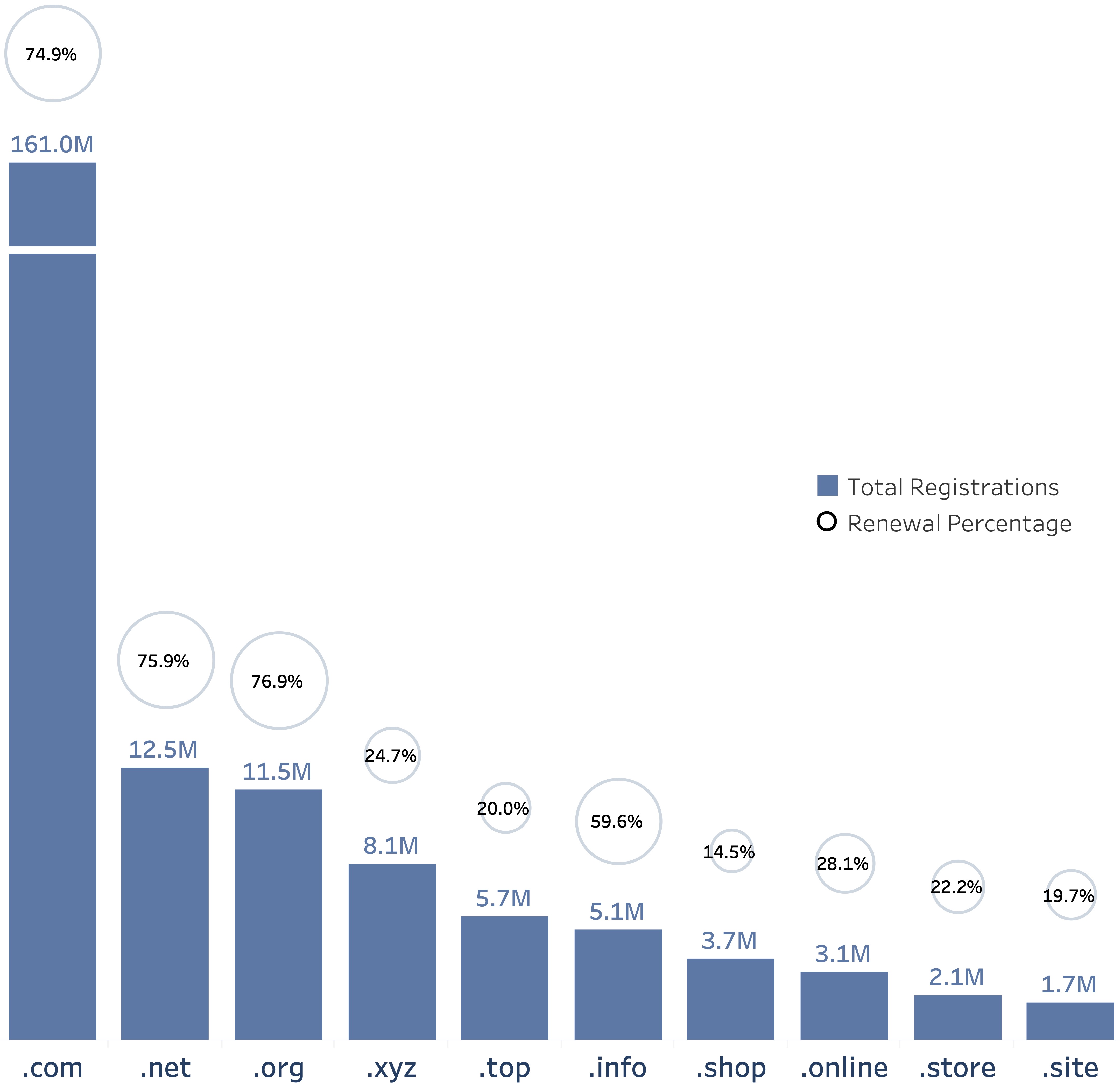
Source: Domain Name Industry Brief (DNIB) Quarterly Report Q4 2025
But as just about any website can adopt it, .com is a weak indicator of authoritativeness. At least, it’s weak relative to the following:
.gov – This TLD is reserved for websites of government agencies. One example is the State Department’s official website at www.state.gov.
.edu – This TLD is reserved for websites of universities and other higher education bodies. Take note that primary and secondary schools don’t use this.
.org – This TLD is reserved for organizations, primarily nonprofits. While not all .org websites are authoritative, at least .org’s use is stricter than .com.
That said, by no means is .com the weakest of the known TLDs. Some like .info and .xyz are not just less authoritative but also considered spammy. Despite being legitimate TLDs, they sadly grew popular among spammers and cybercriminals due to their low cost.
Domain Content
There are two kinds of sources: primary and secondary. Primary sources are content that comes straight from the authority itself, such as the author of a study or an official within an agency or body. Meanwhile, secondary sources are content that reports about primary sources, such as news articles and blog posts.
Primary sources are generally more reputable than secondary ones because of their first-hand nature. However, by that definition, a statement from an interest group—no matter how right or wrong it sounds—can be considered a primary source. That’s why primary or secondary isn’t the only way to classify sources.
According to Amy Guptill, associate dean of the School of Business and Management at SUNY Brockport, sources can also be classified into four tiers.
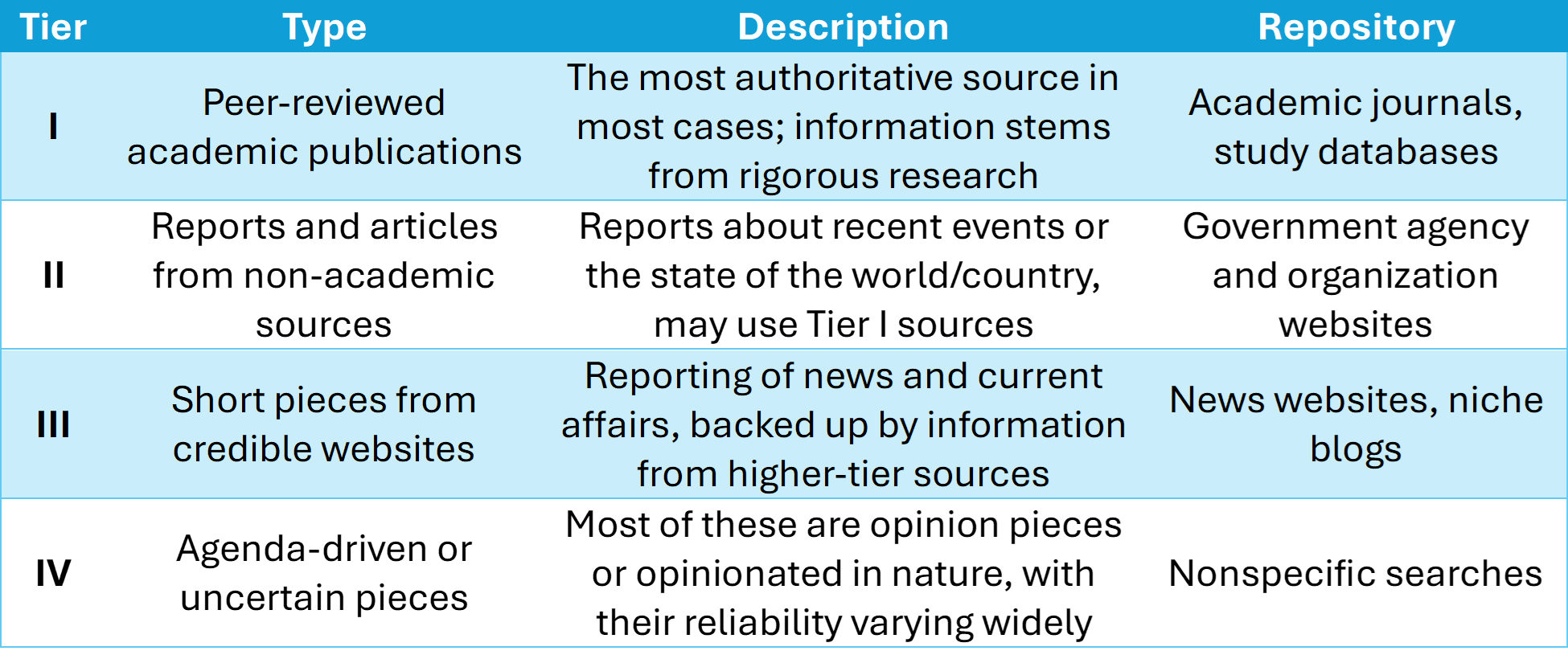
Source: A Dam Good Argument: Persuasive Writing at Oregon State University
While a Tier I source is mostly unmatched in terms of authority, it ultimately depends on the niche you’re writing about. For example, academic studies about SEO are few and far between among Tier I and II sources. At best, most of the details would come from Tier III sources, along with some credible Tier IV ones.
This is one of the reasons giving credit where it’s due is important. You don’t want people to put words in your mouth, especially when your content relies on lower-tier sources.
One more thing: don’t be too dependent on Wikipedia. While a Tier III source, its openness to editing by just about anyone risks picking up misinformation by accident. Instead, use it as a springboard for locating more authoritative sources. And who better to tell you all this and more than Wikipedia itself?
“The structure of the project allows anyone with an Internet connection to alter its content. Please be advised that nothing found here has necessarily been reviewed by people with the expertise required to provide you with complete, accurate, or reliable information.”
Niche Match
In a recent blog post, we discussed the importance of understanding your niche in modern guest posting. A niche match brings several advantages, such as the ease of entry and the ability to run content amid lower competition.
The same applies to locating authoritative websites. A well-known news site may make for an authoritative source, but that won’t always be the case. Going back to the example from earlier, SEO is rarely discussed on general news sites unless it involves a high-profile brand and its black-hat shenanigans.
In such cases, a niche website can be just as authoritative as a news site. In this case, we’d go to sites like Search Engine Journal or Search Engine Land for SEO-related news. General information about SEO, however, can be mostly found in Tier IV sources.
Content Quality
Measuring content quality is something you can’t do with numbers. Metrics can offer hints, but knowing how well-written an article or blog post is involves a deeper dive. You’d have to read the whole piece and weigh in on how the author tackled the topic.
Fortunately, Google gives us an idea through three fundamentals.
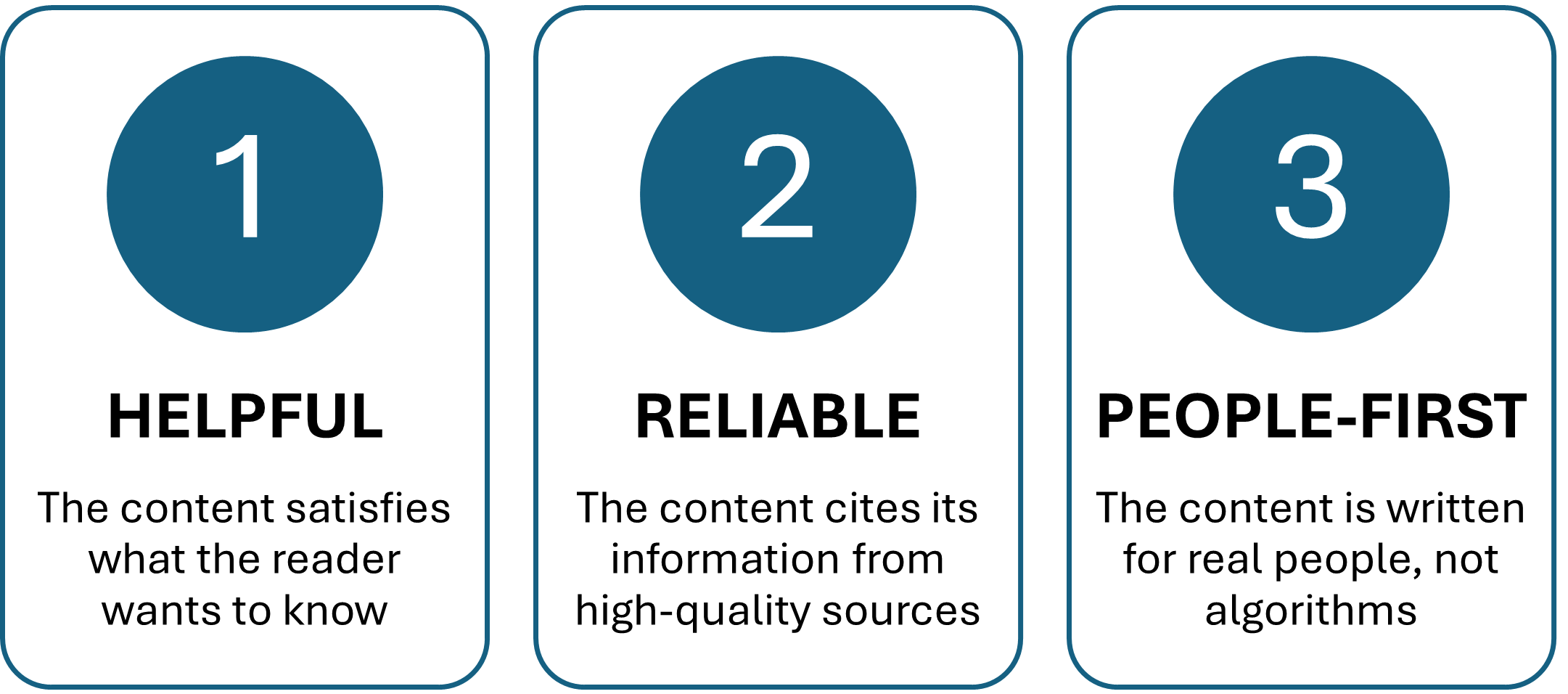
A simple way to check for all three is to put yourself in your readers’ shoes. Assume you’re a user with a burning need to know something. Pick an article (preferably one of the website’s most read) and examine its authoritative sources and its approach to discussing the topic.
If you want a more thorough check, Google has a list of guide questions you can use.
Another way to gauge content quality is through the CRAAP Test. It evaluates a source using five key criteria, hence the acronym.
Currency – how recently the content was posted or updated
Relevance – how close the content is to satisfying your query
Authority – the content author’s credentials and affiliations
Accuracy – how much verifiable information the content uses
Purpose – the content author’s intentions for creating it
Link Profile
The nature of inbound and outbound links is equally important. Authoritative websites can ill afford to resort to black hat SEO techniques, lest they risk driving away visitors and their reader base. In fact, they don’t need it as they’re already trusted sources of information.
We won’t be discussing building a solid link profile in depth here, as we’ve made numerous posts about the topic already. You can check out my updated guide on the necessary types of links in the AI-dominated search environment to get started.
Establishing Authority With Authority
Authority, like many other tenets of a good brand reputation, isn’t given but earned. Building your brand’s authority requires content backed by information from authoritative websites. The process is slow, but it’s the best way to become an authority in your niche yourself.