
This post is an updated version of our brief guide about the types of links that are important for any SEO strategy. Even with the shift to AI-powered search all but certain, links remain crucial for reasons beyond numbers. This updated guide takes today’s search environment into consideration, especially AI.
Back in the old guide on the essential types of links for SEO, I cited that it narrows down to three elements: helpful content, good keywords, and quality link building. That’s because any update to the search engine algorithm almost always involves any or all of them. If not, then it impacts them one way or another.
200 ranking factors? Google debunked that list a long time ago.
Backlinko’s 200? Brian Dean admits that some are speculative.
We’ll never know the full list, as search engines are adamant about taking it to their graves. Nevertheless, those three elements are among the few things we’ve confirmed so far, even if they seem ambiguous. That includes the topic for this post: links.
Are Links Becoming Less Important?
Before we get to the types of links, I feel it’s important to address the elephant in the room. Google stated years ago that links, while still a key part of its algorithm, have become less important. This is reflected in two moves it made within the past decade.
The first was in 2019 when, through Gary Illyes, it announced that it was following nofollow links. More specifically, it changed nofollow from a specific instruction to a suggestion. For publishers, this was a welcome update because it meant that all their nofollow links could receive link equity while Google gets its link data.
This didn’t indicate the link’s declining importance, but it showed how Google treated links moving forward. The March 2024 Core Update brought more than just algorithmic changes; it also featured new descriptions in Google’s spam policies. (1)
Downplaying links from an “important factor” to simply a “factor”
Adding creating low-value content as an example of link manipulation
Explicitly stating outgoing manipulative links as a form of link spam
Adding expired domain abuse to the list of penalizable SEO violations
Adding to these changes is confirmation from Illyes himself, albeit with a hint of regret.
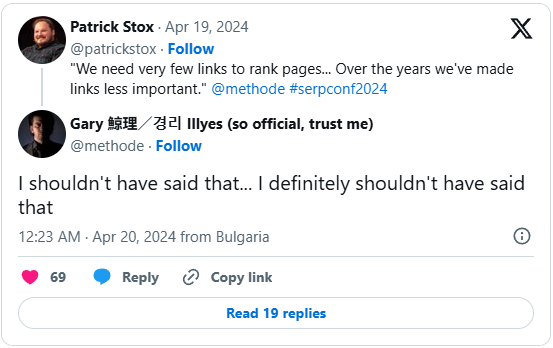
Source: Search Engine Journal
A study by Ahrefs last year revealed this to be the case. However, it also stated that links still matter in certain searches involving queries with: (2)
High search volume (100,000 or more)
Brands as keywords
Local intent
Informational intent
We haven’t begun talking about AI, in which case it turns the tables.
In a study of over 500 pages across 20 industries, Link Publishers discovered that AI loves backlinks. Two out of every five content retrievals by AI models consisted of editorial links, followed by guest posts. This is because AI summaries cite sources as a journalist would credit a name for a direct quote or claim. (3)
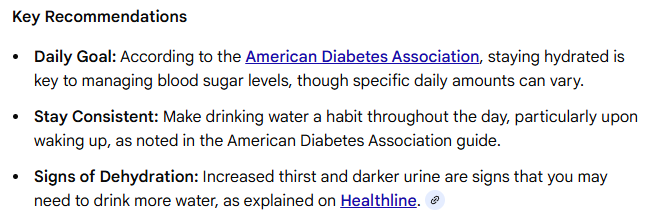
Excerpt from an AI Overview on the query “is water good for diabetes”
Suddenly, links (at least, backlinks) are back in business amid Google deprioritizing them. The study explains that while AI models don’t crawl like search engine crawlers, they look for authoritative content. The richer the link profile, the more likely it’ll attract the attention of the scouring AI model. (3)
It also helps that AI cares little for a page’s ranking. If it deems the page’s content relevant to the query, it won’t hesitate to use the information in its summary. That includes content sitting beyond the top 10 results, once a place where content goes to be forgotten.
Are links becoming less important? Yes as far as traditional search goes, but we’re already moving away from that anyway. The playing field has been slowly shifting from the ten blue links to AI summaries, in which links are still in the game.
What Types of Links Do You Need?
Back in the old guide, we mentioned that you needed backlinks, internal and external links, niche edits, and natural backlinks. But with AI, it’s important not to be content with simply these. There’s still much we don’t know about how AI models pick their sources, let alone citing a brand in their summaries.
Instead of saying “I need backlinks,” you also have to ask yourself, “What kind?” Based on the Link Publishers study, the following types will be valuable:
Editorial Links
Editorial links are a type of natural backlink, the type of link that Google wants to see. As with any other natural backlink, these links are earned rather than asked for or traded for. In this case, they come from bloggers or journalists who linked your content on their own.
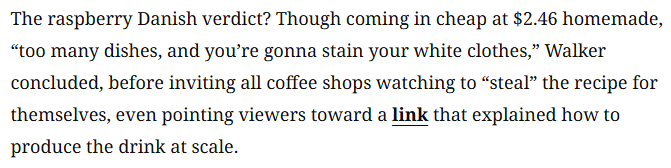
Their positioning also makes them valuable. Proper editorial links are surrounded by the right context, not slapped onto a paragraph for the sake of having them. For example, the screenshot below features a link to a Minnesota coffee shop’s website. The beauty of this is that the publisher, CNN, put it there because of the interesting story behind it.
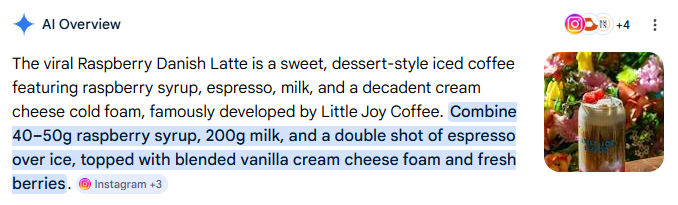
When searching for “raspberry danish latte recipe,” AI Overviews promptly return with a credit to the aforementioned coffee shop.
It goes without saying that editorial links still form the backbone of SEO in the AI era. That said, one downside of this is that they’re hard to earn. Bloggers and journalists go through dozens of pitches sent to their inboxes daily, meaning they only have time for a handful of them to write about. Then again, no one said earning natural links was easy.
Guest Post Links
Guest posting is no stranger to being declared “dead.” Despite this, it continues to be a widely used SEO technique because of what I said about earning natural links. The time spent waiting to get one is better spent on working to earn one by getting your content published on a third-party website.
Let’s get one thing straight here: guest post links aren’t natural. They’re primarily earned through participating in a publisher’s contributor program or, if there isn’t one, pitching topic ideas to the publisher. The link is generated when the article goes live.
Guest post links aren’t natural because you asked—and in many cases, paid—for them. This doesn’t make them any less useful, even in AI-dominated search. For one, content creators have more options because well-known news sites aren’t the only ones offering guest posting (if any). You also have niche blogs, local news sites, and business websites.
Speaking of niche blogs, guest posting becomes easier when aiming to publish content on niche sites. A person in the market for a new car is more likely to visit a car-related website (e.g., Car and Driver, MotorTrend) than a general news site like the New York Times.
However, if you want guest posting to work, you have to stop living in the past. The industry has made it clear that the old ways, from mass emails to article spinning, no longer work. Brian Dean of Backlinko sums it up best:
“Be an expert first, link builder second.”
This means prioritizing building a reputation as a niche or industry authority. Don’t fret too much over what the numbers say; instead, focus on creating and publishing content that your customers want to see. Even if AI doesn’t use it for generating a summary, the trust it garners will have compounding effects on search and AI visibility over time.
Digital PR
An executive at a PR agency once said, “PR has been responsible for supercharging SEO for years and just never took the credit.” To be accurate, they heard that from someone, but I couldn’t find the original (even after running an exact search).
Well, whoever it was, Rand Fishkin (formerly of Moz) concurs with that statement. In his blog post on SparkToro, where he currently works, he stated that public relations (PR) is the medium that reaches out to a diverse media. Social media, newsletters, podcasts, content subscriptions—all are reachable through PR. (4)
He also said that this also applies to AI. He wrote: (4)
“The ability to influence how people write about, talk about, and publish about you on the web directly impact how AI tools respond to questions about your brand, your field, and whether they include you when prompters ask about the problems you solve.”
It’s these changes over the years that cemented digital PR as an important, if not the main, approach to modern SEO. To put it simply, digital PR links are between guest post links and editorial links. Their content quality is a step above that of regular guest posts, but they’re earned through active outreach.
There are several ways to do digital PR, one of which is called newsjacking. As it implies, it involves hijacking current news or viral stories by providing a unique take or spin on them—case in point: Budweiser during the 2022 World Cup.
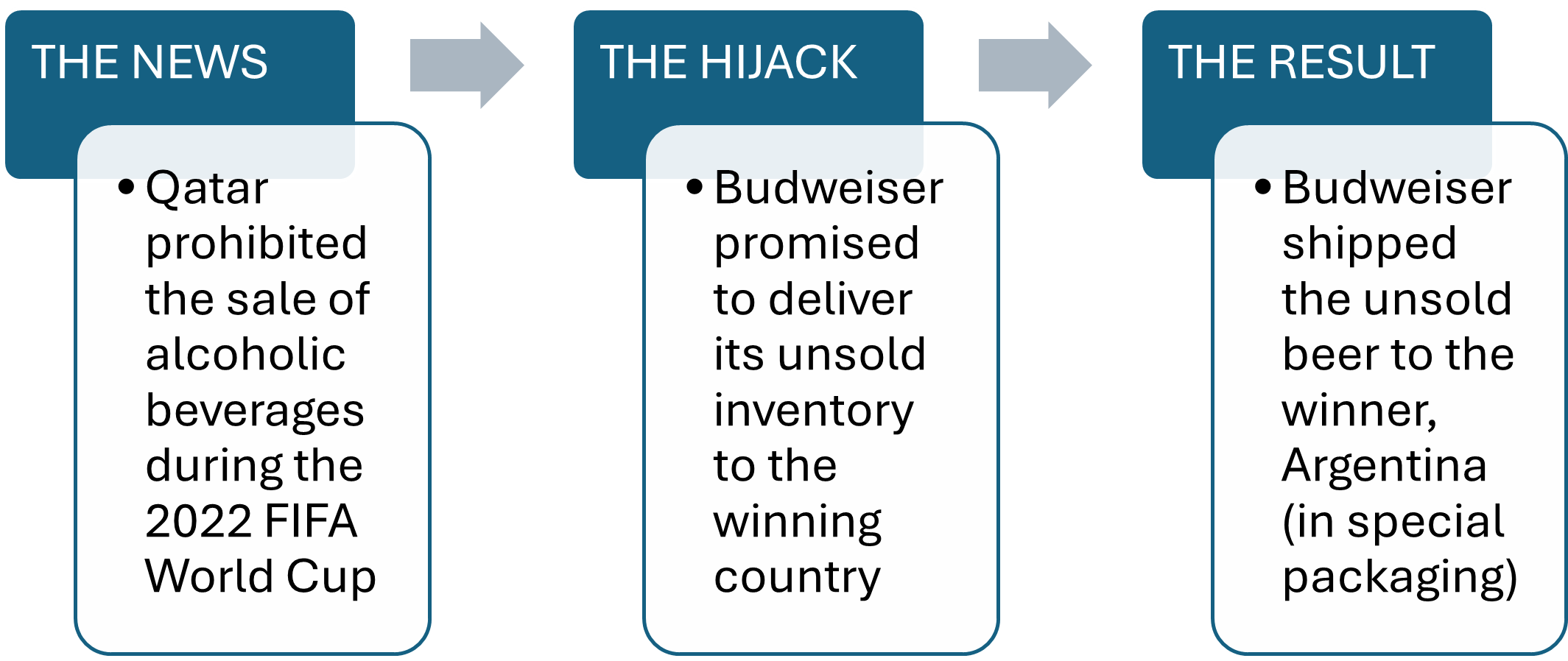
Newsjacking relies on the moment following the breaking news to score PR points. When done right, the campaign will be talked about long after its end. But one mistake and the campaign will be talked about long after its end for the wrong reasons. And whatever the outcome will affect the AI’s returns.
What About Internal Links?
Internal links are an enigma as far as AI visibility is concerned. Unlike external links, AI assesses internal links by topical depth or how well a piece of content covers a subject. The more extensive the coverage, the more authoritative the source is in AI’s eyes.
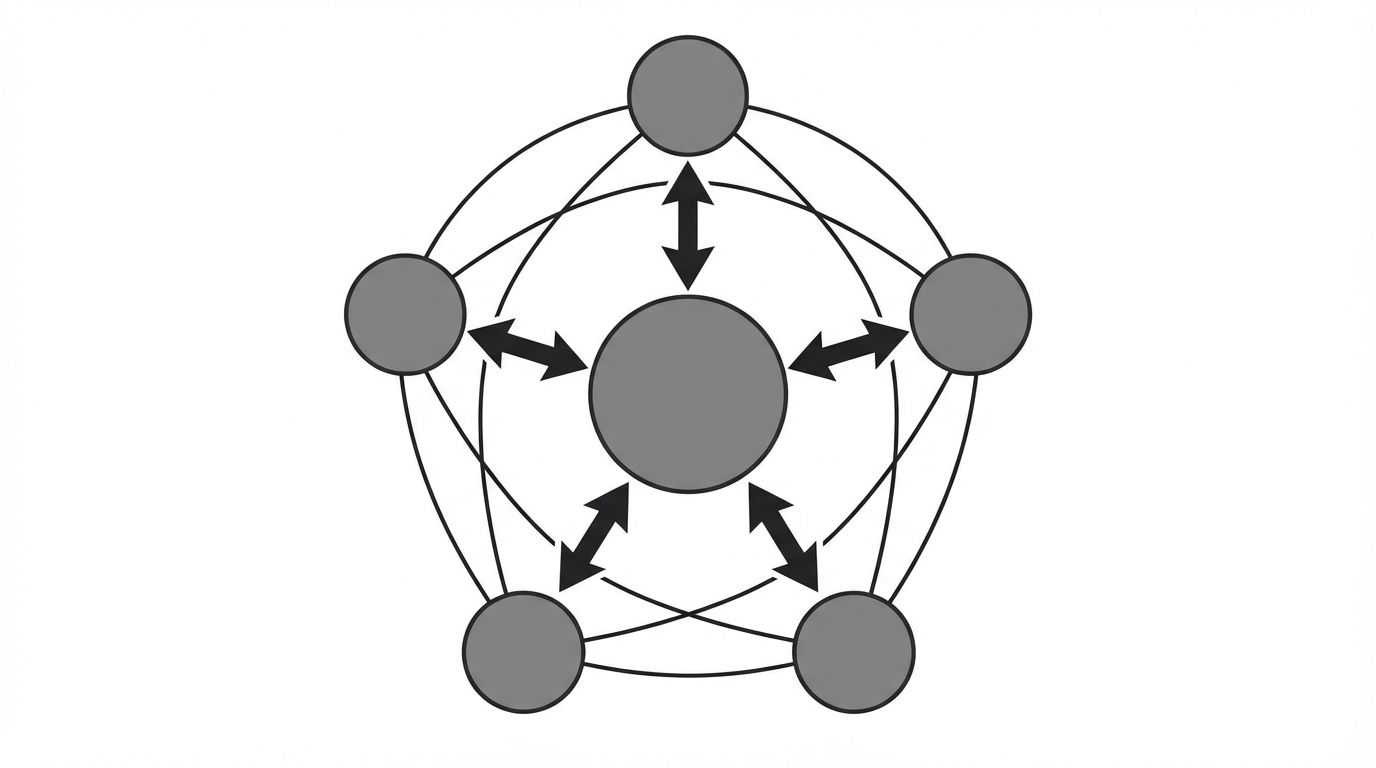
Again, placing internal links in an article or blog post isn’t enough. The internal pages the content links to have to make sense for AI models. James Calloway, SEO and generative search consultant for Geology, said internal linking for AI visibility begins with a readable topical cluster, like the diagram below.
Source: Geology
At the heart of this cluster is the pillar page, which points to an encompassing topic (e.g., link building). From there, it branches out to multiple supporting pages covering multiple related topics (e.g., internal link building, broken link building). These pages are then cross-linked to other pages for easier navigation and indexing.
It’s important to think strategically when cross-linking. Link pages only when they make sense, and avoid overdoing it. Based on Calloway’s analysis of AI-cited websites, a good topical cluster should possess the following characteristics:
Five to eight supporting pages (any higher, and it risks dilution)
A supporting page links to at least two other non-orphan pages
The link between the pillar and supporting pages goes both ways
Are Niche Edits Still Good?
Not as much as it used to be.
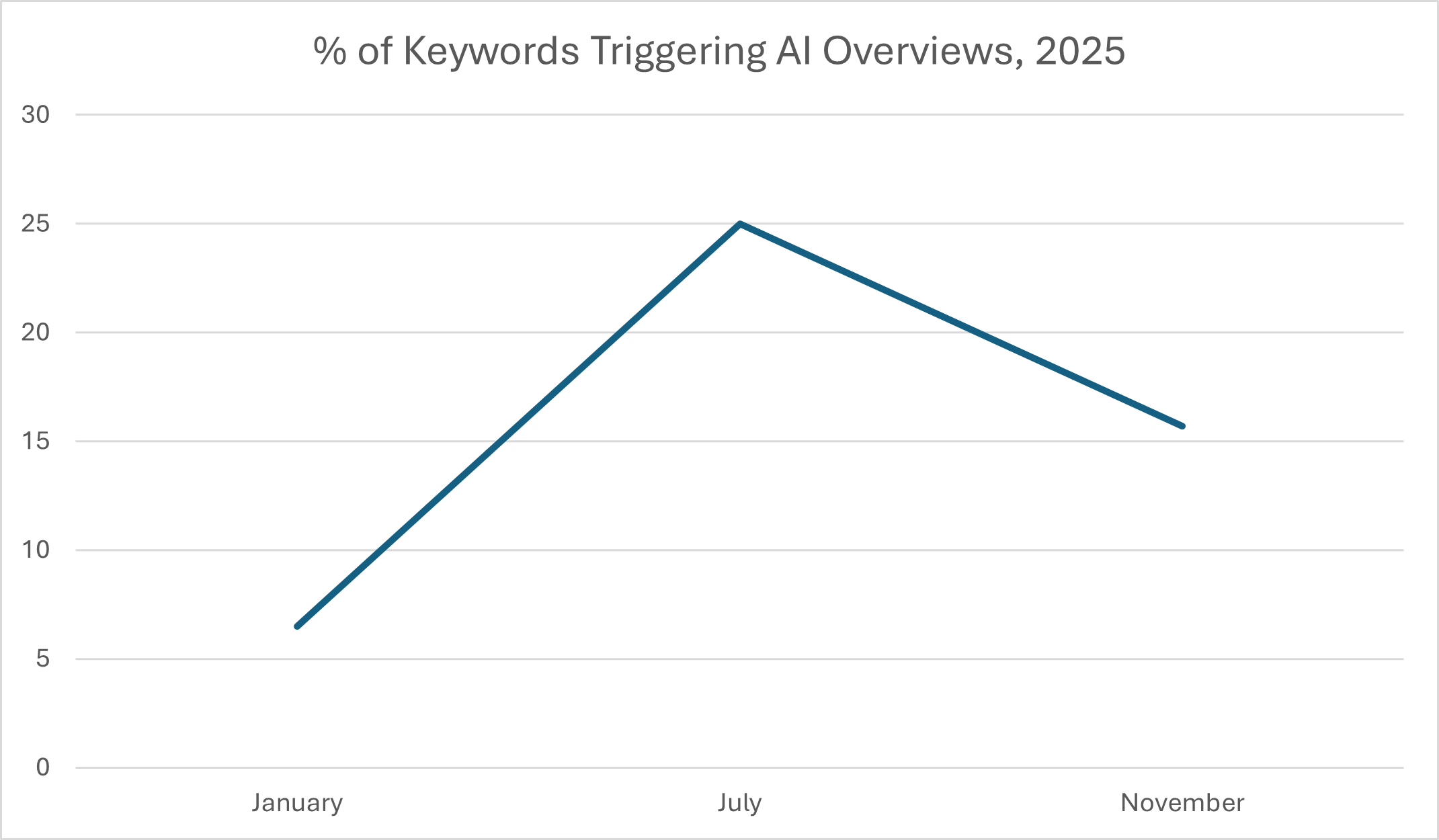
Despite being one of the simplest approaches to link building, niche edits are at a serious disadvantage in AI-dominated search. This is because AI models prioritize editorial brand mentions, especially digital PR, in retrieval.
That said, instances of triggering AI summaries are still erratic.
Data source: SEMrush
As things stand, niche edits are still rather useful for traditional ranking. However, don’t expect them to be a game-changer in AI visibility.
Start Link Building for AI
AI summaries are more or less the future of search. To that end, modern link building has to be tailored for them rather than search rankings. Start by working on the right links that AI models use.
References:
1. “Google March 2024 Core Update: 4 Changes To Link Signal,” Source: https://www.searchenginejournal.com/google-march-2024-update-4-changes-to-link-signal/510322/
2. “Google Says “Links Matter Less”—We Looked at 1,000,000 SERPs to See if It’s True,” Source: https://ahrefs.com/blog/links-matter-less-but-still-matter/
3. “Backlinks and the AI Visibility Curve: What Link Publishers' 2025 Study Shows About How LLMs Choose Brands,” Source: https://linkpublishers.com/blog/backlinks-and-ai/
4. “Unpopular Opinion: Public Relations is the Future of Marketing,” Source: https://sparktoro.com/blog/unpopular-opinion-public-relations-is-the-future-of-marketing/