
KEY TAKEAWAYS:
Getting AI to mention (and cite) a brand can be tricky because AI is focused more on answering questions than advertising.
Brand mentions are the first step in improving visibility across AI-generated answers, whether in AI Mode or chatbots like ChatGPT.
Some measures for improving AI visibility include tracking unlinked mentions, using semantic code, and fixing broken links.
The most coveted spot in search is no longer the top-ranked result. It’s the section above it.
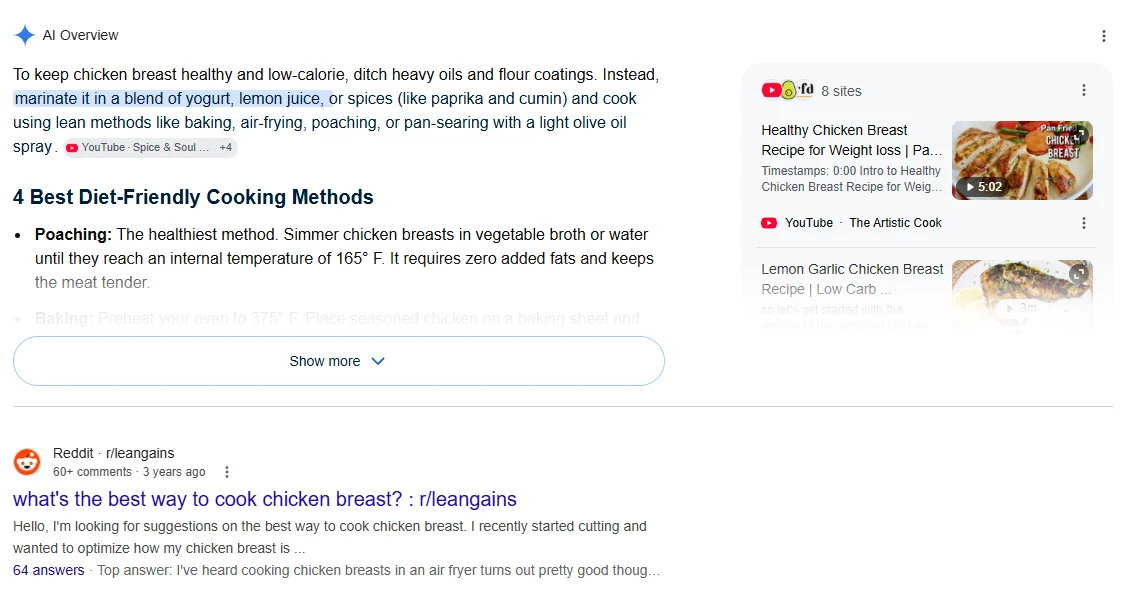
Once home to featured snippets and certain schema types, this part of the results page now houses a different beast: AI summaries. The steps are more or less the same: users input their query and wait a second or two for results. But unlike the traditional “ten blue links,” AI summaries already have an answer prepared.
Although the results aren’t always perfect, an AI summary’s key advantage is convenience. Users don’t have to scour results page after results page for the content they’re looking for. No matter how complex the query is, AI can deliver answers straight to the point.
And that’s a problem, at least to businesses.
With users being fed answers directly, they hardly have a reason to visit the website. These “zero-click searches” have only grown over the years, accounting for 68% of all searches in 2026 from 45% a decade prior. No clicks, no traffic. (1)
Whether all searches will be zero-click in the future is still anyone’s guess, but one thing’s clear. Search visibility in this day and age boils down to whether AI can pick up the brand’s name at all. In this first of a three-part guide, we’ll discuss how to gain the upper hand in AI search by improving your brand’s probability of getting mentioned.
How AI Mentions Brands
Before we get to the meat of the matter, know that brand mentions occur in two ways.
The first is, well, a brand mention. As the term implies, this happens when the AI summary states the brand associated with the information it retrieved. They can either be mentioned plainly or carry links to the source, though the former is more prevalent.
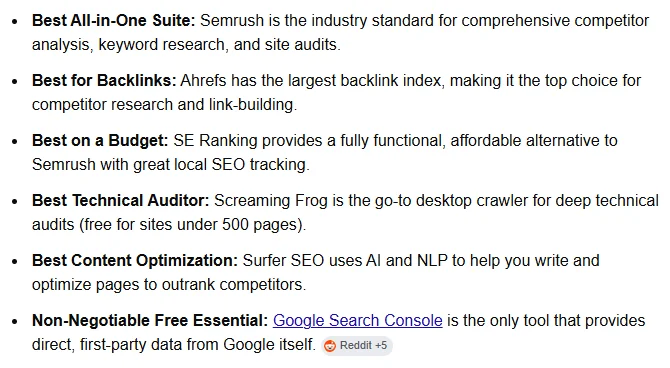
Google AI summary. Search query: “best SEO platforms”
The second is called a brand citation. Instead of a direct mention, the summary appends a collapsible list of sources at the end of an item or paragraph. This form of brand mention is more common in informational intent searches.
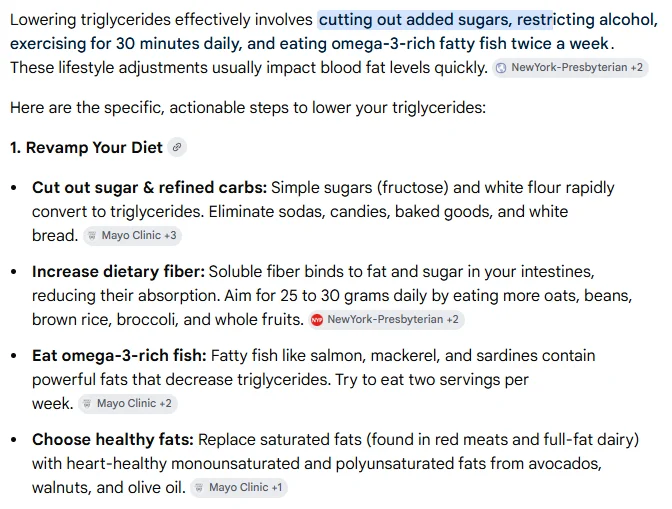
Google AI summary. Search query: “how to reduce triglycerides”
Despite both being used, AI models use brand mentions more often. In a BuzzStream study of 12,000 AI responses across several models, researchers discovered that 7 out of 10 have citations with mentions. The rest are mentions with citations. (2)
The huge disparity can be attributed to several reasons, one of which is the type of content retrieved. Vince Nero, director of content marketing at BuzzStream, wrote that the majority of sources that AI uses come from third-party websites. (2)
One isn’t better than the other; they cover for each other’s respective drawbacks. Mentions are more visible in AI summaries than citations, especially when a brand isn’t the cover (as in the first on the citation list). Meanwhile, citations provide an opportunity for mentions to attract leads to the brand’s website.
Another reason you need both is the volatility of AI search. Even with brand mentions and citations working together, an AirOps study shows that less than a third of brands remain visible between AI responses. Your brand may appear in a summary today, but it might not be there anymore tomorrow. (3)
The silver lining is that over half of brands that drop off in the first run can resurface after a couple of runs. This is because AI models are constantly learning, rotating between brands to diversify and improve their outputs. That said, this requires action on your part. (3)
How to Get AI to Mention Your Brand
Before we discuss the steps you can take, let’s be clear about one thing first.
“There are no guarantees in SEO—including AI search.”
There’s no way to manipulate a model into favoring a source that’s short of poisoning its data. You can have the best content on the Internet, but the AI won’t always choose and use it. As with old-fashioned SEO, we can only improve our odds in AI search.
Now that’s out of the way, here’s how you can improve your odds.
Dealing with ‘Ghost Citations’
SEMrush states that 62% of AI citations are what it calls ghost citations. The AI uses these sources to generate its answers, but it doesn’t mention the brand that created the content. A closer look at the numbers by model and function puts things in perspective.
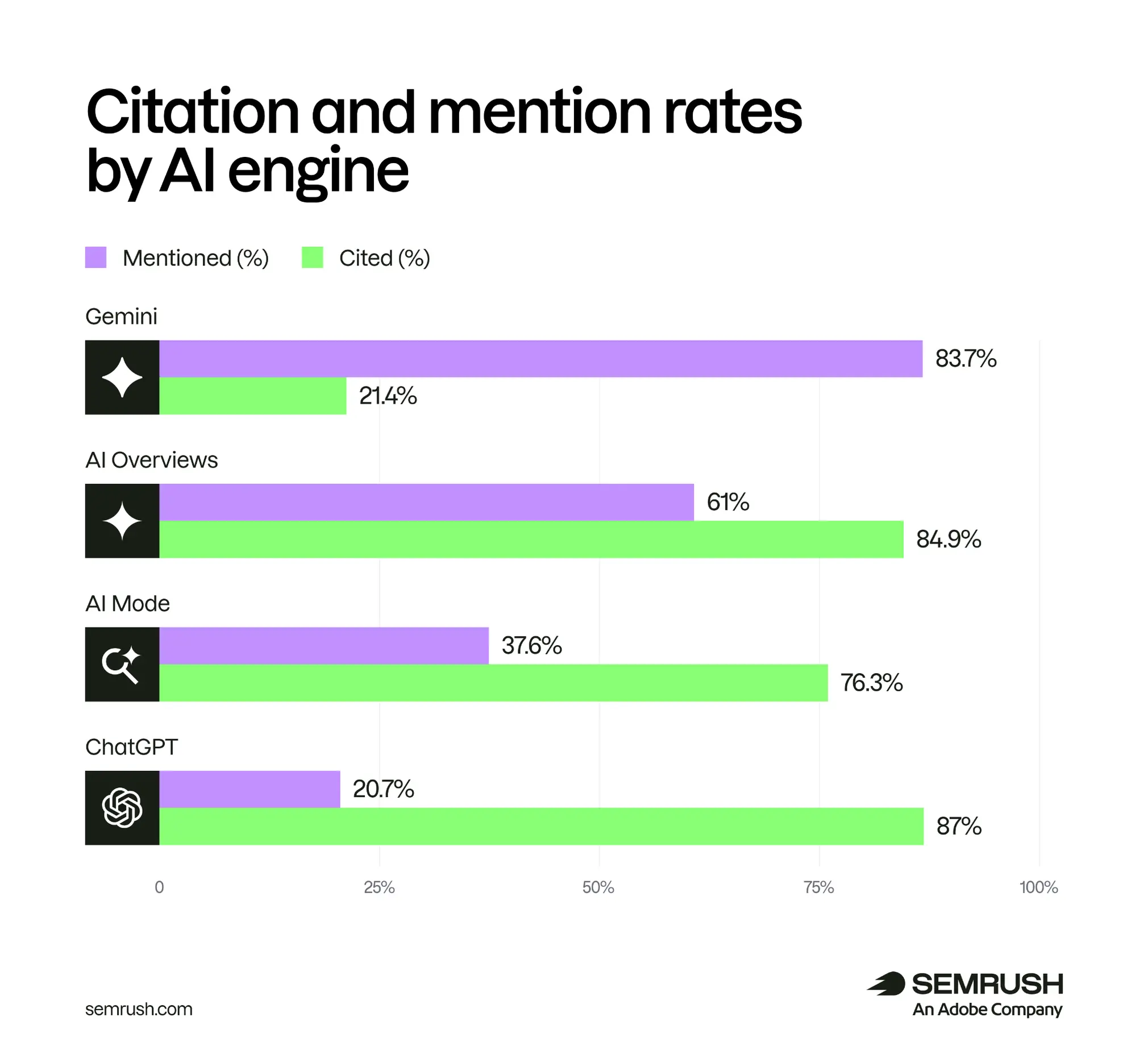
Source: SEMrush
Experts agree that AI works this way because it doesn’t see the point in mentioning a brand name. If I search for information, I normally won’t mind who said it or where it came from as long as it makes sense. It’s a different story for Your Money Your Life (YMYL) searches, given that a brand mention helps with accountability and credibility.
“That’s easy, just create more content.” Wrong.
It’s not about how many you can make but how well they read. Insights vary on how to deal with ghost citations, much less achieve AI visibility, but experts agree on several key points.
One approach involves tracking unlinked mentions, which are brand mentions that don’t have backlinks, in third-party content. SEMrush explains that, together with link building, linking mentions can help the model familiarize itself with your brand. The more frequently it sees your brand on the Web, the more likely it’ll get a mention.
This doesn’t mean linking every mention you come across. Maintaining organic link building is still crucial, as going overboard can flag your content for link spam. Consider factors like context, relevance, and the content’s potential to build partnerships.
Helping AI Understand
For all its sophistication and processing power, AI is not the human brain. It lacks the ability to understand nuance, which has been a key element of search for years in the form of user or search intent. Leave it to interpret a user’s intentions on its own, and it’s bound to return inaccurate information most of the time.
As such, humans have to help it along by optimizing the content structure. And I’m not just talking about keeping jargon to a minimum or something like that. It goes deeper.
Enter semantic HTML.
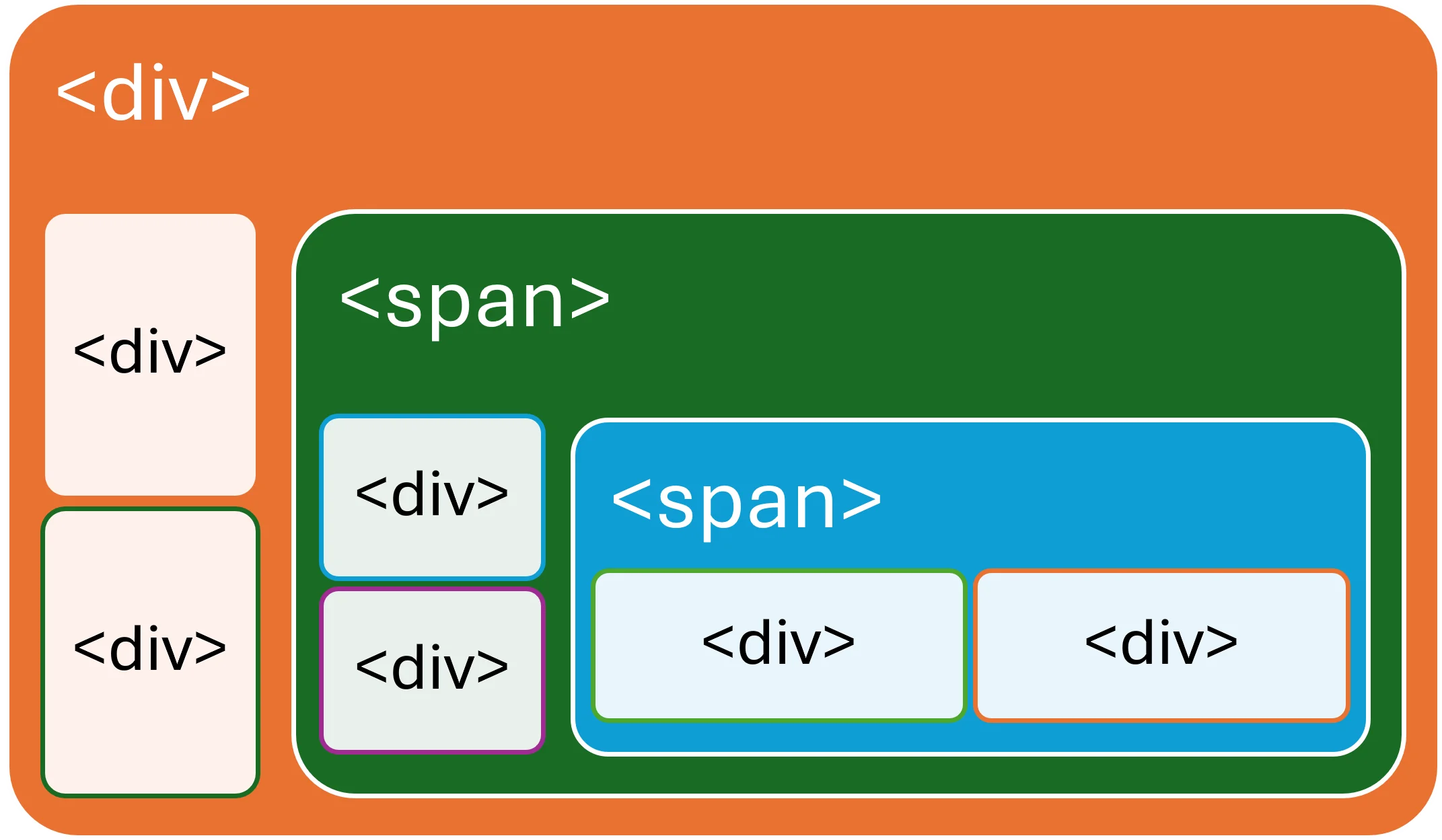
Example of a non-semantic page structure
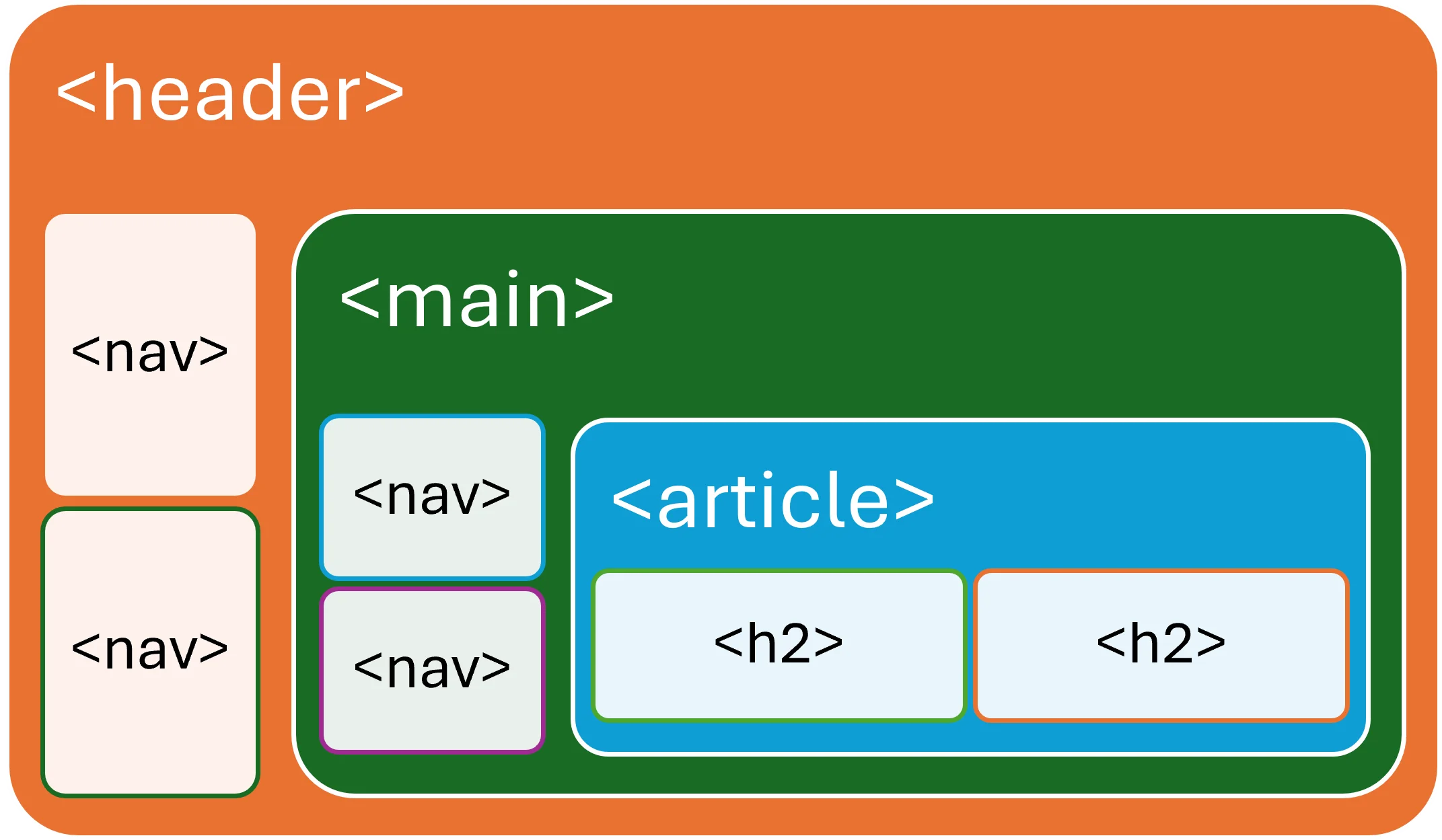
Example of a semantic page structure
Semantic HTML solves an age-old dilemma: what does each <div> or <span> indicate? It’s hard to tell when webpages are coded this way. If a person can’t understand what the heck <div> is supposed to mean, how much more will an AI model?
By replacing these generic containers with more specific ones, AI can identify and retrieve information more effectively. It also helps with accessibility, as semantic HTML also works with devices such as screen readers.
There’s really no reason not to adopt semantic HTML. Anyone using a content management system (CMS) should already know that they’re doing it to some extent. A notable example is the header tag, where <h1> is the post title, <h2> is a subsection title, and so on.
Fixing What’s Broken or Missing
Sometimes, the problem affecting a brand’s AI visibility is hiding right under your nose.
This is what Webflow found in its study of over 2,000 US-based websites. Across several AI models, it stated that the median brand only gets mentioned in 16% and cited in 6% of AI-generated answers. When it’s mentioned, it gets the information wrong 33% of the time. (4)
However, it identifies the root causes—and they’re simpler than we imagined. (4)
Broken internal links: Broken links impact crawlability, which makes sense given that AI and search crawlers share the same technology. Use an all-in-one SEO tool to scan your website for such links and replace them with fresh or working ones.
Missing SEO metadata: Metadata like meta titles and descriptions may not look much, but they’re among the few things that AI understands. Never skip creating these short but crucial pieces of valuable information.
No content refresh: Over half of the surveyed brands were discovered to have not updated their content in the last six months. While some topics don’t need to keep their articles evergreen as often, AI tends to favor new content.
These problems were also a pain in the neck in the pre-AI era, so there’s no reason not to do them in this day and age. Fixing these issues can contribute to brand mentions.
The First Step’s the Hardest
Achieving AI visibility is a steep climb, and the first step is the hardest. It entails convincing the model that mentioning your brand in a specific context is necessary—something it isn’t designed to do. However, countless examples on the Web have shown that it’s possible.
In the next part of this three-part series on AI visibility, we discuss how to build authority in your industry or niche. Stay tuned to our blog for updates.
References:
1. “In 2026, Less than One Third of Google Searches Still Send a Click,” Source: https://sparktoro.com/blog/in-2026-less-than-one-third-of-google-searches-still-send-a-click/
2. “How AI Mentions and Cites Your Brand (New Study),” Source: https://www.buzzstream.com/blog/ai-mentions-vs-citations-study/
3. “The 2026 State of AI Search: How Modern Brands Stay Visible,” Source: https://www.airops.com/report/the-2026-state-of-ai-search
4. “Webflow Research Finds Most Companies Are Unprepared for the AI Discovery Era,” Source: https://www.globenewswire.com/news-release/2026/07/16/3328420/0/en/webflow-research-finds-most-companies-are-unprepared-for-the-ai-discovery-era.html