
Remember when the SEO industry advised people to get good keywords for their content? When it also suggested ranking for long-tail keywords over short-tail ones because of low competition? Yep, those were the days.
So when this year’s Google I/O rolled around, it dawned on me. Keywords are dead.
Make no mistake: entering keywords on search engines still works. However, they no longer play a key role in search as they did in the past decade or two. User behavior has drastically changed as users have begun asking full questions rather than simple words and phrases.
Does that mean things like keyword research are also dead? Far from it. Let me explain.
Move Aside, Moore’s Law
In 1965, a guy from Intel named Gordon Moore calculated how a chip’s computing power would grow over the next several decades. He projected the growth rate to double yearly, with chips getting smaller but containing more transistors than their predecessors. You’re already seeing this in action, from storage drives to smartphones.
But AI was like “I’ll do you one better” and turned the graph from this…
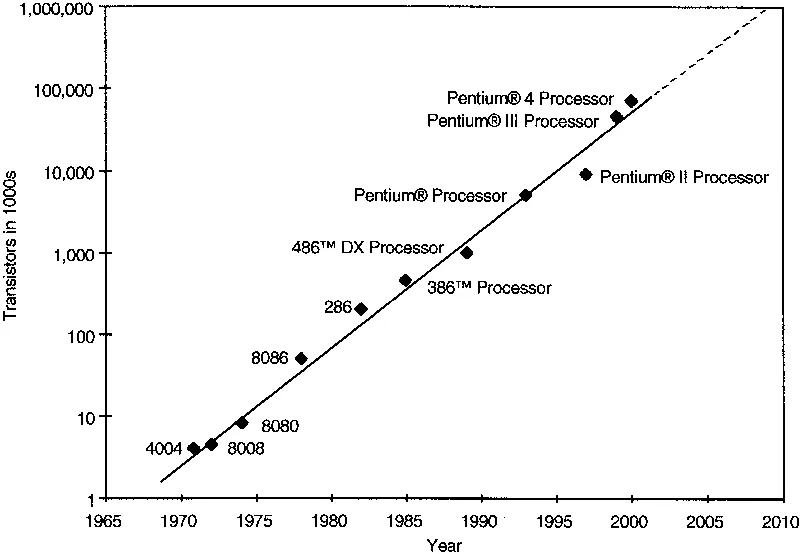
Source: Vanston, J. H. (2003)
…to this.
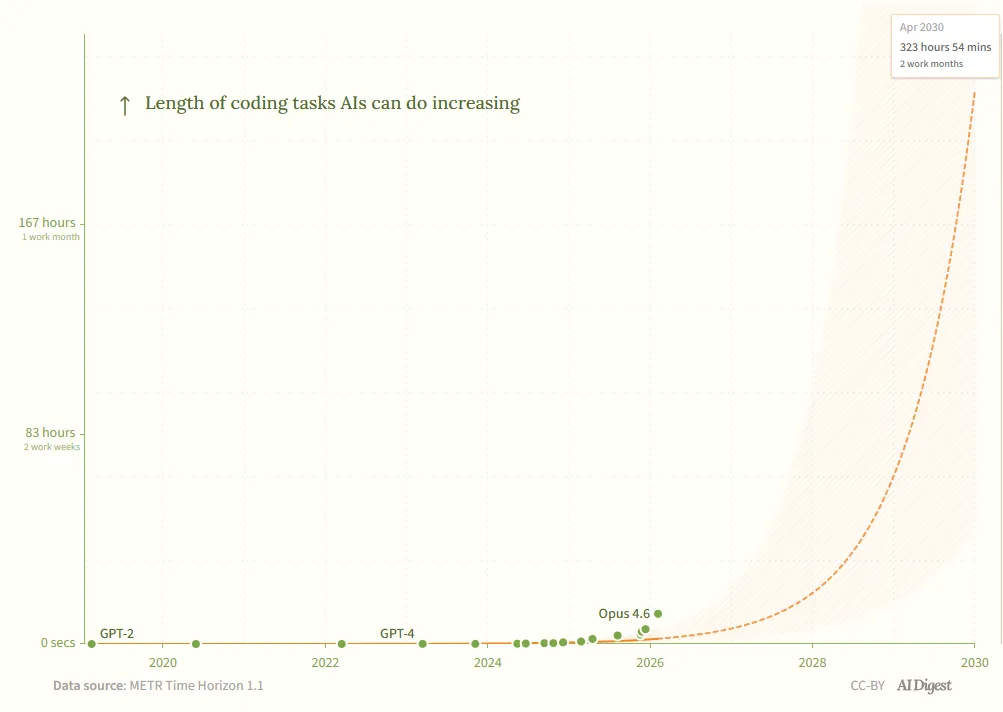
Source: METR Time Horizon 1.1 (c/o AI Digest)
Yes, you’re looking at a hard spike in AI’s capabilities. According to estimates, AI models in 2027 would be capable of completing a workday’s worth of coding tasks. By 2028, it’ll be a full workweek. By 2029, it’ll be a full work month.
What does this have to do with search? One of the key announcements in the latest Google I/O was the latest iteration of its AI model, known as Gemini 3.5 Flash. It boasted the model as the first of its kind to combine “frontier intelligence with action.” Barring the AI jargon, it can process far more data and deliver far more accurate results in far less time.
While mainly designed for developing AI agents, Gemini 3.5 Flash is also integrated into AI search. Elizabeth Reid, Google VP for Search, wrote in The Keyword:
“It’s [Gemini 3.5 Flash] more intuitive than ever, dynamically expanding to give you space to describe exactly what you need. Designed to anticipate your intent, it also helps you formulate your question with AI-powered suggestions that go beyond autocomplete. And you can search across modalities, using text, images, files, videos, or Chrome tabs as inputs.”
Glossing over the irony of the blog called The Keyword, the model further proves a change that has been going on since AI search was introduced. Keywords aren’t the only method people can use in search anymore.
On top of the new model, Google also integrated AI Overviews and AI Mode into a seamless search system. No need to head to the latter separately. After getting your answer through AI Overviews, you can use the text box at the end to type a follow-up query.
Keyword Search Has Limitations
Keywords weren’t just how we’ve been using search for the longest time. Search engines that predate Google like AltaVista and Infoseek relied on exact keyword matches to return accurate results. Over time, the system outgrew the confines of keyword search, allowing search engines to work with context aside from exact matches.
Despite working for us from the start, keyword search still has limitations. For starters, it has a high chance of returning irrelevant results, also called false positives. For example, searching for “aids” will return information about HIV/AIDS.
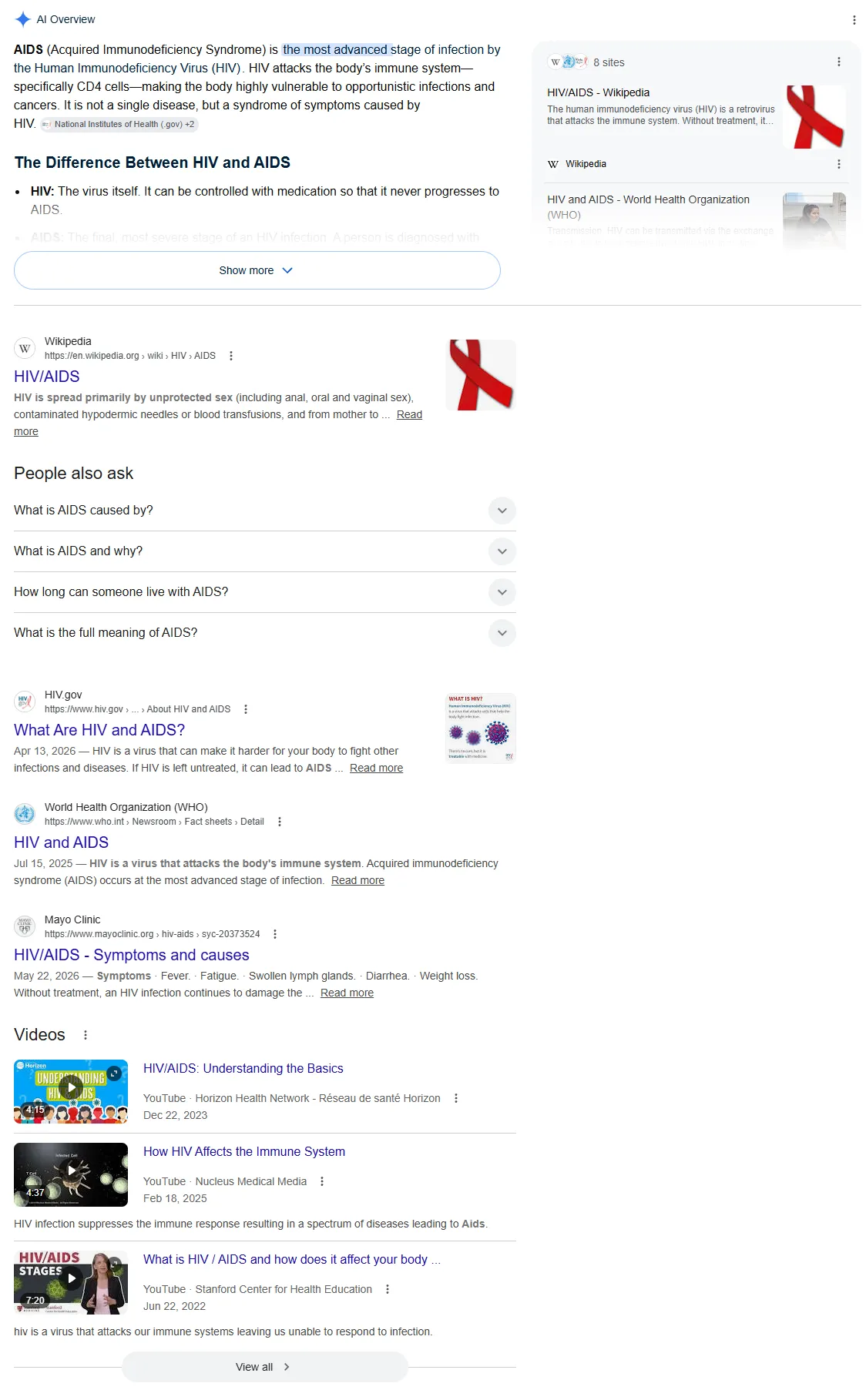
Semantic search made this possible, which is a key element for building AI search models. Without it, Google would’ve returned results about “medical aids” or “hearing aids,” among other things. If it were way earlier, it would’ve produced any result with the word “aids.”
A single keyword or key phrase isn’t usually enough to express a user’s curiosity. Searching for, say, “best running shoes under $500” isn’t as thorough as “I need a good pair of running shoes under $500 that won’t hurt my feet.”
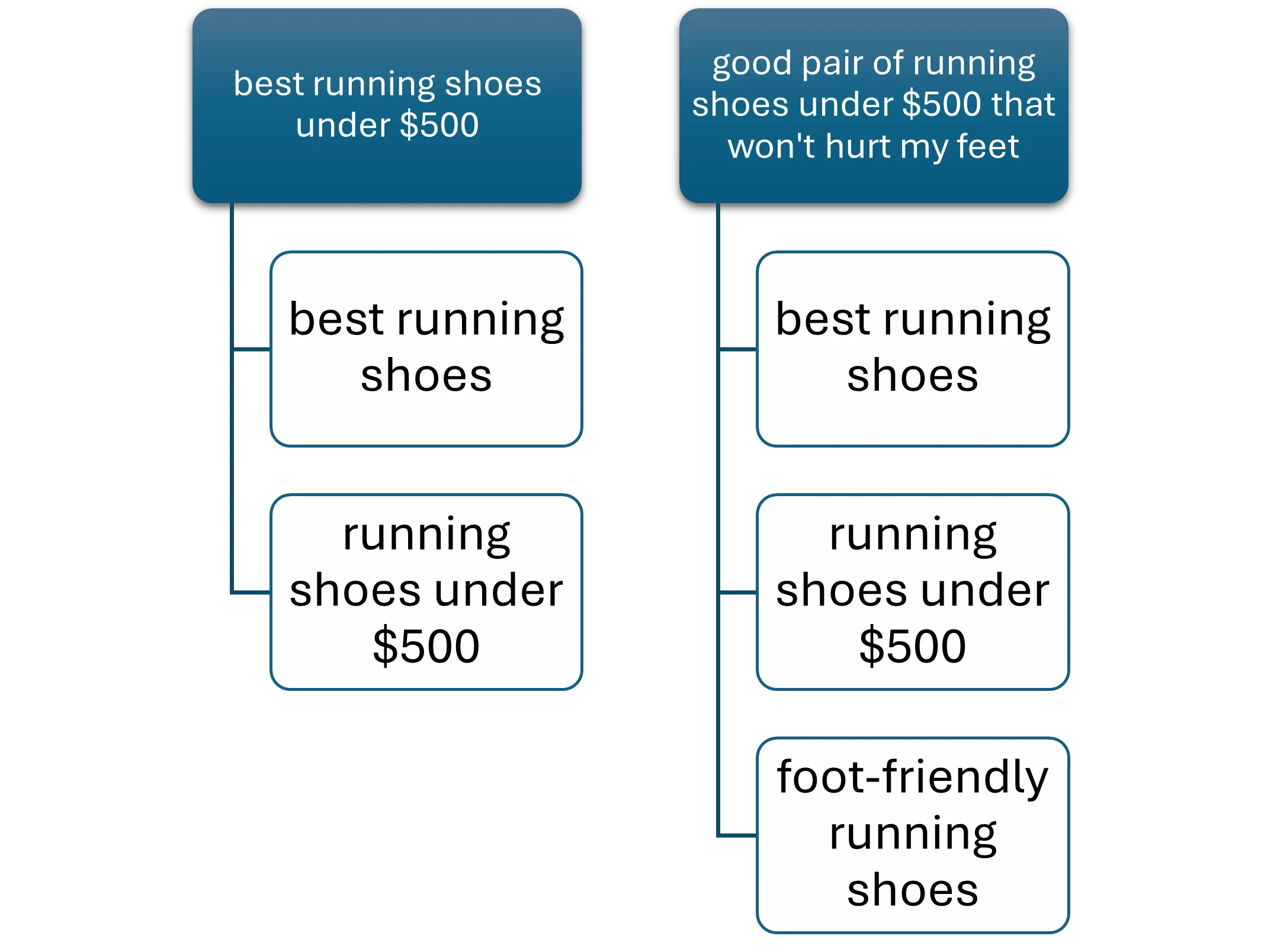
If you try the latter in a search engine that uses exact matches, the results will likely contain any of the keywords but not necessarily all. And while later search engines have been made to use multiple keywords in a query, understanding context remains an issue.
Lastly, as mentioned earlier, keywords aren’t the only way we use search engines anymore. There’s a vast range of modalities from voice to even real-time vision, the latter of which is proven with the announcement of two new models of intelligent eyewear. The first of these, audio-enabled smart glasses, is scheduled for a fall 2026 release.
We’re all too familiar with voice search at this point, having used Alexa or Siri at the palm of our hands or in the comforts of home. But it’s the later models that have people talking. It’s believed to feature the ability to run a search just by looking at whatever’s in front.
This is convenient, as keywords don’t always accurately describe what you’re looking for.
Keyword Research Still Matters
With AI all but taking over, the question on marketers’ minds is whether keyword research has been rendered pointless. But you should know that keyword research has long moved away from exact matches as a goal. Yes, even when AI was still in its experimental stages.
Yes, we published a guide on keyword research three years ago and talked about stuff like long-tail keywords, short-tail ones, etc. We even recommended looking for untapped ones as ranking opportunities. While that post is still a good read today, it’s less a matter of what keyword people are using and more about why they’re using it.
To that end, keyword research can be helpful in determining the search intent behind every query. We’ve discussed search intent a couple of times in this blog, but as a refresher:
Informational: Finding an answer to the query or learning about a topic
Navigational: Searching a particular website or page within the domain
Commercial: Comparing products and services among multiple brands
Transactional: Finding out how to purchase a specific product or service
However, even these need to be updated because of the way AI search works. According to Konrad Wolfenstein, industry influencer and award-winning business innovator, AI works by generating subqueries and collating them in a summary. Examples include:
Semantic expansion: Searches for synonyms and other alternative terms
Intent-based variants: Evaluates the user’s intentions with the query
Conversational and follow-up: Draws up responses in case of a deep dive
Entity-based reformulations: Looks for relevant brands, products, locations, etc.
Regional and contextual: Accounts for the user’s location, date and time, etc.
Understanding how AI searches for results is crucial if you want it to mention your brand or link to your content. Fortunately, the platforms often used for keyword research can still be helpful. Just don’t focus too much on the numbers.
Time to Think Outside the Keyword
If keywords are still your primary means of ranking, you may want to change that. AI search will only grow more sophisticated in understanding queries, leaving exact match keywords in the dustbin of SEO history. Instead, think about how a user will search for your content—and how AI will present it to them.