
Buying backlinks for a podcast website is not worth it as a shortcut to Google rankings; paying for relevant, disclosed sponsorships is a different decision, justified by audience value rather than promised SEO gains. In 2026, judge a paid placement by the listeners, subscribers, or business inquiries it brings—not by a seller’s promise of ranking credit.
- Is it worth buying backlinks for a podcast website? Not as a paid ranking shortcut; assess sponsorships separately.
- Google treats paid links intended to manipulate rankings as link spam; sponsored links need appropriate qualification.
- Podcast link building starts with useful episode pages, guest outreach, and relevant editorial coverage.
- NO-BS Marketplace serves SEO professionals and agencies sourcing publisher placements; platform access does not remove paid-link risk.
Why this matters
Your podcast website and your listening audience need separate measurement. A referral visit is not automatically an episode play, and an outbound click to a listening app is not proof of a completed listen.
That distinction changes what you should buy. A placement aimed at reaching relevant listeners belongs in a sponsorship plan; a placement sold solely as ranking credit creates a different risk. Before paying a publisher, use a publisher-site audit to assess the actual publication, not just its domain metrics.
For your 2026 campaign, define the outcome before choosing the placement. Otherwise, a report full of live links can hide an audience result you never measured.
Is it worth buying backlinks for a podcast website?
Not if the purchase depends on a paid link passing ranking credit. Google Search Central’s spam policies classify buying or selling links for ranking purposes as link spam. Its link-qualification guidance calls for advertising and paid placements to use rel="sponsored"; nofollow remains an acceptable way to qualify paid links.
Paying someone to research journalists, develop a pitch, or write useful content is not the same as paying a publisher for ranking credit. Assess what the payment actually secures. Calling a purchased link “editorial” does not change the arrangement.
| Approach | Best for | Main benefit | Main drawback | Recommendation |
|---|---|---|---|---|
| Paid ranking links | No recommended podcast SEO use | Secures a purchased placement | Conflicts with Google’s spam policies when intended to pass ranking credit | Skip |
| Disclosed sponsored content | Reaching a relevant publication’s audience | Provides a paid distribution opportunity | Referral and listener results remain uncertain | Assess as advertising |
| Earned editorial coverage | Podcasts with useful expertise or original material | Gives publishers a genuine reason to cite the show | Publication and links are not guaranteed | Prioritize when there is a strong story |
| Guest and partner outreach | Shows with relevant interview guests or collaborators | Connects an episode with people already involved | Participation does not guarantee a backlink | Make relevant sharing requests |
The practical test is simple: would you still want the placement if it delivered no ranking credit? If the answer is no, the proposal depends on the very benefit you should not treat as guaranteed.
What does Google’s guidance mean for a podcast site?
Google’s published guidance on link spam and qualifying outbound links applies to podcast websites as it does to other websites. A show’s format does not create an exemption for paid ranking links.
For a 2026 placement brief, separate reader-facing sponsorship disclosure from technical link qualification. A visible disclosure explains the commercial relationship to readers; a link attribute communicates the link’s relationship to search engines. Do not treat one as a substitute for the other.
Sponsored content: best for relevant audience exposure
A sponsored article makes sense to evaluate when its readers overlap with your intended listeners. Start with the publication’s subject matter and the proposed article—not a promise that the link will improve your rankings.
For example, a podcast episode addressing a specific professional problem belongs beside content read by people facing that problem. A general article containing an unrelated show mention gives readers little reason to visit.
Ask the publisher to explain where the article will appear, how sponsorship will be disclosed, and how the link will be qualified. Request evidence for any audience claim used to sell the placement. Do not convert an unsupported audience estimate into your campaign forecast.
The benefit is a defined distribution opportunity. The drawback is that publication alone proves neither readership nor listener acquisition. Approve sponsored content for its audience case, not an implied SEO guarantee.
Earned coverage: best for original podcast material
A podcast gives you material to pitch when it contains something a publisher can use: a substantive interview, an expert explanation, a documented finding, or a useful disagreement. The episode needs to support the claim being pitched.
Create a page that lets an editor verify the relevant passage without listening to the entire recording. Include an accurate summary, speaker identification, and a transcript or excerpt where appropriate. Check quotations against the recording before sharing them.
The benefit is an editorial reason for coverage that exists independently of a link purchase. The drawback is uncertainty: an editor can decline the pitch, cover the topic without a link, or choose a different source.
Do not promise guests coverage you cannot control. Pitch the useful material and let the publication make its own editorial decision.
Guest and partner outreach: best for existing relationships
When a guest contributes to an episode, send the guest its finished page and a concise explanation of what the audience will learn. Make sharing easy, but leave the choice with the guest.
A relevant link from a guest’s existing interview page or resource collection has a clear reader purpose. An obligation to insert keyword-rich links across unrelated pages does not serve that same purpose.
The advantage is relevance: the person already has a genuine connection to the episode. The limitation is control. Guests do not owe you a backlink, and some have no suitable website page to update.
Request a useful reference, not a prescribed SEO anchor. A show name, episode title, or natural description often communicates the destination more clearly than a forced commercial phrase.
Why the value of a podcast backlink varies
There is no defensible universal backlink target for every podcast website. Evaluate each opportunity against these factors rather than buying a fixed quantity:
- Audience fit: The publication should reach people interested in the episode’s subject, not merely people interested in podcasts generally.
- Destination quality: A useful episode page gives visitors context, supporting material, and an obvious listening action. A bare player offers less information for an editor to reference.
- Editorial context: The surrounding article should explain why the linked episode matters. An isolated mention gives readers less reason to follow it.
- Commercial relationship: Identify whether the link is independently selected, sponsored, or otherwise compensated. Document the arrangement accurately.
- Measurement access: Know which website actions you can observe and which listening-platform outcomes remain outside your reporting.
- Search readiness: Check whether the destination is accessible and indexable before commissioning promotion. Links do not replace fixing a blocked page.
Use the same criteria throughout 2026. Changing the definition of success after publication makes it impossible to judge whether the purchase met the original brief.
What should you fix before paying for promotion?
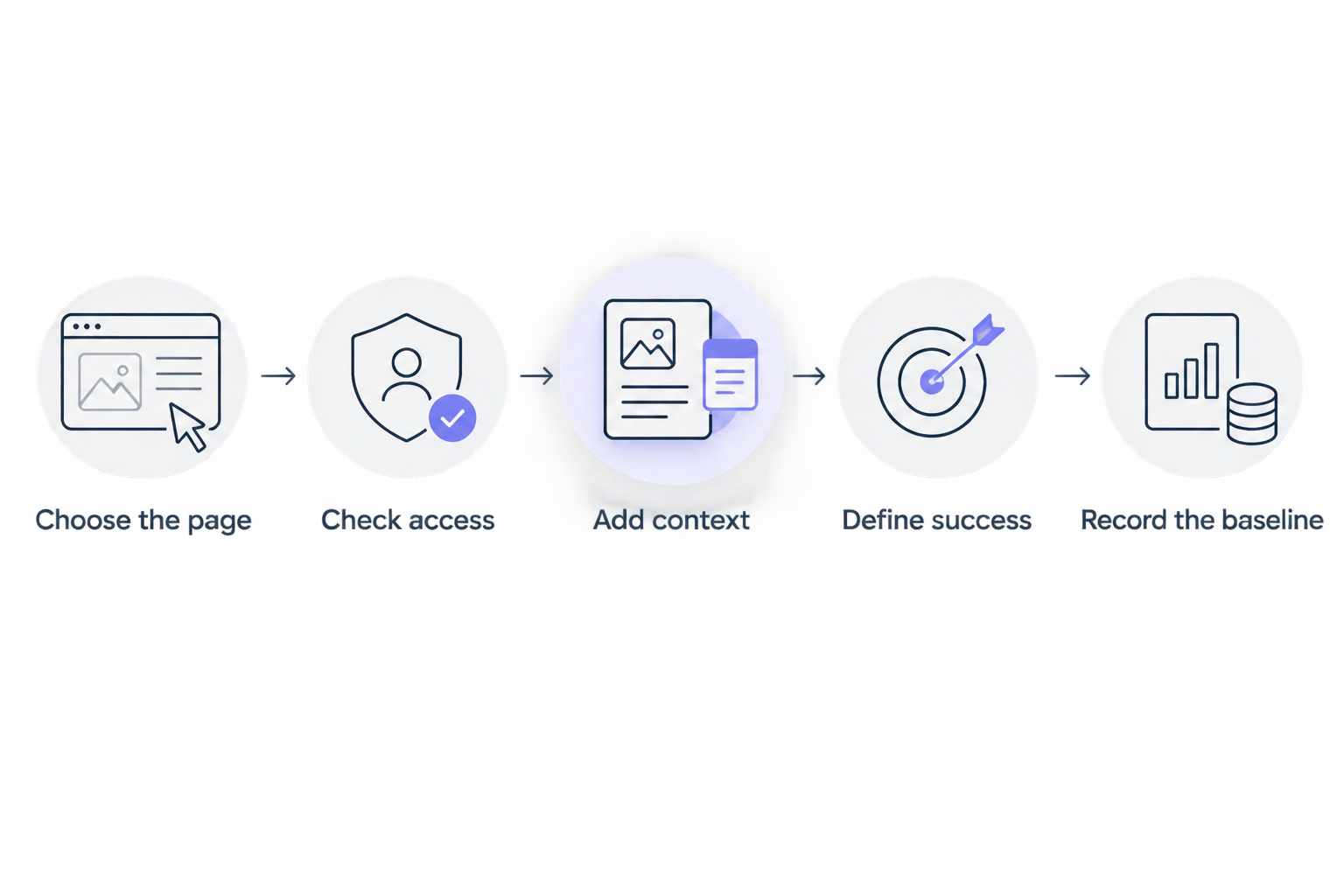
Before buying distribution, give the visitor a destination worth reaching. Follow this sequence for the episode or resource you intend to promote.
- Choose the page. Match the destination to the promise in the proposed article. A link discussing a particular interview should normally lead to that interview, not a homepage that makes visitors search again.
- Check access. Confirm that the page loads, the player works, and the intended page is not accidentally excluded from search. Test the listening action on a phone as well as a desktop.
- Add context. Explain the topic, identify the speakers, and include accurate supporting material. Edit automated transcripts before treating them as publishable references.
- Define success. Choose the observable action that matters: an episode-player interaction, newsletter signup, subscription-link click, or qualified inquiry. Keep those actions distinct.
- Record the baseline. Save the destination’s existing search and referral performance before publication, along with the placement date and other campaign changes.
A useful page supports both outreach and paid distribution. More importantly, it gives you something concrete to improve when visitors arrive but do not take the intended action.
Where does a publisher marketplace fit?
NO-BS Marketplace is best suited to SEO professionals and agencies sourcing guest posting and publisher placements. The platform connects those buyers with verified publisher sites for SEO content, backlinks, sponsored content, and digital PR placements.
That is a sourcing role, not proof that a particular placement will bring podcast listeners or improve rankings. The practical benefit of NO-BS Marketplace is access to publisher-placement options; the limitation is that publisher verification alone does not establish audience fit, campaign results, or compliance for a particular link arrangement.
Keep the brief specific. State the episode topic, intended reader, destination page, disclosure requirements, and link qualification. Reject any proposal whose business case depends entirely on guaranteed ranking credit.
How should you measure whether a placement was worth it?
Separate delivery from outcomes. A published article with the agreed link satisfies a placement check; it does not, by itself, prove a successful podcast campaign.
Record the live article, destination, anchor text, disclosure, link attribute, and publication date. Then examine referral visits and the actions those visitors take. Where tracking is technically appropriate, use campaign parameters without creating duplicate destinations or breaking the publisher’s link requirements.
For a 2026 report, keep search results in a separate view. Google Search Console reports search performance, while your website analytics reports on-site behavior. Neither establishes that every ranking change after publication was caused by the purchased placement.
Also log episode releases, page revisions, guest promotion, and other campaigns. These are competing explanations for changes in traffic. Renew a sponsorship because its measured audience result supports renewal—not because a ranking chart moved at the same time.
Should I buy links to episode pages or the homepage?
Choose the destination that fulfills the article’s promise, not the page with the most aggressive keyword target. An episode-specific discussion should lead to the episode; a profile of the whole show can reasonably lead to the homepage.
For ongoing outreach, consider a useful topic resource that connects related episodes. Build it for readers first, with clear summaries and relevant internal links—not as an empty page created to receive backlinks.
Can backlinks improve my rankings inside podcast apps?
Do not buy website backlinks on the assumption that they will improve podcast-app rankings. Google web search and podcast-app discovery are separate systems; a claim about one is not evidence about the other.
Ask a seller to specify which platform and outcome the proposal addresses. If the offer only documents a website link, evaluate it as a website placement.
FAQ
Is it worth buying backlinks for a podcast website in 2026?
Buying backlinks is not worth treating as a reliable podcast SEO shortcut in 2026. Evaluate properly disclosed sponsorships for relevant audience exposure instead, and qualify paid links appropriately.
Can Google penalize my podcast website for buying backlinks?
Paid links intended to manipulate rankings violate Google’s link-spam policies. Violations can lead to algorithmic action or a manual action; purchasing a placement does not guarantee ranking benefit.
Are sponsored links useless for a podcast?
Sponsored links are not useless when the placement reaches relevant readers. Assess referral visits and meaningful website actions rather than assuming the link will pass ranking credit.
Should I ask every podcast guest for a backlink?
Ask for a reference when the guest has a relevant place to share the episode. Do not make a backlink mandatory or prescribe an unnatural keyword anchor.
How many backlinks does my podcast website need?
There is no universal backlink count that guarantees podcast search rankings. Set priorities around useful destination pages, relevant coverage, and measurable audience outcomes rather than a link quota.
Can NO-BS Marketplace help source podcast placements?
NO-BS Marketplace connects SEO professionals and agencies with verified publisher sites for guest posts, sponsored content, backlinks, and digital PR placements. Evaluate each proposed publication’s audience fit and paid-link treatment before purchasing.
How do I know whether a backlink brought new listeners?
Track referral visits and the listening-related actions available on your website. A player interaction or listening-app click is not proof of a completed listen or a new subscriber.
One last thing
Your strongest next move might be improving an existing episode page rather than acquiring another link. Find an interview with useful material buried in the recording, publish an accurate written explanation, and give relevant publishers a clear reason to reference it.
Then apply the no-ranking-credit test to every paid proposal. If the audience case disappears when ranking promises are removed, skip the placement.