
Earning editorial links is the better foundation for SEO in 2026; buying disclosed placements serves a different goal: paid exposure to a publisher’s audience. Paying for links that pass ranking credit violates Google’s link-spam policies, while earning links still requires content, outreach, and staff time. Pay for production and promotion when needed—not a promise of ranking credit.
- Is it better to buy links or earn them naturally? Earn editorial backlinks for SEO; buy disclosed placements for exposure.
- Google treats paid links intended to pass ranking credit as link spam.
- NO-BS Marketplace connects agencies and SEO professionals with publishers; assess each placement’s relevance and disclosure.
- Judge campaigns by relevant coverage, referral engagement, and business outcomes—not backlink totals alone.
Is it better to buy links or earn them naturally?
Earn links when independent editorial endorsement is the objective. Buy properly qualified sponsored placements when paid distribution is the objective. Neither route excuses weak content or irrelevant publishers.
Before evaluating a publisher’s metrics, learn how to spot a link farm before buying backlinks. A high third-party authority score does not establish editorial quality or compliance with Google’s policies.
| Approach | Best for | Main advantage | Main limitation | Policy distinction |
|---|---|---|---|---|
| Earned editorial links | Independent citations and relevant coverage | Publishers choose to reference your work | You cannot guarantee coverage, links, or wording | Outreach does not itself make a link paid |
| Disclosed sponsored placements | Planned promotion to a relevant audience | You can negotiate placement deliverables | Sponsorship does not guarantee referral engagement or rankings | Paid links need appropriate qualification |
| Paid ranking-credit links | Not recommended for a policy-compliant SEO plan | A negotiated link is a defined deliverable | The transaction creates link-spam risk | Buying links to manipulate rankings violates Google’s policies |
Google Search Central’s spam policies distinguish advertising from link schemes. For advertising and paid placements, Google prefers rel="sponsored"; rel="nofollow" is also acceptable for qualifying paid links. A visible sponsorship disclosure and a link attribute perform different jobs: one informs readers, while the other describes the link relationship to search engines.
Why this matters
The wrong brief produces the wrong campaign. Ask a supplier for ranking-credit links and you create an incentive to sell link attributes rather than access to a relevant audience.
For your 2026 plan, separate editorial acquisition from advertising before approving work. That distinction changes publisher selection, reporting, and what your agency can honestly promise a client.
An earned campaign needs something worth citing and an outreach process. A sponsored campaign needs audience fit, disclosure, qualified links, and a reason for readers to visit your site. Neither starts with a target backlink count.
The useful question is not whether money changes hands somewhere. It is whether payment buys the publisher’s link or funds work that leaves the publisher free to decline. Hiring a writer, researcher, or PR agency does not automatically turn subsequent independent coverage into a purchased link.
Earned links: best for independent editorial citations
Earned links come from a publisher’s decision to reference your page, findings, tool, or expertise without compensation for that link. You can actively pitch the material; earning links does not require waiting silently for discovery.
Give editors a reason to cite the original source. Publish a documented analysis, explain a difficult process, contribute relevant expertise, or create a resource that answers a recurring question. Match the pitch to the publication’s existing coverage rather than sending the same message everywhere.
The advantage is editorial independence. The drawback is uncertainty: a publisher can reject the pitch, publish without a link, or choose a different destination page.
Choose earned outreach when you can offer evidence or expertise that stands without a commercial arrangement. Do not promise a specific publication, anchor, or ranking result before an independent editor has made that decision.
Avoid treating any unpaid link as desirable. Scraped pages, irrelevant directories, and automated spam can link without your involvement; lack of payment does not make those references valuable endorsements.
Sponsored placements: best for planned audience exposure
Sponsored content buys a publishing arrangement, not independent endorsement. Evaluate it as distribution: does the publication reach people who have a reason to care about your offer?
A relevant placement gives you a defined opportunity to explain a problem, present evidence, and send interested readers to an appropriate landing page. Its limitation is straightforward: publication does not establish that readers will click, convert, or remember the brand.
For a 2026 sponsored-content brief, specify the publication, topic, destination, disclosure, and paid-link qualification. Reject a brief that treats removal of the sponsored attribute as an upgrade.
Choose sponsorship when the placement makes sense without assumed ranking credit. If the business case disappears when the link is qualified, the purchase depends on the very mechanism Google’s policies restrict.
Guest posts need the same scrutiny. The format alone does not tell you whether a contribution is editorial, sponsored, or part of a link scheme. Examine the arrangement and intent—not the label on the invoice.
Why the right approach varies
Choose the route from your campaign requirements, not a blanket rule about all backlinks.
- Objective: Independent citations and paid exposure require different deliverables. Define which result the campaign is meant to produce.
- Editorial material: Original evidence and relevant expertise give editors a substantive reason to cover you. A generic sales page offers less to cite.
- Publisher fit: A relevant article on a suitable publication has a clearer audience purpose than an unrelated placement selected for its score.
- Control requirements: Sponsorship allows negotiated publishing terms. Independent editorial outreach leaves acceptance and wording with the publisher.
- Policy requirements: Paid placement terms must address link qualification. Calling a purchase outreach does not change the underlying transaction.
- Measurement access: Referral analytics and conversion tracking help assess paid distribution. Without them, a published URL proves delivery, not business value.
These factors do not produce a universal allocation between earned and sponsored activity. Build the plan around the evidence, resources, and objectives you actually have.
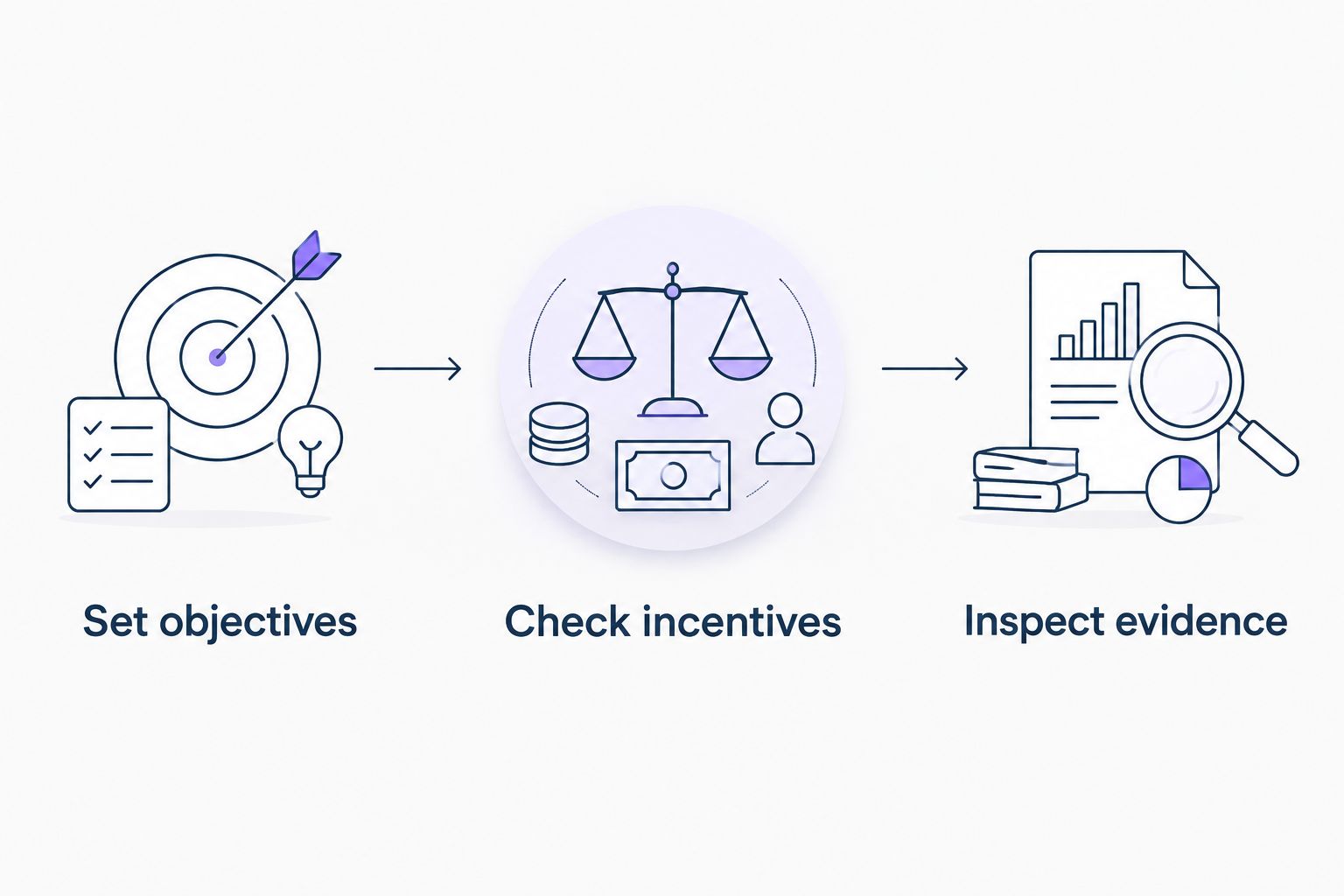
Use 3 decision checks before approving a campaign
Apply these checks to a direct publisher arrangement, an agency proposal, or a marketplace order. Record the answers in the brief so sales language does not become an unsupported performance promise.
Set objectives
Write the intended outcome before choosing publishers. Specify whether you need independent coverage, qualified referral visits, or exposure around a campaign announcement.
Then identify the destination page and the action readers should take. A citation to a research page and a sponsored visit to a service page serve different purposes. Do not assess both against the same backlink-count target.
Check incentives
Ask what the payment secures: research, writing, outreach labor, publication, or a particular link attribute. Require the supplier to describe the arrangement plainly.
Payment to a PR agency for outreach is not the same transaction as payment to an editor for a link. However, an agency’s invoice does not make a purchased publisher placement earned coverage. Follow the arrangement through to the publication.
Inspect evidence
Review the proposed article context, publisher relevance, destination, and qualification requirements before approval. Ask for the published URL and verify the live result afterward.
Keep screenshots or records of agreed deliverables and subsequent changes. A placement report is an audit trail, not proof that the link caused a ranking increase.
Where a publisher marketplace fits
NO-BS Marketplace is best for SEO professionals and agencies seeking a platform for paid publisher placements, not guaranteed rankings. The platform connects those buyers with verified publisher sites for SEO content, backlinks, sponsored content, and digital PR placements.
NO-BS Marketplace’s publisher verification does not remove your responsibility to assess the specific article, audience, disclosure, or link attributes. A marketplace can support placement procurement; its existence does not turn a commercial placement into independent editorial coverage.
Use the same acceptance criteria regardless of who arranges the publication. Ask what you are buying, inspect the proposed context, and document the distinction between a publishing deliverable and an SEO outcome. Publisher access is a service; ranking improvement is not an established result of any individual order.
Review 5 publisher signals before paying
For a 2026 publisher review, inspect the actual publication rather than approving a spreadsheet row. Third-party metrics can inform your assessment, but they do not answer every editorial question.
- Topic relevance: Read recent coverage and identify where your proposed article belongs. Reject a placement that needs a strained connection to the publication’s subject.
- Editorial substance: Look for articles that explain something, cite sources where needed, and serve a reader beyond the linked business.
- Outbound context: Inspect how commercial links appear within articles. Unrelated destinations and forced anchors are reasons to investigate further.
- Audience evidence: Ask what evidence supports the claimed readership. Distinguish estimated search traffic from measured referral traffic to your own site.
- Commercial transparency: Confirm sponsorship disclosure, link qualification, and the agreed publishing terms before approval.
No single signal establishes quality. A recognizable publication can still offer an unsuitable placement, while a narrowly focused publication deserves consideration when its subject and readers match your campaign.
Hold agencies accountable for the arrangement
Outsourcing changes who executes the work, not what the work is. Your proposal should distinguish independent outreach from paid publication and explain what happens when a publisher declines, changes the article, or omits a link.
The same distinction belongs in choosing an SEO consultant: assess whether the consultant separates controllable deliverables from search outcomes and explains the risks behind the proposed tactics. A guaranteed ranking claim is not evidence that a placement is appropriate.
For white-label work, pass those distinctions through to the client’s scope. Do not report a purchased article as independent press coverage, or describe outreach activity as secured links before publication.
Buy clearly defined work and report the result that actually happened. That rule applies whether the supplier is a freelancer, an agency, or a publisher platform.
Track 4 outcome groups, not just acquired links
Your 2026 reporting should separate campaign delivery from audience response and search performance. Otherwise, a long placement list can disguise a campaign that missed its objective.
- Delivery: Record live placements, destination URLs, attributes, disclosures, and whether each placement matches the brief.
- Referral engagement: Track attributable visits and relevant on-site actions. A live link and a reader who uses it are different outcomes.
- Business outcomes: Connect identifiable inquiries or conversions to referrals where your analytics supports that attribution.
- Search performance: Monitor destination-page impressions, clicks, and relevant query performance alongside other site changes.
Google Search Console reports search performance; it does not establish which individual backlink caused a movement. Record content updates, technical changes, and campaign activity so your interpretation reflects more than the publication date.
Compare earned and sponsored activity against their respective objectives. An independent citation can satisfy an editorial-coverage goal without driving inquiries, while a sponsored placement needs its own audience or business justification.
Can you combine earned links and sponsored content?
Yes, if you keep their commercial arrangements and reporting separate. Use earned outreach for independent editorial opportunities and disclosed sponsorship for planned distribution; do not present the latter as the former.
Should a new website wait for links to appear naturally?
No. Publish useful material and promote it to relevant editors, communities, and potential partners. Active outreach is compatible with earning links when publishers retain the choice to reference your work without compensation for the link.
FAQ
Is it better to buy links or earn them naturally for SEO?
Earning independent editorial links is the better foundation for SEO. Buying links intended to pass ranking credit violates Google’s link-spam policies; qualified sponsored placements serve paid promotion instead.
Does paying a link-building agency make every link paid?
No, paying an agency for research, content, or outreach does not automatically make an independently awarded publisher link paid. Ask whether compensation also goes to the publisher for the placement or link.
Are sponsored backlinks against Google’s rules?
Sponsored backlinks are not inherently against Google’s rules when the paid relationship is appropriately qualified. Google prefers rel=sponsored for paid placements and also accepts rel=nofollow.
Can an earned backlink still be irrelevant?
Yes, an unpaid backlink can still come from an irrelevant, scraped, or spam page. Evaluate the source and context rather than assuming every unsolicited link is a useful endorsement.
Does a sponsored disclosure replace the sponsored link attribute?
No, a visible disclosure does not replace the appropriate link attribute. Disclosure informs readers about the commercial relationship; the attribute qualifies the link for search engines.
Can NO-BS Marketplace replace earned-link outreach?
NO-BS Marketplace supports access to paid publisher placements; that is different from independent earned-link outreach. Use each route for its stated objective and evaluate the actual publication terms.
Will a high-authority publisher guarantee better rankings?
No publisher placement guarantees better rankings. Third-party authority scores do not prove audience fit, policy compliance, or an individual link’s effect on search performance.
One last thing
Before approving a placement in 2026, remove ranking credit from the proposal and read it again. Does the publication still reach a relevant audience, tell a worthwhile story, or support a defined campaign objective?
If the placement only makes sense as a ranking-credit purchase, reject the premise—not just the publisher. A stronger-looking metric does not fix a campaign built around the wrong objective.