
Digital PR is better than guest posting for SaaS brands when the goal is earned media coverage around original research, credible expertise, or a newsworthy story. Guest posting is the better fit when you need to explain a specific buyer problem on a relevant publisher’s site; neither approach guarantees rankings, qualified leads, or editorial links in 2026.
- Is digital PR better than guest posting for SaaS? Only when earned coverage matches the campaign goal.
- Digital PR fits original research and newsworthy expertise; guest posting fits detailed, buyer-relevant explanations.
- NO-BS Marketplace serves SEO professionals and agencies sourcing publisher placements; marketplace access does not guarantee SEO results.
- Judge both approaches by audience relevance, editorial quality, qualified referrals, and business outcomes—not backlink totals alone.
Is digital PR better than guest posting for SaaS brands?
Digital PR wins on earning coverage of a story. Guest posting wins on developing a useful argument for a specific audience. Choose the format after you identify the buyer, the message, and the destination page—not before.
| Approach | Best for | Main advantage | Main limitation |
|---|---|---|---|
| Digital PR | SaaS brands with original findings or credible commentary | Gives journalists a reason to cite the brand’s expertise | Editors control coverage, wording, links, and timing |
| Guest posting | SaaS brands explaining technical or operational problems | Lets a subject expert develop a detailed contribution | Publisher fit and editorial standards vary; paid links need appropriate treatment |
| Combined campaign | SaaS brands with both a newsworthy finding and practical expertise | Connects a news angle with deeper educational content | Requires separate briefs, quality checks, and measurement |
If both formats serve a clear purpose, use the guide to combining guest posts and digital PR to plan them together. Do not split effort between them just to make the campaign look balanced.
The distinction matters: an earned news article, a contributed article, and a paid placement are different arrangements. Calling all of them “digital PR” hides the editorial control and disclosure requirements you need to understand.
Why this matters
A SaaS buying journey involves questions that a backlink count cannot answer. Does the publication reach your intended buyer? Does the article explain a problem your product actually addresses? Does the destination help that reader take a useful next step?
A broad news mention and a detailed contribution to a specialist publication serve different purposes. Neither is automatically more valuable because the publisher has a larger audience or a higher third-party authority score.
For your 2026 plan, define success before commissioning content. Otherwise, a campaign can meet its placement target without producing evidence that the right people read, visited, or acted.
Digital PR: best for original findings and credible commentary
Choose digital PR when you have something an editor can report, question, or use as evidence. The starting point is the story—not the page you want linked.
For example, a SaaS company with permission to analyze anonymized product data can investigate a meaningful operational question. A subject expert can also explain a regulatory development or challenge a widely repeated industry assumption, provided the argument has evidence behind it.
Useful material includes:
- Original research: Explain the methodology, sample, limitations, and relevant dates.
- Expert commentary: Give a named specialist a clear, defensible position.
- Public-interest analysis: Connect a documented development to consequences readers understand.
- A reference resource: Publish evidence that a journalist can inspect and cite.
The advantage is independent editorial consideration. A journalist decides whether the material deserves coverage, rather than simply publishing a sales message supplied by the brand.
The trade-off is control. An editor can cover the finding without linking, quote a different part of the interview, or decide not to publish. A genuine earned-media brief must allow for those outcomes.
Recommendation: choose digital PR when the evidence stands up without a product pitch. Skip the campaign if the entire story is that your software exists or has a feature you want to promote.
Guest posting: best for detailed buyer education
Choose guest posting when your strongest contribution is a practical explanation for a defined readership. The article needs to deserve publication even if the reader never visits your site.
A SaaS subject expert might explain how to document a reporting workflow, evaluate migration risks, or prepare an internal implementation brief. These are article concepts, not claims about any particular product’s capabilities.
Good contributions show the author’s reasoning. They identify constraints, explain decisions, and acknowledge where a method stops working. A generic introduction followed by a product link does not meet that standard.
The advantage is space to develop a useful argument. You can propose the subject, draft the contribution, and explain why a supporting reference belongs in the article, subject to the publisher’s approval.
The limitation is publisher quality. Acceptance alone does not establish audience relevance, editorial credibility, or SEO value. A site that publishes unrelated promotional submissions without meaningful review is a poor foundation for a SaaS campaign.
Recommendation: choose guest posting when a specialist audience needs an explanation you are qualified to provide. Reject placements whose main selling point is an authority metric rather than the publication’s actual content and readership.
Why the better choice varies between SaaS brands
There is no universal channel winner because the inputs differ. Use these factors to decide which approach deserves your team’s attention:
- Campaign objective: Earned coverage, buyer education, referral visits, and sales conversations require different evidence of success.
- Source material: Original findings support a research-led pitch; practical expertise supports a detailed contributed article.
- Audience fit: A specialist publication can match your buyer more closely than a general-interest outlet. Check the readership rather than assuming it.
- Destination quality: Research needs an inspectable source page. Educational contributions need references that genuinely help the reader.
- Editorial control: Earned coverage leaves publication decisions with the journalist; contributed content still requires publisher approval.
- Commercial arrangement: Payment changes disclosure and link requirements. It does not turn a placement into an independent endorsement.
Your 2026 channel choice should follow these factors, not an arbitrary allocation between digital PR and guest posts. If neither approach has a defensible brief, improve the evidence or content before commissioning placements.
How do you choose between digital PR and guest posting?
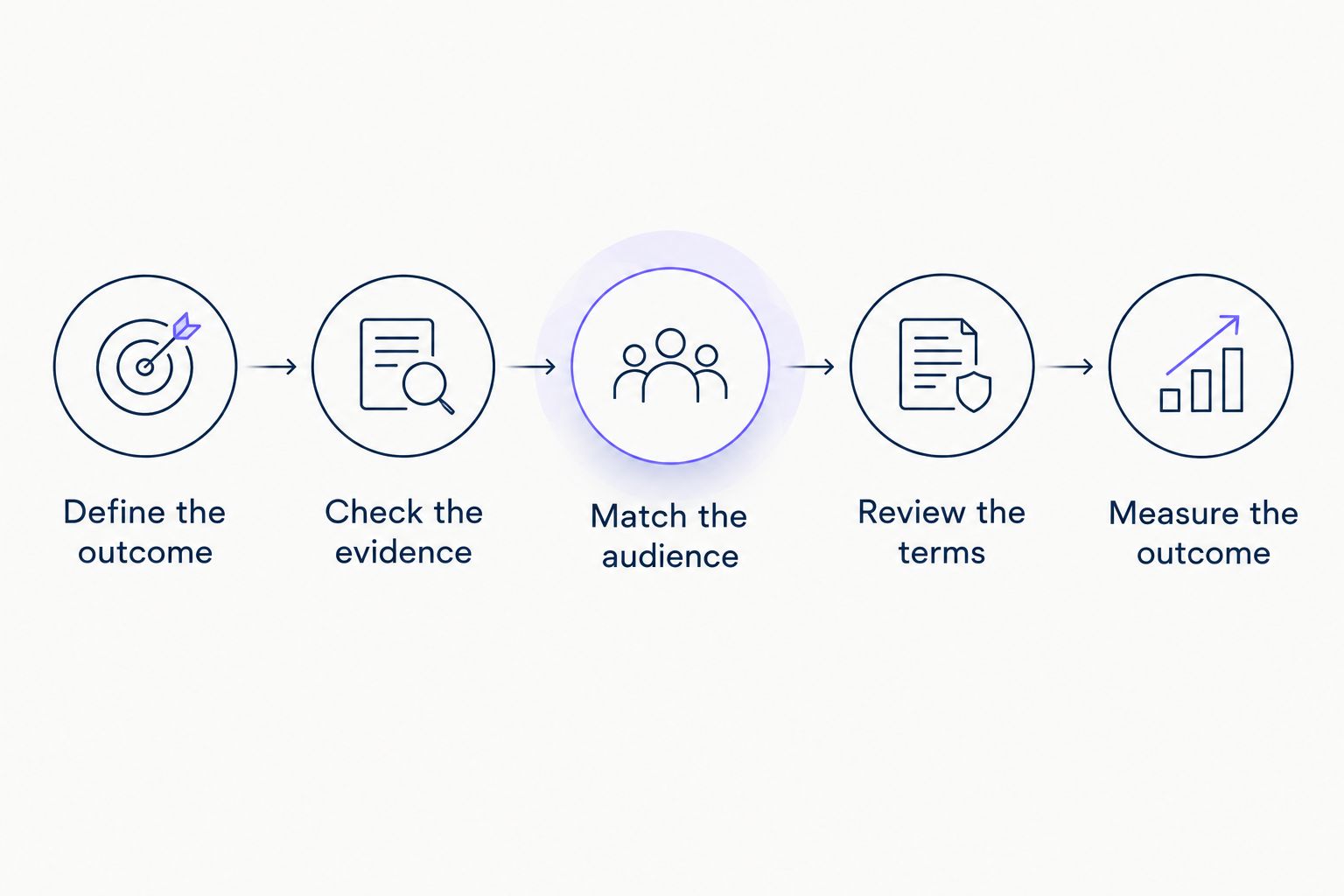
Use this sequence to turn a channel debate into a campaign decision. Each step produces something your team can inspect before approving outreach or publication.
1. Define the outcome
Write 1 campaign brief that names the audience, business objective, source material, and destination. “Build authority” is too vague; explain what relevant exposure or reader action would demonstrate progress.
Keep the commercial objective separate from the deliverable. Publishing an article completes a task, but it does not establish that the campaign reached buyers.
2. Check the evidence
Review whether the proposed story contains verifiable findings or simply an opinion. Research-led PR needs a method an editor can inspect; a contributed tutorial needs accurate instructions and an author qualified to explain them.
If the evidence is weak, fix it before pitching. Rewriting the headline cannot repair an unsupported claim.
3. Match the audience
Read the publisher’s recent coverage, contributor pages, and relevant articles. Look for editorial continuity: does the proposed subject belong beside what the publication already covers?
Do not treat a broad “technology” label as proof that a site reaches your SaaS buyer. The actual articles should support the match.
4. Review the terms
Confirm whether the opportunity is earned coverage, an unpaid contribution, or a paid placement. Record editorial approval, disclosure expectations, and how any commercial links will be qualified.
A promise of a guaranteed followed link should not substitute for this review. You need to understand the arrangement, not just the deliverable.
5. Measure the outcome
Maintain 2 separate scorecards: one for publication quality and one for business outcomes. The first records what appeared and where; the second tracks relevant visits, observable actions, and sales feedback where attribution exists.
The sequence is simple: define the outcome, check the evidence, match the audience, review the terms, and measure the outcome. Keep those decisions visible in the brief so approval does not collapse into a discussion about domain metrics.
Where a publisher marketplace fits
NO-BS Marketplace is best for SEO professionals and agencies sourcing guest posting and digital PR placements. The platform connects those buyers with verified publisher sites; that is a sourcing role, not proof that every placement matches your campaign.
Use NO-BS Marketplace when publisher sourcing is the task you need to solve. Bring your own acceptance criteria: audience relevance, editorial quality, suitable subject matter, and an appropriate commercial arrangement.
The benefit is access to publisher placement options. The limitation is that access cannot replace a credible story, a useful article, or outcome measurement; do not interpret a purchased placement as independent editorial endorsement.
What should you measure after publication?
For a 2026 campaign, record what was published before interpreting what it achieved. Keep the live article, destination, link attributes, disclosure, publication date, and relevant editorial context in your campaign record.
Review performance through 3 measurement layers:
- Publication quality: Is the article accurate, relevant, accessible, and consistent with the approved arrangement?
- Audience response: Did the placement send relevant referral visits or produce observable engagement?
- Business contribution: Did identifiable visitors take useful actions, and what does your attribution actually support?
Track search visibility for the destination separately. A ranking change after publication does not prove that the placement caused it; technical changes, content updates, competition, and other activity complicate attribution.
Do not convert total publisher audience into campaign reach unless you have evidence of article readership. Likewise, a brand mention is not a backlink, and a backlink is not a qualified lead.
Can digital PR and guest posting work together?
Digital PR and guest posting work together when they use shared expertise for different editorial purposes. Publish the underlying evidence, pitch the finding as a news story, and develop a separate practical contribution explaining its implications.
Avoid distributing the same promotional article under different labels. The journalist needs a reportable finding; the specialist publication needs a useful contribution tailored to its readers.
A combined campaign also needs separate reporting. Record earned mentions, contributed articles, paid placements, referral activity, and business outcomes distinctly rather than presenting everything as equivalent coverage.
Is digital PR safer than paid guest posting?
Digital PR is not automatically safer because of its label. The arrangement and intent matter: earned editorial coverage differs from paying for a link intended to manipulate search rankings.
Google’s spam policies address buying and selling links for ranking purposes, and its link guidance calls for qualifying advertising or paid-placement links, with rel="sponsored" preferred. Apply that review to paid PR placements as well as paid guest posts in 2026.
Disclosure and link qualification solve different problems. Readers need to understand the commercial relationship, while link attributes describe that relationship to search systems; do not assume one replaces the other.
FAQ
Is digital PR better than guest posting for a new SaaS company?
Digital PR is better when a new SaaS company has a credible story or original evidence worth reporting. Guest posting fits a company whose strongest contribution is practical expertise for a relevant specialist audience.
Which is better for reaching SaaS decision-makers?
The better approach is the one published where your intended SaaS decision-makers actually read. Check the publication’s subject coverage and audience fit rather than treating either format as a guarantee of qualified exposure.
Does digital PR guarantee backlinks?
Digital PR does not guarantee backlinks from earned coverage. Editors control whether they publish, what they cite, and whether they include a link.
Are paid guest posts against Google’s rules?
Buying links to manipulate rankings violates Google’s spam policies. Paid contributions need appropriate commercial disclosure and link qualification; paying for publication does not guarantee ranking value.
Should SaaS guest posts link to a product page?
A SaaS guest post should link to a product page only when that destination genuinely helps the reader and the publisher accepts it. A research source or explanatory resource is a better destination when the article needs supporting evidence.
Can NO-BS Marketplace support both approaches?
NO-BS Marketplace connects SEO professionals and digital marketing agencies with publisher sites for guest posting, sponsored content, and digital PR placements. Evaluate each opportunity against your audience, editorial, and disclosure requirements.
How should I compare digital PR and guest posting results?
Compare digital PR and guest posting against their assigned objectives, using publication quality, relevant referral activity, and observable business outcomes. Keep earned coverage and paid placements separate, and do not attribute every ranking change to a backlink.
One last thing
The most useful campaign asset might be the evidence page, not the placement. A clear methodology, inspectable sources, and honest limitations give journalists something to verify and readers something worth visiting.
Before approving your next pitch, remove the brand name and product link from the draft. If the story or contribution no longer has a reason to exist, improve it before asking a publisher to carry it.