
An SEO agency’s backlink markup is contract-specific; there is no single percentage you should treat as the standard for 2026. The difference between the publisher’s charge and your invoice can include content, outreach, quality checks, campaign management, and profit—not just a resale premium.
- How much does an SEO agency mark up backlinks? Judge the disclosed scope, not an unsupported industry average.
- Backlink markup and gross margin use different denominators; they are not interchangeable.
- Separate publisher spend, content production, campaign management, and agency profit before comparing proposals.
- NO-BS Marketplace serves SEO professionals and agencies sourcing guest posting and white label link building services.
How much does an SEO agency typically mark up backlinks?
There is no defensible universal markup to apply to every backlink proposal. You need the agency’s underlying purchase cost and the corresponding client charge to calculate the actual percentage. A bundled invoice alone does not reveal either the markup or the agency’s profit.
Use this calculation when the agency discloses comparable figures:
Markup percentage = (client charge − agency purchase cost) ÷ agency purchase cost × 100%.
That calculation measures the uplift on purchase cost. It does not tell you whether the uplift fairly compensates the agency for its work.
Before calculating, follow these steps:
- Identify the purchase cost. Establish whether it covers only publication or also includes writing and fulfillment.
- Match the client charge. Use the charge for the same placement and services, not an unrelated campaign total.
- Separate additional work. Identify strategy, editing, reporting, and management included in the client charge.
- Check the agreement. Confirm whether the agency sells placements, manages publisher spend, or delivers a broader campaign.
For agencies defining those boundaries, start with how to structure a white label link building offer. Clear service boundaries make the percentage easier to interpret.
Why this matters
A markup is not automatically waste. You pay an agency to perform work that your team would otherwise need to handle, but that work should be identifiable.
The problem starts when a proposal presents an intermediary’s charge as the publisher’s own charge, or sells an undifferentiated link count without explaining selection and delivery. You cannot evaluate the service if you cannot tell what the service includes.
For your 2026 procurement process, compare proposals against the same brief. An agency handling research, writing, approval, and reporting is selling a different service from a supplier arranging publication of content you provide.
Compare equal deliverables before comparing markups. Otherwise, the apparently smaller uplift can leave more work with your team.
Backlink markup versus gross margin
Markup uses the agency’s purchase cost as its denominator. Gross margin uses the client charge as its denominator.
Gross margin percentage = (client charge − direct delivery cost) ÷ client charge × 100%.
The distinction matters because direct delivery cost can include more than a publisher payment. Writing, editing, and delivery labor belong in the analysis when they are attributable to that work.
Neither measure automatically represents net profit. Agency overhead and other operating expenses still need to be covered.
When an agency describes its margin, ask what costs it has included. When it describes its markup, ask what purchase cost it used. Without those definitions, the percentages are not comparable.
Which agency billing model are you evaluating?
Separate the billing model from the placement type. A guest post, sponsored article, or editorial outreach campaign can involve different work even when the invoices use similar labels.
| Billing model | Best for | Main advantage | Main limitation |
|---|---|---|---|
| Bundled placement charge | Buyers delegating defined placement delivery | Keeps the purchase tied to an agreed deliverable | Does not reveal the publisher payment or embedded agency uplift |
| Publisher spend plus a separate management fee | Buyers prioritizing financial visibility | Separates third-party spend from agency compensation | Requires agreement on which activities the management fee covers |
| Campaign retainer | Buyers needing ongoing strategy and coordination | Covers work beyond individual placements | Does not translate cleanly into a per-link markup |
These are evaluation categories, not claims about what every agency offers. Your contract determines the actual arrangement.
Bundled placement charge
A bundled charge combines the agency’s delivery responsibilities into an agreed amount. Your decision rests on the placement requirements, included work, and acceptance terms.
Best for: buyers who want to delegate a defined delivery process. The trade-off is limited visibility into the underlying publisher payment. Ask for clear deliverables rather than assuming the entire difference is profit.
Publisher spend plus a separate management fee
This model distinguishes the publisher transaction from the agency’s work. It makes the commercial relationship easier to inspect when publisher charges are documented.
Best for: buyers who want to review publisher spend separately. The limitation is scope ambiguity: writing, revisions, research, and reporting still need explicit treatment. A separate fee does not remove the need for a detailed agreement.
Campaign retainer
A retainer can cover research, planning, outreach, content, coordination, and reporting. Treating the whole retainer as a link resale premium misclassifies that work.
Best for: buyers seeking ongoing campaign management. The limitation is attribution: you need activity records and defined deliverables to understand what the engagement produces. Do not divide a broad SEO retainer by its backlink count and label the result a publisher markup.
Why an SEO agency’s backlink markup varies
The meaningful drivers sit in the scope of work. Ask whether each responsibility belongs to the agency, your team, or a separate supplier.
- Publisher sourcing: Does the agency identify relevant publications, or do you provide the shortlist?
- Site assessment: Does the agency inspect topic relevance, editorial quality, and publication practices before recommending a placement?
- Content production: Does delivery include research, drafting, editing, and revisions, or only placement of your finished article?
- Outreach and coordination: Who handles pitches, publisher questions, changes, and publication follow-up?
- Campaign planning: Who chooses destination pages, develops content angles, and reviews anchor text?
- Verification and reporting: Who checks the published page, records the link attributes, and handles delivery discrepancies?
These responsibilities explain what you are buying. They do not prove that any particular uplift is reasonable.
For a 2026 statement of work, turn each responsibility into a named deliverable. “Quality link building” is not a substitute for a publisher approval process, a content brief, or a publication record.
How do you decide whether the markup is justified?
Evaluate the work and the placement separately. A well-managed campaign can still recommend an unsuitable publisher, and a relevant publisher does not excuse unclear billing.
Define the scope
Write down who supplies the topic, draft, publisher shortlist, target page, and anchor text. Include who approves changes before publication.
This prevents a familiar comparison problem: one proposal includes writing while another assumes your team will provide it. The invoice labels can look alike even though the workload differs.
Check the publisher
Review the publication itself rather than accepting a domain metric as the entire case. Look at whether the proposed article belongs on the site, whether the surrounding content serves a recognizable audience, and whether the placement makes editorial sense.
Ask the agency to explain why that publication fits your campaign. A metric without a relevance explanation is an incomplete recommendation.
Inspect the work
Request the deliverables that make the service tangible: a brief, approval record, final article, published URL, and link details. Agree which records you receive before work begins.
You do not need access to every internal task. You need enough evidence to verify that the contracted work happened.
Confirm the terms
Clarify what counts as completed delivery and what happens if publication differs from the approved brief. Ask about corrections, removed links, rejected content, and reporting responsibilities without assuming any remedy is included.
Document the answers. A verbal expectation is a poor basis for resolving a delivery dispute.
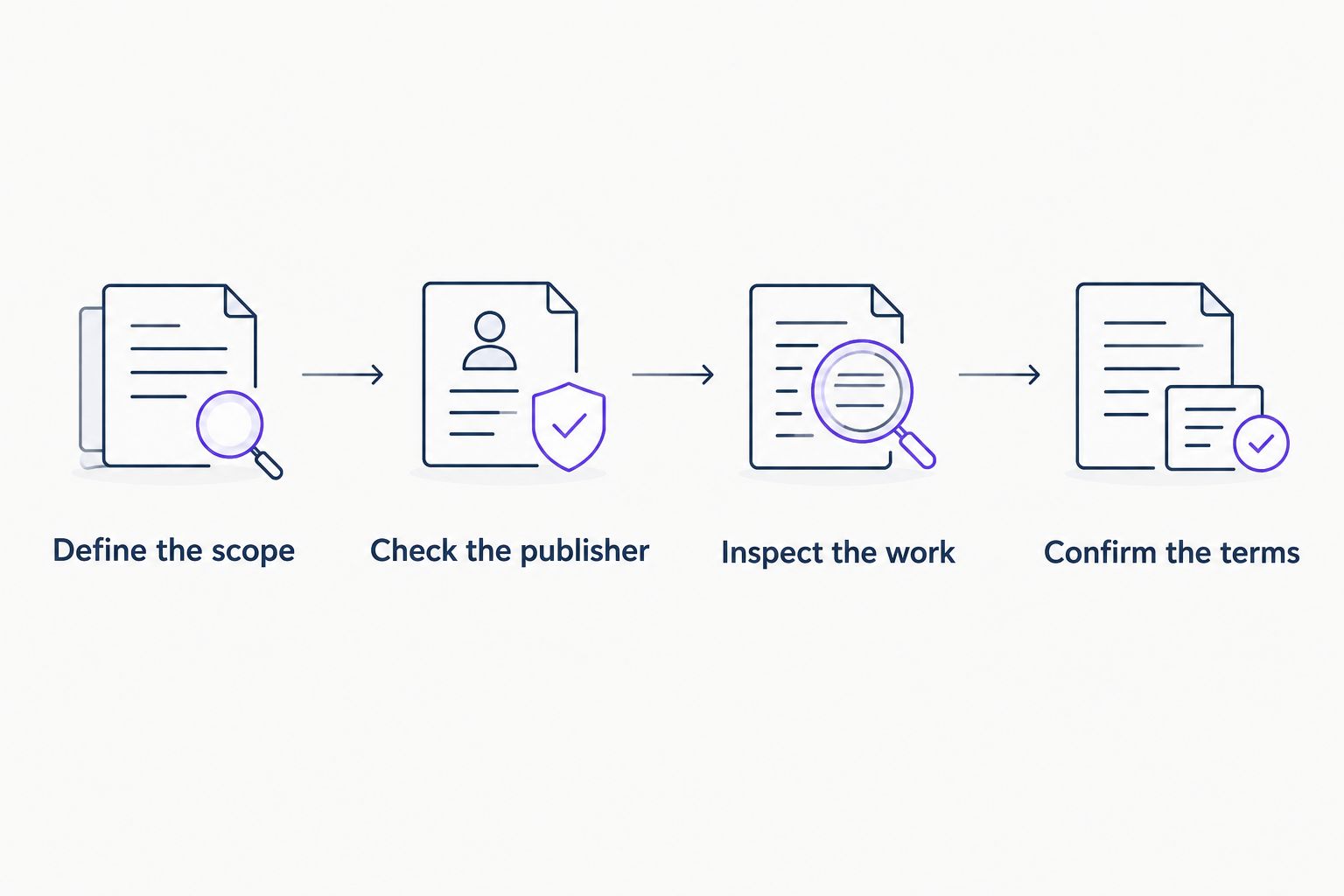
The decision is not whether an agency earns a profit. It is whether you understand the service and accept the terms for that service.
What should an agency disclose before you approve a campaign?
Ask for disclosure that matches the billing model. A fixed-deliverable agreement needs clear outputs; a publisher-spend arrangement also needs a clear explanation of third-party charges.
Your approval checklist should cover:
- The billing model and what the agency’s compensation covers.
- Whether publisher payments are passed through or included in a bundled charge.
- Content ownership, writing responsibilities, and revision boundaries.
- Publisher approval rights and substitution rules.
- Sponsored-content disclosure and link qualification.
- Delivery evidence and the process for addressing discrepancies.
NO-BS Marketplace is a link building platform for SEO professionals and agencies sourcing publisher placements. Its stated services include guest posting and white label link building; the platform connects buyers with verified publisher sites.
Use NO-BS Marketplace to review that sourcing route against your brief. Publisher access does not replace your responsibility to assess campaign suitability, contract terms, and search-policy compliance. Do not treat verification as a guarantee of rankings.
Does a higher backlink markup mean a better link?
A higher markup does not establish better link quality. The markup describes the agency’s commercial uplift, not the relevance, editorial context, or usefulness of the published page.
Keep separate records for service delivery and placement quality. In your 2026 supplier review, assess the agency’s completed work alongside the publication’s suitability rather than using its invoice as a quality score.
Can you avoid an agency markup by going directly to publishers?
Direct publisher buying removes the agency intermediary from that transaction, but it transfers sourcing and coordination work to your team. You still need to assess sites, prepare content, agree terms, and verify publication.
Choose direct sourcing when your team can own that work. Choose managed delivery when the agency’s documented responsibilities address work you want to delegate. Neither route eliminates publisher risk or search-policy obligations.
Is paying for backlinks against Google’s policies?
Google’s link spam policies prohibit buying or selling links for ranking manipulation. Google’s guidance allows paid advertising and sponsorship links when they are appropriately qualified, with rel="sponsored" preferred for paid placements and rel="nofollow" also acceptable.
For a 2026 campaign, distinguish buying sponsored exposure from buying an unqualified link intended to pass ranking credit. An agency’s markup does not change that distinction.
Do not approve a proposal that depends on hiding payment or guarantees rankings from purchased links. Ask how paid placements will be disclosed and qualified before you authorize delivery.
FAQ
How much does an SEO agency mark up backlinks in 2026?
An SEO agency’s backlink markup is contract-specific, not a fixed industry percentage. Calculate it from disclosed, comparable purchase and client charges, then assess the work included in the difference.
Is backlink markup the same as agency profit?
Backlink markup is not the same as agency profit. The uplift can fund writing, editing, coordination, reporting, and other delivery work before operating expenses are covered.
Should an SEO agency disclose its publisher costs?
Disclosure should match the agreement. If the agency bills publisher spend separately, request supporting records; if it sells a bundled deliverable, require clear scope and acceptance terms.
Is a separate management fee better than a bundled backlink charge?
A separate management fee is better for buyers prioritizing visibility into publisher spend. A bundled charge suits buyers delegating a defined deliverable, but its underlying uplift is less visible.
Can an agency guarantee rankings because it charges a higher markup?
A higher markup does not justify a ranking guarantee. Agency compensation does not control Google’s ranking decisions or establish the quality of a publisher placement.
What is NO-BS Marketplace used for?
NO-BS Marketplace is a link building and guest posting platform for SEO professionals and digital marketing agencies. It connects buyers with verified publisher sites for content, backlinks, sponsored content, and digital PR placements.
What should I ask before approving a backlink proposal?
Ask what the agency delivers beyond publication, how publisher sites are assessed, and what constitutes completed delivery. Confirm disclosure, link qualification, approval rights, and correction terms in writing.
One last thing
Ask the agency what it would still deliver if a publisher rejected the proposed article. The answer separates research, writing, and campaign management from the act of arranging publication.
For your next 2026 proposal review, request that distinction in writing. Approve defined work and suitable placements—not an unsupported claim that a markup is normal.