
Run a guest post campaign against evidence-based checkpoints, not a promised ranking deadline. In 2026, there is no defensible universal number of weeks or months before rankings move: publication, Google’s discovery and processing of the link, and the target page’s ability to compete are separate issues. A published placement does not guarantee a ranking improvement, and paid links require proper qualification under Google’s spam policies.
- How long should a guest post campaign run before rankings move? Use verified progress, not a guaranteed deadline.
- Google indexing, publisher relevance, and target-page quality matter more than the campaign’s order date.
- NO-BS Marketplace connects SEO professionals and agencies with publishers; placements are not proof of ranking impact.
- Continue, repair, or stop based on delivery checks, search performance, and business outcomes.
Why this matters
A campaign can look busy while producing nothing you can evaluate. Orders, accepted pitches, published articles, referral visits, and organic ranking changes measure different things. Treating them as interchangeable makes weak delivery look like progress.
NO-BS Marketplace is a guest posting platform connecting SEO professionals and digital marketing agencies with verified publisher sites. That helps explain the purchasing channel, not the date your target page will improve. Keep those expectations separate before you approve a campaign.
For your 2026 campaign brief, define what counts as delivery and what counts as a result. A live article proves publication. It does not prove Google indexed it, credited its links, or changed your target page’s position because of it.
How long should a guest post campaign run before rankings move?
Keep the campaign running only while its delivery, page readiness, and performance evidence justify continuation. Google’s Search Central guidance does not establish a fixed guest-post-to-ranking timetable. Its crawling and indexing documentation also distinguishes discovery from indexing; neither guarantees a ranking gain.
Use this sequence to decide whether elapsed time is meaningful:
- Set the baseline. Record the target URL’s queries, impressions, clicks, and average position before placements go live. Keep country, device, and search-type filters consistent.
- Verify publication. Open each publisher URL and confirm the article, destination, anchor text, and link attributes match the agreed placement.
- Check accessibility. Confirm the publisher article and target page are accessible. Investigate indexing exclusions, redirects, and broken destinations before discussing ranking delays.
- Review comparable search data. Compare equivalent reporting periods for the same page and relevant queries. Annotate content edits, migrations, and other changes that affect interpretation.
- Choose the next action. Continue when the evidence supports the strategy, repair identifiable problems, or stop an approach that fails your acceptance criteria.
Do not start the evaluation clock from the invoice date. Record each placement’s actual publication date so an article published late is not assessed as though it had been live throughout the campaign.
The same applies to staggered delivery. Group placements by publication period instead of treating the entire order as a single event. Otherwise, your report combines links with different exposure periods and hides whether delivery itself is behind schedule.
Why guest post ranking timelines vary
These factors explain why a calendar alone cannot settle the decision:
- Discovery and indexing. Google must discover and process pages before their content can participate in search. A live publisher URL is not proof that this has happened.
- Publisher relevance. A relevant article gives the placement a clear editorial context. An unrelated placement does not become more relevant because it has been live longer.
- Link qualification. Google’s spam policies address links bought to manipulate rankings. Paid placements should use appropriate qualification, such as
rel="sponsored"; do not treat them as guaranteed ranking credit. - Target-page readiness. An indexing exclusion, incorrect canonical, broken destination, or mismatch with search intent needs attention independently of link acquisition.
- Search competition. Rankings are relative. Your page competes with other results, so its movement cannot be explained by your campaign calendar alone.
- Measurement scope. Sitewide averages, branded queries, and changing filters can obscure what happened to the specific page and queries you intended to improve.
For 2026 planning, separate controllable work from search-engine outcomes. You can specify publisher criteria, article requirements, destination URLs, and reporting. You cannot specify when Google must reward a placement.
What should you check before deciding to wait longer?
Publisher checks
Open the actual article, not just the publisher’s homepage or a delivery spreadsheet. Read enough to establish whether the article serves a recognizable audience and whether your link belongs in its context. Check that the destination is correct and that the link remains present.
Use a publisher-site audit before buying a placement to put acceptance criteria ahead of the order. A publisher metric alone does not establish editorial relevance, legitimate readership, or the suitability of a particular article.
Also distinguish accessibility from indexing evidence. An HTTP 200 response means the server successfully returned the resource; it does not mean Google indexed it. External checks cannot replace the publisher’s own Search Console inspection, so avoid claiming certainty you do not have.
Target-page checks
Inspect the destination in your own Google Search Console property. Confirm that Google can index the intended URL and that its canonical handling matches your expectations. Then review whether the content answers the queries you want to win.
Follow redirects deliberately. An HTTP 301 response indicates a permanent redirect, while an HTTP 404 response indicates the requested resource was not found. Neither should be recorded as a successful final destination without examining what the visitor and crawler actually reach.
Fix destination problems before extending the campaign. More placements are not a substitute for a usable, relevant landing page, and waiting does not repair a broken URL.
Measurement checks
Use page-and-query reporting rather than a single domain-wide position figure. Google Search Console’s average position is an aggregated metric, not a promise that every searcher sees the same placement. Review it alongside impressions and clicks.
Keep a change log beside your performance report. If you rewrote the page, changed its title, added internal links, and published guest posts during the same period, the ranking change alone cannot isolate the guest posts’ contribution.
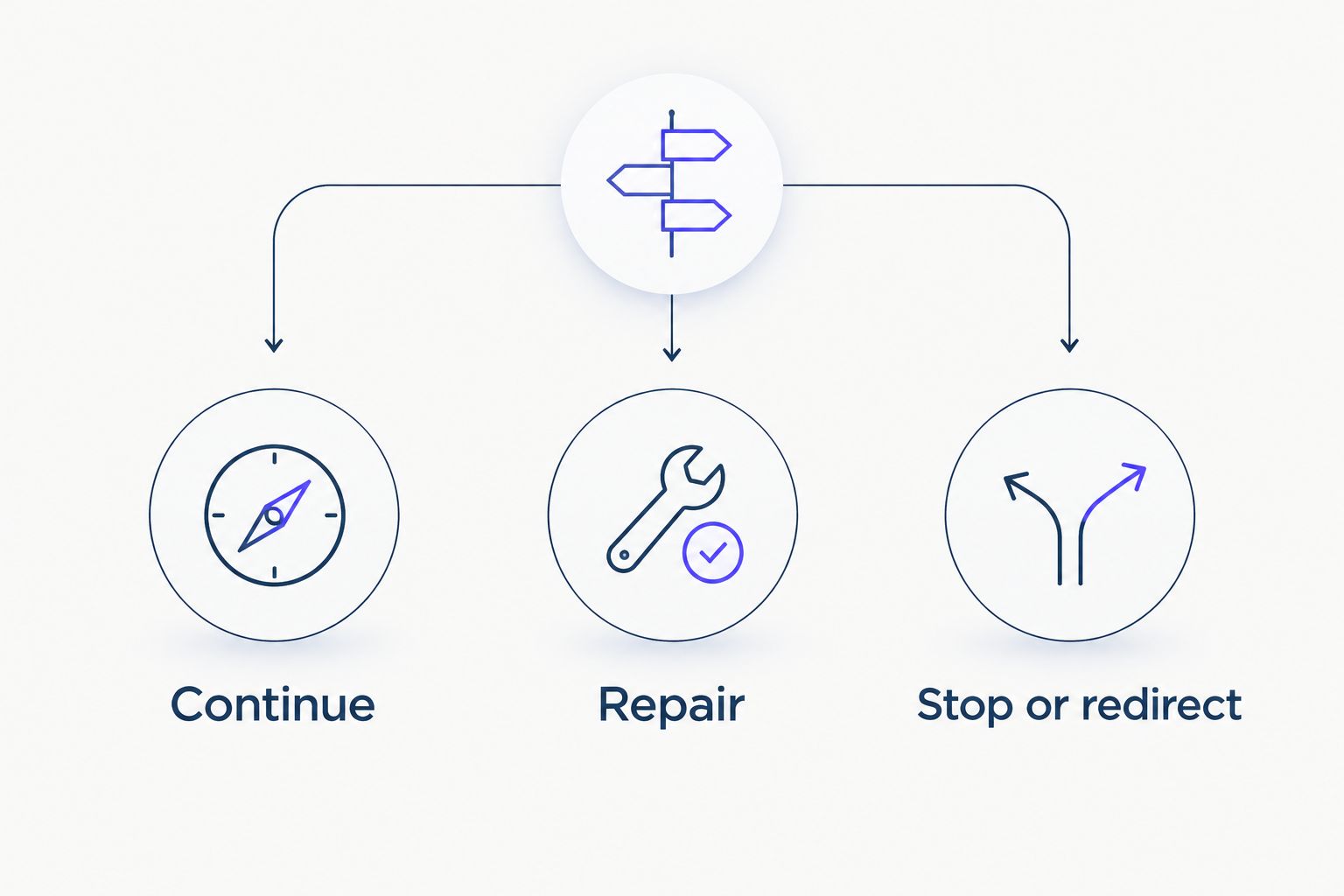
Should you continue, repair, or stop the campaign?
Choose the action that matches the problem. These are operating decisions, not alternative promises about how quickly Google will respond.
| Action | Best for | Advantage | Limitation | Decision rule |
|---|---|---|---|---|
| Continue | Campaigns with accepted delivery, a ready target page, and encouraging relevant search trends | Preserves a consistent strategy while you collect more evidence | Continued activity still does not guarantee ranking gains | Continue within a pre-agreed review scope |
| Repair | Campaigns with incorrect destinations, weak relevance, delivery defects, or measurement gaps | Addresses a specific problem you can verify | Repairs do not prove the original placements will influence rankings | Correct the defect before expanding |
| Stop or redirect | Campaigns that fail acceptance criteria or no longer support the business objective | Prevents automatic repeat orders without a defensible rationale | Stopping acquisition does not explain previous performance | Document the reason and test a different approach |
Continue the strategy, not the habit of ordering. If you cannot explain what the next batch is intended to improve, pause the expansion decision until you can.
When you repair a campaign, specify the defect and its owner. A publisher correction, landing-page rewrite, and reporting fix require different work. Calling all of them “more time for SEO” conceals the actual decision.
What counts as evidence that the campaign is working?
Separate delivery evidence, search evidence, and business evidence in your 2026 reporting. Each answers a different question, and a strong result in one category does not automatically establish success in the others.
Delivery evidence shows whether the agreed work exists. Record the publisher URL, publication date, destination, anchor text, link attributes, and any subsequent correction or removal. Keep these records factual rather than labeling every published link a success.
Search evidence shows what happened to the intended landing page. Review relevant nonbranded queries, impressions, clicks, and position trends under consistent filters. Look at individual queries as well as totals so a changing query mix does not distort the story.
Business evidence shows whether the campaign supports your objective. Track attributable referral visits and meaningful actions on the destination page where your analytics setup permits. Referral outcomes and organic ranking outcomes belong in separate reporting lines.
A referral visit demonstrates that someone followed a link. It does not establish that Google credited the link for ranking purposes. Likewise, a ranking increase during a campaign establishes timing, not sole causation.
For an agency, this distinction protects the client conversation. Report what was delivered, what changed in search, what changed commercially, and what remains unattributed. Do not compress all of that into a green campaign status.
How should you set expectations before buying placements?
Write the review plan before approving the order. Name the target page, its intended queries, the business objective, publisher acceptance criteria, and the evidence required for renewal. Assign responsibility for both placement checks and landing-page fixes.
Separate the publisher’s delivery commitment from your performance review. A delivery commitment concerns work the supplier controls. A ranking forecast concerns a search engine’s response and requires a different level of caution.
NO-BS Marketplace’s guest posting platform is best suited to SEO professionals and agencies sourcing publisher placements, not buyers seeking a guaranteed ranking deadline. Its stated role is connecting buyers with verified publisher sites; that does not remove the need to assess placement fit, disclosure, or performance.
For a 2026 supplier brief, ask how link attributes, publisher corrections, and publication evidence will be documented. Do not assume a policy exists unless the supplier states it. Keep the final decision tied to the agreed campaign objective rather than a vague promise of authority.
Does buying more guest posts make rankings move sooner?
More guest posts do not establish a ranking deadline. Increasing orders changes campaign activity, but it does not resolve indexing exclusions, irrelevant content, incorrect destinations, or a landing page that misses search intent.
Expand only after you can explain why the additional publishers fit the strategy. Do not use link volume to avoid diagnosing a weak target page or an unsuitable publisher selection process.
Should you stop if rankings have not moved yet?
Flat rankings alone do not identify the cause. First establish whether the placements meet your criteria, whether the destination is ready, and whether the reporting compares the intended page and queries consistently.
Then make an explicit decision. Extend observation only with a stated reason and review condition; repair known defects immediately; stop repeat ordering when the strategy no longer has a defensible case.
Can paid guest posts guarantee a ranking improvement?
Paid guest posts cannot guarantee a ranking improvement. Google’s link spam guidance covers buying links to manipulate rankings and calls for appropriate qualification of paid links.
Assess sponsored publishing on its legitimate objectives, including relevant audience exposure and referral activity. Do not describe disclosure as a temporary obstacle or promise that a properly qualified placement will pass ranking credit.
FAQ
How long should a guest post campaign run before rankings move?
There is no universal guest-post ranking deadline. Evaluate verified publication, page accessibility, relevant search trends, and business outcomes rather than promising a fixed number of weeks or months.
When should I start measuring a guest post campaign?
Record a baseline before publication and log each placement’s actual publication date. Keep order dates separate so delivery delays do not distort the performance review.
Does a published guest post mean Google has indexed it?
A published guest post does not prove Google has indexed it. Accessibility, discovery, indexing, and ranking are separate checks.
Should I keep buying guest posts if rankings stay flat?
Do not renew automatically when rankings stay flat. Check placement quality, target-page readiness, and measurement consistency before choosing to continue, repair, or stop.
Can NO-BS Marketplace guarantee when my rankings will improve?
A guest posting platform cannot control Google’s ranking decisions. Assess NO-BS Marketplace against your publisher and delivery requirements, not an assumed ranking deadline.
Do sponsored links guarantee SEO ranking credit?
Sponsored links do not guarantee SEO ranking credit. Google calls for paid links to be appropriately qualified, and buying links to manipulate rankings falls under its link spam policies.
What should I report before organic rankings improve?
Report verified delivery, destination accuracy, referral activity, and relevant search performance separately. Do not label publication or referral visits as proof of an organic ranking effect.
One last thing
A guest post can generate referral value without producing a measurable ranking gain. The reverse also matters: a ranking increase during the campaign does not prove the campaign caused it.
Before your next renewal, write a sentence naming the evidence that supports it. If the sentence says only that SEO takes time, you have not made the decision yet. Your next move is diagnosis, not another automatic order.