
KEY TAKEAWAYS:
A growing number of publishers are considering pulling out of Google. This comes amid the search engine giant scraping their content without compensation.
These publishers are refocusing their efforts on other channels, particularly social media and newsletters. Still, these won’t be enough to fill the gap.
Google is expected to remain dominant in the long term, even as its competitors are intensifying efforts to make the market less one-sided.
More publishers have just about had it with Google—and they’re taking action.
Adweek last week reported that major publishers are preparing to pull their content from Google search results. Among the leading efforts comes from Cloudflare, which hosts a fifth of all websites on the Web. Effective September 15, new free and paid accounts will have bot management set to block multipurpose crawlers by default.
Stephanie Cohen, Cloudflare chief strategy officer, made her company’s stance clear.
“We’ve been clear about what we want. We want a technical solution that allows you to be discoverable without having to give your content away for free.”
This ultimatum comes amid publishers’ concerns about Google scraping their content for AI training without compensation. With zero-click search a reality driven by AI summaries, they’re forced to either accept the data scraping or give up being visible on search results.
There are as many reasons to love Google as to hate it. That said, does removing yourself from the world’s largest search engine make business sense? Is there a way to break free from this rock-and-a-hard-place situation?
It’s Hard To Deny The Giant
Despite recent challenges, Google remains the giant of the search engine market. As of last month, it owns more than 90% of the global market. The second-largest, Bing, doesn’t even come close to challenging it.
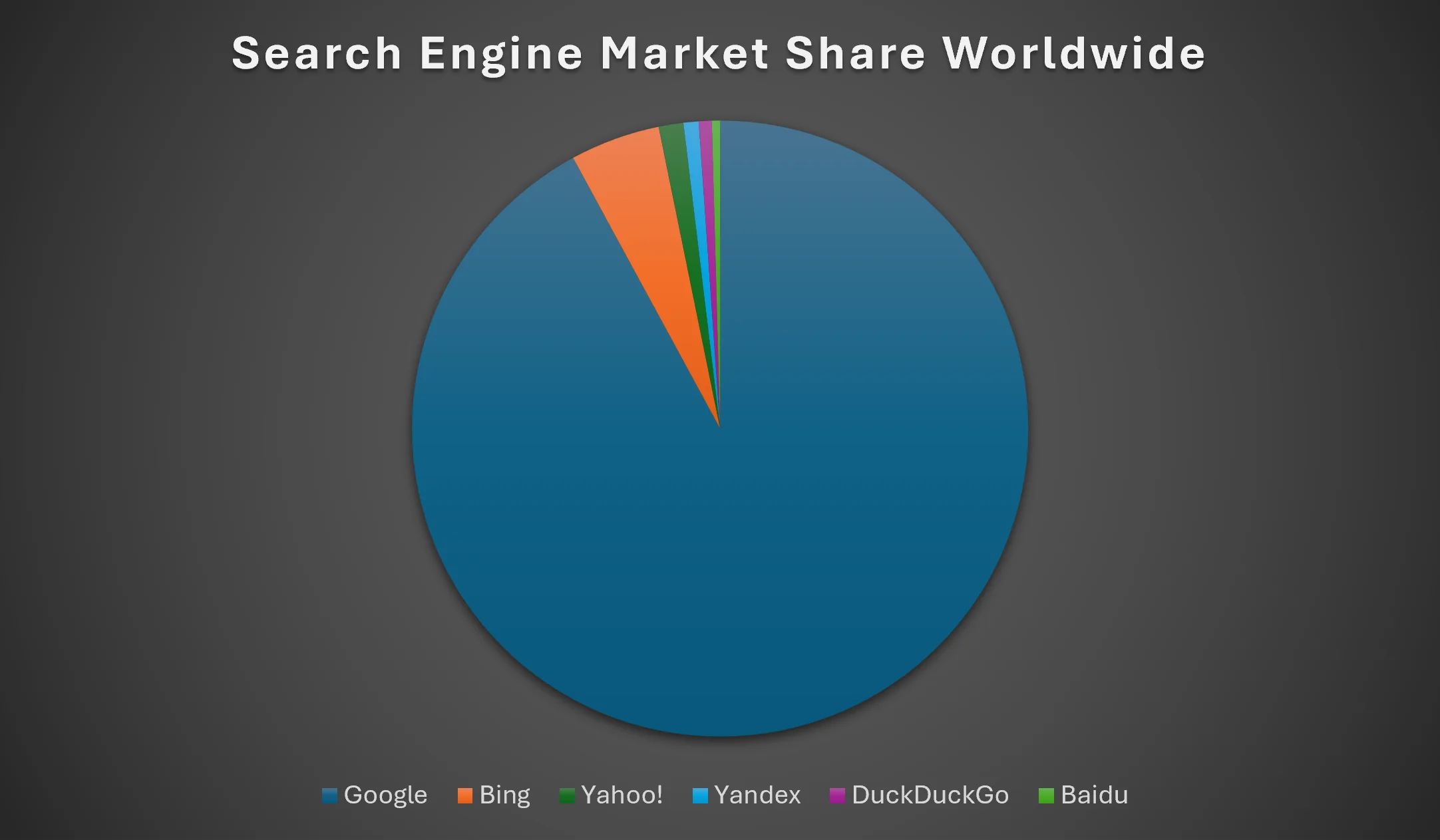
Data source: Statcounter Global Stats
However, it’s not necessarily because Google is the best at what it does.
In a study led by Wharton professor of business economics and public policy Leon Musolff, his team discovered that most users tend to stick with the default. This lack of an “active choice has benefited Google over the long term, at least in devices where it’s the default.1
Even after over half of respondents were paid $10 to switch to Bing, only a third stayed with it. Musolff argued that simply removing the Google default function won’t work, as users have little to no incentive to try the alternatives.1
It also helps that Google revolutionized search. While not the first search engine in history, it introduced PageRank that laid the foundation for the modern search algorithm and, later, SEO. It benefited from innovations ahead of its time, cementing its status as a household name in the search engine market.
However, it’s this status that makes opting out of Google no less than commercial suicide. Roughly half of the globe uses it to start their day on the Web, making it the largest source of leads. Disappearing from its search results is a risk not many would normally take.
Can Other Media Fill The Gap?
The businesses considering walking away from Google are well aware of the ramifications. USA Today, a well-known American daily, is reportedly considering bolstering its visibility in other areas, such as social media and newsletters. CEO Mike Reed told Adweek that USA Today still managed to hit its pageview goals for the past three years.
But can they make up for a brand’s absence in search? Not really.
For one, your content will still be at the mercy of an algorithm—maybe a more ruthless one. Unlike search engine algorithms designed to favor relevance, social media algorithms favor engagement. A person’s interests and preferences determine which post or video shows up at the top of their feed, and it won’t always be relevant.
Even if your content goes viral, know that attention on social media dies down as quickly as it builds up. For example, a Facebook post has an average half-life (the time required to get half of its total engagement) of 1.43 hours. That means its engagement is expected to taper off after almost three hours since going live.
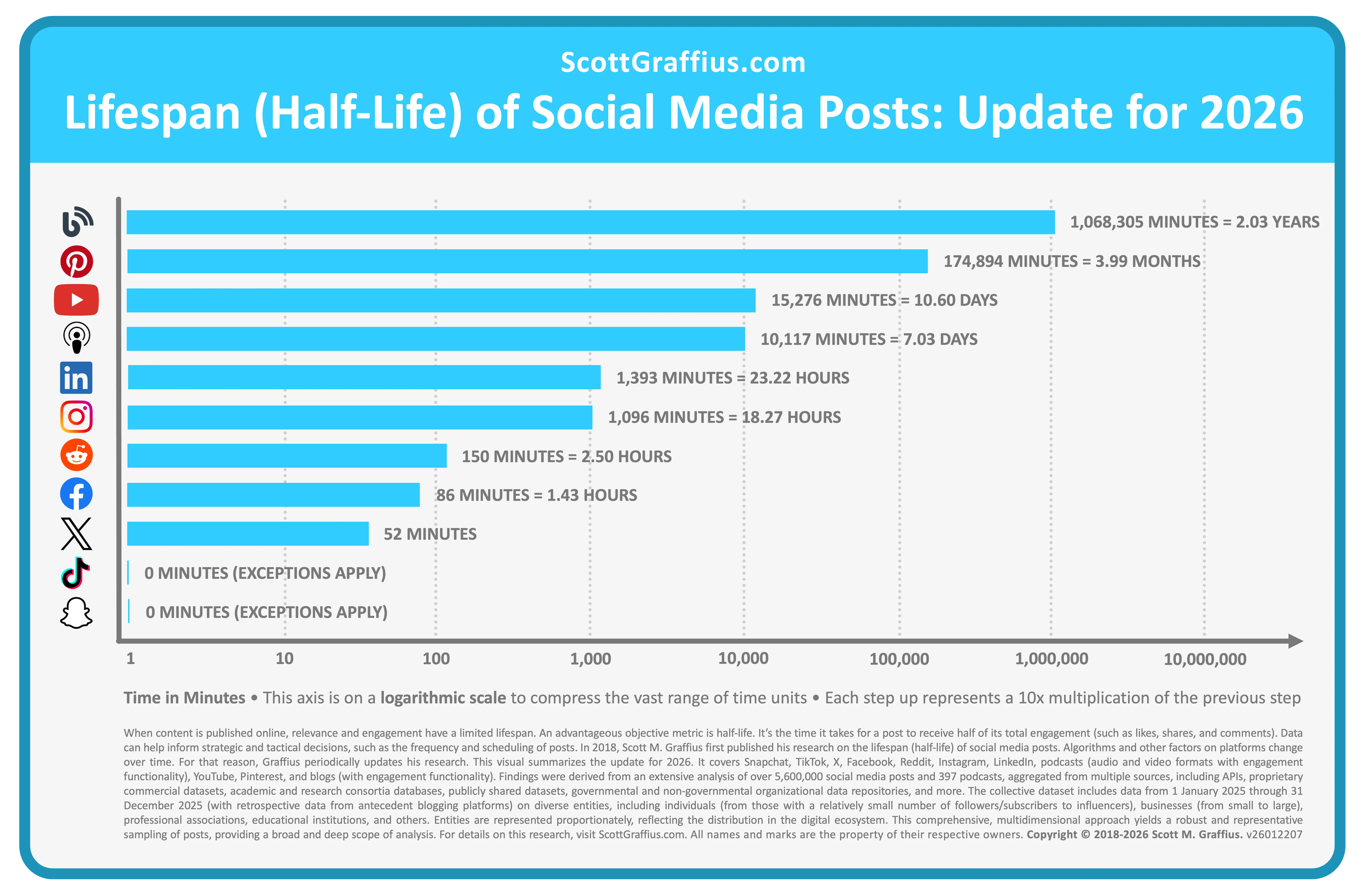
Source: Scott Graffius
Maintaining engagement on Facebook requires consistently posting interesting content, at least eight times a day if the math checks out. This isn’t much of a problem for, say, general news brands, but it can be hard for retailers or service providers.
What about newsletters? They’re a viable alternative to social media posts, given that some platforms have a character limit (e.g., 280 characters per post for free X users). Sadly, these pieces of content also can’t fill the gap for several reasons.
For one, creating a newsletter is a major project in its own right. Guest posting still requires planning, but at least you have platforms like NO-BS Marketplace making the process easy. With newsletters, there’s a wider range of factors to consider, from the target audience to the delivery method.
If you plan on monetizing your newsletter, expect to be up a creek. In Escape the Cubicle, Wes Pearce outlined the downsides of several models.2
Paid subscription: Generates decent income provided you keep pumping out high-quality content every period. Missing one increases the risk of unsubscribing.
Sponsorships: Not worth it unless your newsletter has at least 10,000 subscribers. Also, sponsors will often require you to put their brand in a positive light.
Affiliate marketing: Like sponsorships, the gains are too little to justify the effort. If you aren’t selling anything, this method may feel like you are.
High-ticket coaching: Great for earning money, but you’ll still be just as exhausted as with other methods. Not worth it unless you hate yourself.
Partnerships: Good for reputation building but not for making money. Pearce said it’s “just a hobby with added pressure.”
Donations: Work that deserves a tip can vary in interpretation. Not to mention that people typically don’t expect to tip for free content.
Pearce mentioned a seventh method that worked for him: selling online courses. That said, you need to ask yourself if offering such products makes sense for your brand. It’s sensible for niches that rely on thought leadership (e.g., SEO) but not for generic ones.
Can Anyone Beat Google?
As much as we want to see a David rise to this occasion, it won’t happen anytime soon. The gap between Google and its competitors is too huge to change in the short or medium term. Antitrust lawsuits against it may have gained ground, but it’s fighting tooth and nail.
Musolff also cited that antitrust efforts alone won’t be enough because the real problem lies with consumer behavior. Other search engines—and policymakers to some extent—need to step up their game if they hope to dent Google’s dominance.
Until that time comes, however, exiting Google is ill-advised.
References:
1. “Why Google Dominates the Search Engine Market,” Source: https://knowledge.wharton.upenn.edu/article/why-google-dominates-the-search-engine-market/
2. “I Tried 7 Ways to Monetize my Newsletter. Six Flopped, One Brings Me $5K+ Monthly.” Source: https://escapethecubicle.substack.com/p/i-tried-7-ways-to-monetize-my-newsletter