
KEY TAKEAWAYS:
For all its advancements, GEO still relies on old-fashioned SEO to gather content and produce quality AI summaries.
Contrary to popular belief, fresh content doesn’t always make for better content. It only matters when people need quick updates.
Mass-producing content, whether or not it uses generative AI, is a good way to earn a serious penalty from Google.
While looking for topics to post about, I came across a YouTube video by entrepreneur and SEO consultant Edward Sturm. It was supposed to be a talk about SEO vs. its AI-powered counterpart, GEO, featuring two industry professionals. But the longer I watched the video, the more it felt like a debate than a conversation.
It wasn’t even a contest. The SEO veteran won hands down.
But more than that, this shows that there’s still much we don’t know about how AI works in search. Services love to flaunt their transition to GEO, believing it’ll replace traditional SEO moving forward. What they don’t understand is that AI doesn’t hold the whole Internet, only accesses it—primarily through search results.
So let’s break down what went wrong for the GEO side in the debate. This should also serve as a cautionary tale to avoid misunderstanding the purpose of GEO and SEO.
Note: While the guest experts were named, I’ll withhold their identities out of respect. The post will instead refer to them as the “GEO side” and “SEO side,” respectively.
SEO and GEO are Different Games
The talk begins with Sturm quoting the GEO side’s email to him beforehand. It read:
“SEO is about hacking your way to the first page. It required a person to do their own research, click through results, and decide for themselves. AI search flips that. AI is your best promoter and your best salesperson. It does the research and makes the recommendation for the customer, but it can’t promote you without context, without trusting you, without actually believing you are the one to recommend.
GEO is about giving AI the information it needs to do that. To be your influencer, to be your brand ambassador, to be your best salesperson you don’t pay. You can have perfect SEO and still be invisible to ChatGPT because AI doesn’t care about your backlinks or where you sit on page one. It cares whether your business actually exists on the Internet in a way it can read, trust, and recommend.”
The GEO side is right about a few things. Over the years, SEO has been more or less about gaming the algorithm to rank at the top or high enough in search results. Search engines at the time ran on much simpler systems, allowing techniques such as keyword stuffing and link cloaking to manipulate the results.
It’s also right that AI doesn’t care where content ranks. In our study on third-party citations alongside government or official sources, we discovered that AI would cite results as far as beyond rank 100. The technology essentially upended the long-standing belief that content must rank on page one to be visible to users.
However, the cracks in the argument began to show a few minutes into the video. The GEO side seemed to imply that AI manages to do this on its own—that it has its own index from where it can pull the necessary information.
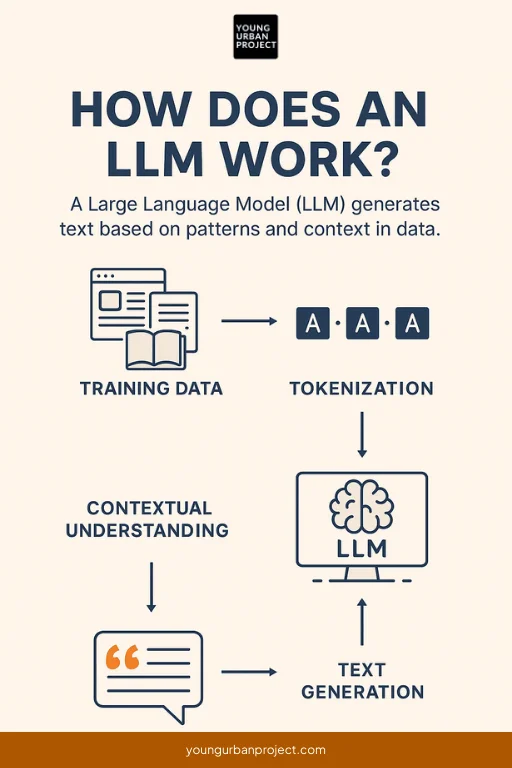
Except, as the SEO side argued, that’s not how large language models (LLMs) like GPT work. LLMs are trained using data their creators input to develop patterns. They don’t store a copy of the wider Web inside, as it’s way too large to fit into an LLM.
Source: Young Urban Project
Instead, the model breaks down the query into “tokens” and analyzes them. Depending on how many subqueries a query contains, it can run multiple searches to retrieve dozens of relevant results. The overlap between LLMs and search results might be shrinking, but the mutual relationship between the two still exists.
Long story short, an LLM can’t recommend a brand it can’t find in search results. AI results are only as good as the data the LLM works with. Think of it this way: SEO helps your brand be seen, while AI helps it get recommended.
Fresh Content Matters in SEO
Asked whether fresh or real-time content makes for better content, the SEO side said that it was never the case. At least, it doesn’t necessarily improve content quality. While it seems contrary to everything we’ve learned, there are a couple of reasons for this.
First, not all content needs to be fresh. A recipe for chocolate brownies doesn’t need to be updated as often as, say, a report on what’s happening at the Strait of Hormuz. The author may choose to improve upon the recipe, but the old version will still produce a delectable dessert. On the other hand, people need frequent updates on the Strait due to gas prices.
Another is that, as the SEO side added, search engines are more concerned with relevancy than accuracy. Guaranteeing the latter is impossible, especially in a world where the truth can vary from source to source.
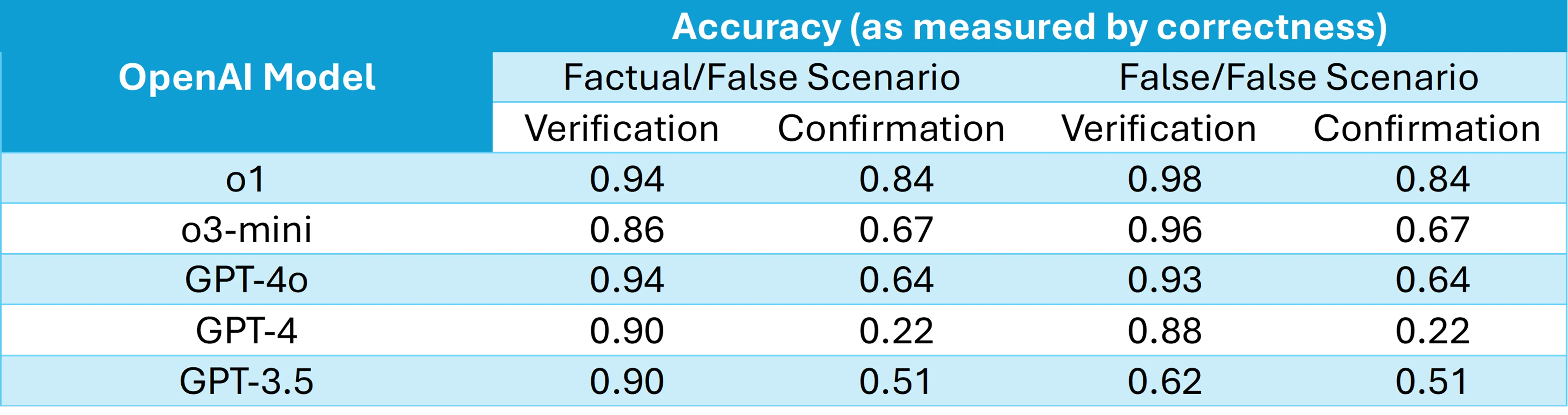
It’s worse for LMs, as Stanford University researchers discovered in 2024. In their study of two dozen LMs being asked around 13,000 questions, they found that all models failed to confirm a user’s false beliefs. For instance, if a user believes that humans only use 10% of their brains, the model may respond that the user doesn’t really believe that.
Source: Suzgun, M. et al. (2025)
As search engines and AI focus on returning relevant results, it falls to websites to ensure content accuracy and, if applicable, freshness. Don’t count on Google or Gemini to return accurate results, as that’s not their priority.
Produce Content En Masse for AI Visibility
Near the end of the video, the GEO side discussed its approach to AI visibility.
“What we like to do is basically create 10, 15, 20 pieces of content around the same topic with different angles that AI can now use to actually answer that person’s question in that season of life.
“We cluster topics together, and then we also have it [written]. We have layers of audits that it goes through, where it writes the content and then audits it for just genuine usefulness, and it goes through two or three rounds of layers before the official articles [are] written and added to a content calendar in our platform that they can now schedule out to our blog site, which we built for them.”
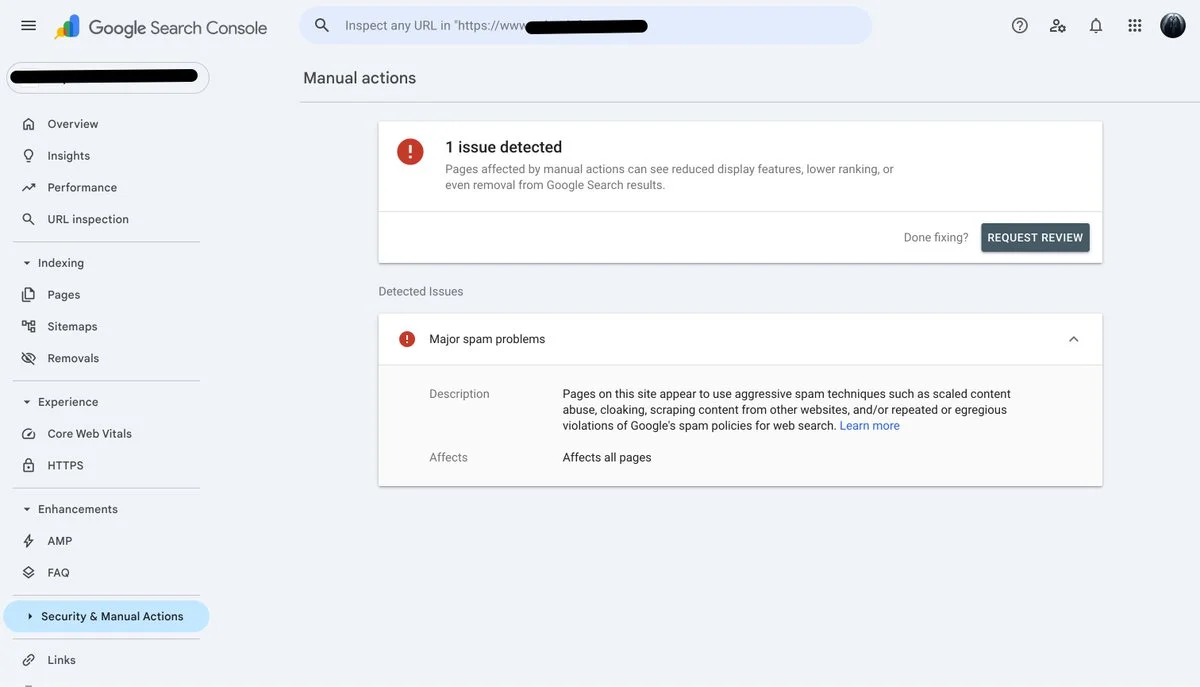
The SEO side, however, cautioned that it has the makings of scaled content abuse. As one of Google’s oldest guidelines (predating AI search by two decades), it’s defined as creating content en masse with the intent to manipulate search rankings. As it happens, an example of this is mass-producing content using generative AI.
Nothing scares website owners more than this ominous alert in the Search Console—and for good reason. The SEO side added that scaled content abuse can result in the site being permanently blocked by Google.
Source: @_Ayu5h on X
It doesn’t matter if your business offers a myriad of products or services. It doesn’t matter if you put much effort into making your content as helpful as it can be. It doesn’t even matter if AI-generated content isn’t technically banned on Google.
Pumping out AI-generated content that adds little to no value is a violation. We all should be over this by now: keyword stuffing, link spam, article spinning—more isn’t necessarily better. One well-written blog post is better than a bunch of slapdash ones.
Arguably, this is the most dangerous piece of advice someone in the SEO industry can give.
Understand SEO, Understand GEO
I won’t deny AI’s growing role in search. The technology is far-rooted in search engines, even if some people don’t like it. But seeing it as the final nail in SEO’s coffin is a grave mistake.
If you want to make the most out of GEO (or AEO, LLMO, whatever), you have to understand how its predecessor works. Or you can accept that GEO is just SEO in a different form.