
No—not if you mean buying links that pass ranking credit: Google's link spam policies treat paid links intended to manipulate search rankings as spam in 2026. You can pay for advertising with appropriately qualified links, or pay professionals to earn independent editorial coverage, but neither arrangement makes purchasing ranking credit white hat.
- Can you buy backlinks and stay white hat? Google distinguishes qualified advertising links from paid ranking manipulation.
- Google Search Central recommends rel=sponsored for paid placements; rel=nofollow remains acceptable.
- Paying for digital PR work differs from paying publishers for ranking links.
- NO-BS Marketplace connects SEO professionals with publishers; assess each sponsored content or guest posting arrangement separately.
Why this matters
A publisher's reputation does not change the nature of a transaction. Neither does a useful article, a relevant audience, or an agency calling its service white hat. Those qualities matter for readers, but they do not exempt paid ranking links from Google's policies.
NO-BS Marketplace is a link building and guest posting platform connecting SEO professionals and agencies with verified publisher sites. That describes how you source placements, not how Google classifies every resulting link.
For your 2026 campaign, separate advertising, editorial outreach, and ranking expectations before approving placements. Otherwise, your team can buy exposure while reporting it as earned authority. Decide what you are purchasing before deciding what success looks like.
Can you buy backlinks and stay white hat?
You cannot buy links intended to manipulate Google rankings and accurately describe that transaction as white hat. Google's Search Central spam policies distinguish buying ranking influence from buying advertising, provided advertising links are appropriately qualified.
Use this comparison when a supplier describes everything from sponsored posts to editorial outreach as link building:
| Arrangement | What you purchase | Main advantage | Main limitation | Best for |
|---|---|---|---|---|
| Qualified sponsored placement | Publication or advertising with a qualified link | Agreed exposure on a publisher's site | Not a purchase of ranking credit | Reaching a relevant audience |
| Earned editorial outreach | Research, content, pitching, and relationship work | Independent editorial consideration | Coverage and links are not guaranteed | Earning coverage through useful material |
| Paid ranking link | A link intended to influence rankings | Control over the contracted placement | Conflicts with Google's link spam policies | Not recommended for white-hat campaigns |
The distinction is not whether money appears anywhere in the process. Writers, researchers, publicists, and outreach specialists charge for their work. The question is whether the publisher's link is purchased for ranking influence or independently awarded through editorial judgment.
A paid placement does not become earned coverage because an agency arranged it. Keep that distinction in contracts and client reports.
Qualified sponsored placements: buy exposure, not ranking credit
Best for: reaching readers on a relevant publication. A sponsored article can explain your product, introduce your research, or send interested readers to a useful destination. Those are legitimate advertising objectives.
Google Search Central recommends rel="sponsored" for advertisements and paid placements. It also accepts rel="nofollow" for this purpose. These are 2 link attributes to recognize, not competing guarantees of SEO performance.
The qualification belongs on the link itself. A visible sponsorship disclosure tells readers about the commercial relationship; the link attribute communicates that relationship to search systems. One does not substitute for the other.
The limitation is straightforward: you should not purchase a qualified placement on the promise that it will deliver ranking credit. Google's treatment of link attributes does not give advertisers a guaranteed ranking outcome.
For a 2026 sponsored content brief, specify the intended audience, reader benefit, disclosure, destination, and link qualification. Reject a brief that defines success only as obtaining an unqualified link from a high-metric domain.
Earned editorial outreach: buy the work, not the endorsement
Best for: brands with expertise, evidence, or a useful story. You can hire an agency to develop research, identify publications, prepare pitches, and handle journalist requests without purchasing a publisher's endorsement.
The editor must retain the decision to cover the story and whether a link helps readers. Paying an outreach team does not automatically make an independently awarded editorial link a paid link.
The downside is uncertainty. An editor can decline the pitch, publish without linking, or choose a different source. That is part of independent coverage, not necessarily a delivery failure.
Do not turn an outreach contract into a disguised placement purchase. If a provider guarantees a particular publisher's ranking link in exchange for payment, ask what arrangement sits behind that guarantee.
Judge the campaign on the quality of its work and the coverage it earns. Do not describe every placement as independent simply because the invoice says digital PR. The payment arrangement and editorial decision matter more than the service label.
Paid ranking links: relevance does not create an exemption
Best for: no white-hat campaign. Buying a followed link specifically to influence rankings conflicts with Google's link spam policies, even when the article is readable and the publisher covers your niche.
Paid ranking links offer control over a placement, but that control is not evidence of policy compliance. Google's published policies describe link spam as grounds for algorithmic action or a manual action. A particular outcome is not predictable from an individual placement.
Do not accept cosmetic fixes as a solution. Replacing an exact-match anchor with a brand name, spacing purchases apart, or moving a link into an older article does not change the commercial arrangement.
A niche edit and a guest post can each carry either an advertising link or a manipulative paid link. The format alone answers nothing.
Better content improves the reader experience; it does not cancel the rules governing paid links. Apply that distinction when reviewing any 2026 proposal marketed as safe, natural, or undetectable.
Why backlink policy risk varies
Google does not publish a safe purchase quota that turns paid ranking links into compliant links. Assess the arrangement rather than looking for a magic number.
- Payment arrangement: Determine whether compensation purchases content work, advertising, or a link intended to influence rankings. Products and services exchanged for links also matter under Google's policies.
- Link qualification: Check whether paid links carry an appropriate
relattribute. A sponsorship label elsewhere on the page is not the same technical signal. - Editorial independence: Establish who chooses the subject, destination, and inclusion of the link. Independent coverage differs from a contracted endorsement.
- Anchor requirements: Watch for commercial keyword anchors written into placement obligations. Natural-sounding wording does not erase payment, but contractual keyword demands clarify the campaign's intent.
- Campaign purpose: Separate audience exposure from buying ranking influence. A relevant publication does not exempt an arrangement designed to manipulate rankings.
Publisher quality still deserves scrutiny. Treat it as a separate question: a site can be relevant to your audience while offering a placement you should reject.
How do you check a placement before approving it?
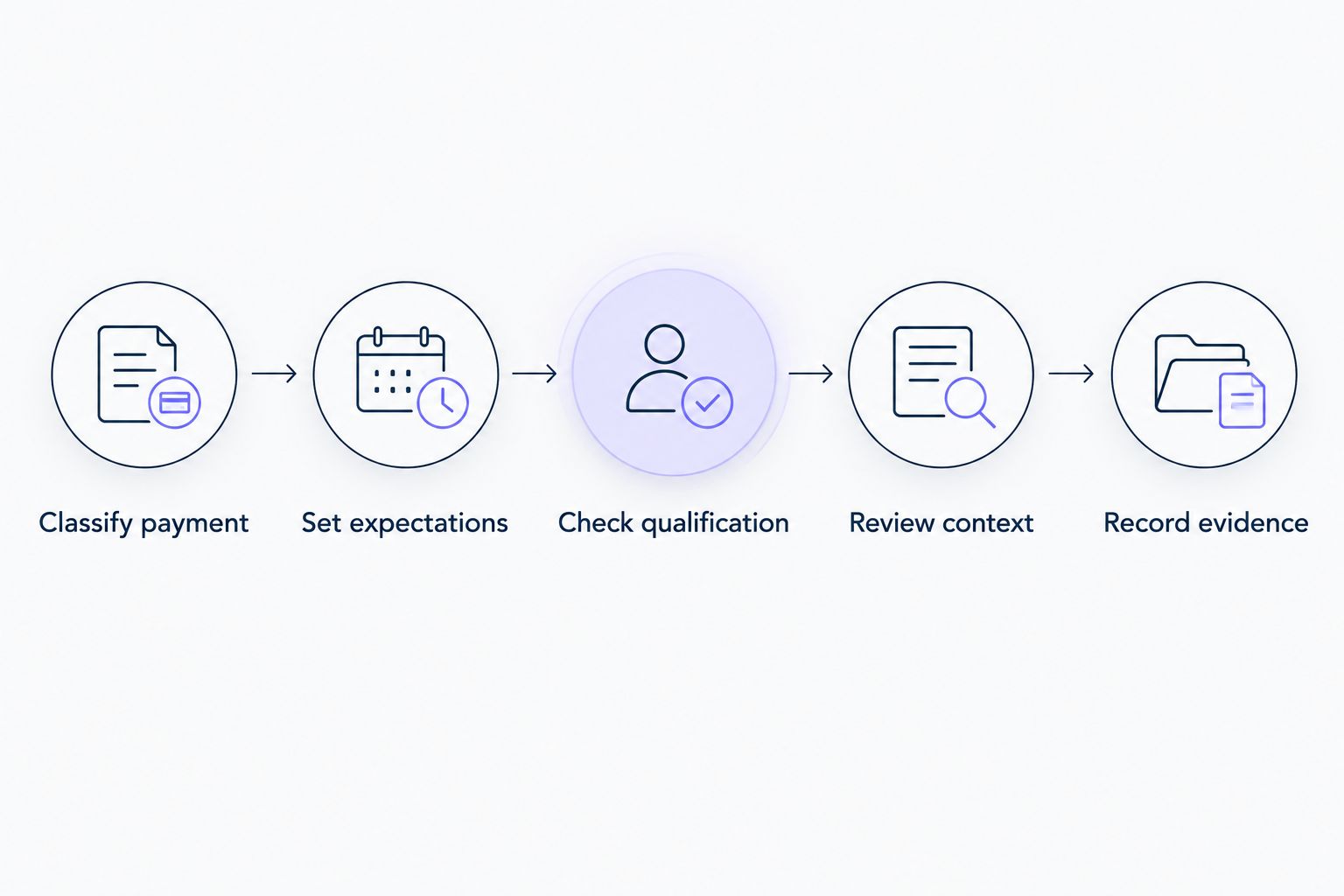
Use 3 approval checks: classify the payment, inspect the published link, and verify the reporting claim. Support those checks with the following workflow so sales language does not become your only evidence.
Classify payment
Ask what the payment secures. Is it writing and outreach work, a sponsored article, an inserted link, or guaranteed editorial coverage?
Get the answer in writing. If the scope combines several activities, separate them rather than treating the entire package as earned media. An agency fee and a publisher placement fee describe different transactions, even when they appear on the same invoice.
Set expectations
Write down the placement's purpose before commissioning content. For advertising, identify the audience and the action you want readers to take. For editorial outreach, identify the evidence or expertise that makes the pitch useful.
Remove promises of guaranteed ranking improvements. You can agree on deliverables you control; you cannot responsibly promise how Google will evaluate a particular backlink.
Check qualification
For a paid placement, confirm the intended link attribute with the publisher before publication. After publication, inspect the actual anchor element rather than relying on the order description or a screenshot.
A page can look correct while its link markup differs from the agreement. Check the live destination and rel value together. If the publisher refuses appropriate qualification, reject the placement as a white-hat purchase.
Review context
Read the published article as a reader, not a link buyer. Check that the destination supports the surrounding claim and that readers receive an accurate explanation of why they should visit it.
Then review the sponsorship disclosure separately. For US campaigns in 2026, consider applicable FTC endorsement and native advertising guidance; compliance with Google's link policies does not replace advertising disclosure obligations.
Record evidence
Keep 5 record fields: publisher URL, destination URL, payment classification, link attribute, and disclosure status. Save the publication agreement alongside that record so your team can distinguish planned terms from the live result.
Record what you verified, not what a supplier's package name implies. If a placement changes later, update the record rather than leaving an inaccurate classification in the client report.
How should agencies describe these purchases to clients?
Separate service delivery from search outcomes. A published sponsored article is an advertising deliverable; an independently earned mention is editorial coverage. Neither needs an invented promise about ranking credit to justify its existence.
In your 2026 reporting, label placements by their actual arrangement and include their verified attributes. Avoid a single total that blends paid advertisements, earned editorial links, and unreviewed purchases as though they were equivalent.
NO-BS Marketplace is best for SEO professionals and agencies sourcing publisher placements. Its platform connects buyers with verified publisher sites, but that description does not establish the qualification, disclosure, or editorial independence of any particular placement.
The practical advantage is access to publisher placement options. The limitation is that purchasing through a platform does not resolve Google's policy requirements for you. Treat NO-BS Marketplace link building placements with the same approval checks you apply to direct publisher arrangements.
Does a nofollow link make a paid article white hat?
A qualified link addresses the paid-link issue, not every possible content issue. Google accepts nofollow for paid links, while preferring sponsored for advertising relationships.
You still need to assess the article's accuracy, disclosure, and purpose. A link attribute is not blanket approval of the surrounding campaign.
Is paying a digital PR agency the same as buying backlinks?
Paying for outreach work is not automatically buying backlinks. The distinction depends on whether publishers independently choose the coverage and links or receive compensation for the placement.
Ask the agency to explain the arrangement behind its promised deliverables. A service name is not evidence of editorial independence.
Can a high-authority website sell white-hat ranking links?
A publisher's authority does not exempt paid ranking links from Google's policies. Third-party authority metrics describe their own measurements; they do not certify that a commercial arrangement complies with Google Search requirements.
Evaluate the payment and link qualification before comparing publisher metrics. A stronger-looking domain does not change what you bought.
FAQ
Can you buy backlinks and stay white hat in 2026?
Not if you purchase links intended to manipulate Google rankings. Qualified advertising links and independently earned editorial links are different arrangements from buying ranking credit.
What link attribute should a paid guest post use?
Google recommends rel=sponsored for paid placements and also accepts rel=nofollow. Verify the attribute on the published link rather than relying on a sponsorship label alone.
Is a paid guest post safe if the content is useful?
Useful content does not exempt a paid ranking link from Google's link spam policies. Assess the payment arrangement, link qualification, and reader disclosure separately.
Can I pay an agency to earn editorial backlinks?
Yes, you can pay an agency for research, content development, and outreach. Publishers must independently decide whether to cover the material and include links for the resulting coverage to be genuinely earned.
Does using branded anchor text make bought links white hat?
No, branded anchor text does not change a paid ranking-link arrangement. Link wording and payment classification are separate issues.
Can Google penalize a site for buying backlinks?
Google's spam policies allow algorithmic action or manual action for link spam. A specific outcome cannot be predicted from an individual purchase.
Does a sponsored label replace the sponsored link attribute?
No, a visible sponsorship label does not replace link qualification. Reader-facing disclosure and machine-readable link attributes perform different jobs.
How many backlinks can I buy without breaking Google's rules?
Google does not publish a safe quota for purchasing ranking links. Assess the purpose and qualification of each arrangement rather than treating a purchase count as permission.
One last thing
Before approving a placement, ask whether you would still want it if search engines gave the link no ranking credit. That question is a useful commercial test, not a policy exemption.
If the answer is yes, define the audience benefit and measure the advertising accordingly. If the answer is no, do not disguise a ranking-link purchase as brand exposure. Buy advertising as advertising; earn editorial endorsement through something worth covering.