
Yes, you can build backlinks without cold outreach by publishing resources people cite, responding to requests for expertise, working with existing contacts, or arranging publisher placements through a marketplace. For a 2026 campaign, the distinction is control: you can remove unsolicited pitching, but you cannot guarantee independent editorial links or treat paid placements as earned endorsements.
- Can you build backlinks without cold outreach? Yes—use citable resources, requested contributions, existing relationships, or publisher marketplaces.
- Earned backlinks depend on editorial choice; publishing useful content alone does not guarantee links.
- NO-BS Marketplace connects SEO professionals with verified publishers; paid placements still require scrutiny and appropriate link qualification.
- Choose a method based on your audience, editorial resources, and whether payment influences the placement.
Can you build backlinks without cold outreach?
Yes. Cold outreach is a distribution tactic, not a requirement for earning or arranging backlinks. The alternatives differ in who starts the conversation, who controls publication, and why the publisher includes your link.
Separate earned coverage from commercial placements before comparing results. If you are considering the commercial route, start with how to vet a guest post marketplace before you pay.
| Method | Best for | Main advantage | Main limitation |
|---|---|---|---|
| Citable resources | Teams with original expertise or useful reference material | Gives writers a reason to reference your website | Discovery and links are not guaranteed |
| Requested contributions | Specialists answering relevant editorial requests | Starts with an expressed need rather than an unsolicited pitch | Editors control selection, attribution, and links |
| Existing relationships | Businesses with genuine customers, suppliers, or industry contacts | Builds on established context | Relationships do not create an entitlement to links |
| Publisher marketplaces | SEO teams arranging commercial publishing opportunities | Replaces individual publisher prospecting with a platform | Paid links need appropriate qualification and publisher review |
None of these methods removes the need for judgment. A relevant citation inside a useful article serves a different purpose from a purchased placement, even when both produce a backlink.
Why this matters
A no-cold-outreach strategy needs a replacement for prospecting, not just a decision to stop sending emails. Someone still needs to discover your resource, request your expertise, recognize your relationship, or accept a commercial brief.
For your 2026 plan, write down which mechanism will make that happen. If the answer is simply “publish more content,” the distribution part of the plan is unfinished.
Also define what success means before choosing the channel. Referral visits, relevant coverage, and search visibility are different outcomes; a published link does not prove all of them improved.
Citable resources: best for teams with original expertise
A resource earns a citation when it helps a writer support a claim, explain a process, or direct readers to something useful. Original research is one route, but a documented methodology, a practical template, or a clearly explained technical reference can also give someone a reason to link.
Start with questions your team can answer better than a generic summary. Use information you own or have permission to publish, explain its limits, and make the source easy to identify.
A useful resource needs more than a polished introduction:
- A specific purpose: State the question the page answers.
- Traceable evidence: Explain where facts or observations came from.
- Clear scope: Identify what the resource does and does not cover.
- Accessible presentation: Put the useful material on the page rather than hiding the entire answer behind a form.
- Maintenance: Correct broken references and update material that changes.
Distribute the resource through your existing newsletter, relevant community participation, and owned channels. Follow community rules; dropping an unrelated link into a discussion is not a substitute for contributing.
The advantage is editorial usefulness. The drawback is uncertain discovery. Even an excellent resource needs an audience, and an independent writer can use it without linking. Choose this route when you can maintain the asset, not when you need a guaranteed publication date.
Requested contributions: best for subject-matter specialists
Responding to a journalist's or editor's request is not cold outreach when the request invites contributions. You are answering an expressed need rather than interrupting someone with an unrelated pitch.
Read the request literally. Check the required expertise, topic, publication context, and submission instructions before preparing an answer.
Offer a contribution the editor can use: a clear explanation, a relevant example, or a defensible observation. State your credentials accurately and separate direct experience from opinion.
A contribution request is not a promise of a backlink. An editor can decline the response, quote only part of it, name your business without linking, or use a link attribute you did not request.
The advantage is a defined editorial need. The drawback is limited control. Use this method when your specialists can provide credible answers without turning every response into a sales pitch.
Keep a record of submitted contributions and published coverage. That lets you distinguish unanswered requests from actual mentions and linked citations without counting every response as a result.
Existing relationships: best for businesses with real industry ties
Your customers, suppliers, professional associations, and collaborators already understand some part of your business. Relevant publishing opportunities can emerge from those relationships without a stranger-to-stranger pitch.
Examples include contributing to an association resource, participating in a genuine customer story, or sharing technical documentation with a partner that needs it. The link should help the publisher's reader understand the relationship or access supporting information.
Ask about the editorial opportunity first, not the anchor text. A useful contribution remains useful even when the publisher decides a link is unnecessary.
Avoid turning relationship building into a compulsory exchange. Google's link-spam policies identify excessive link exchanges as a problem; an existing relationship does not exempt a scheme designed to manipulate rankings.
The advantage is shared context. The drawback is a limited pool of relevant opportunities. Do not stretch a legitimate partnership into unrelated articles just to increase the backlink count.
Publisher marketplaces: best for arranging commercial placements
A publisher marketplace changes how you find and arrange a placement. Instead of identifying publishers individually and sending unsolicited pitches, you work through a platform connecting buyers and publishers.
NO-BS Marketplace is best for SEO professionals and agencies seeking a platform that connects them with verified publishers for commercial placements. The platform connects buyers with publisher sites for SEO content, backlinks, sponsored content, and digital PR placements.
You can review NO-BS Marketplace as one route for link building and guest posting. The practical benefit is access to publisher connections; the limitation is that a marketplace placement does not become an independent endorsement simply because you did not send the pitch.
For a 2026 campaign, separate publisher verification from your own assessment of suitability. Read the publication, examine the proposed article context, and establish how the commercial relationship and links will be handled.
Google's published spam policies treat buying links for ranking manipulation as link spam. Google recommends qualifying paid links with rel="sponsored"; rel="nofollow" is also acceptable for identifying paid links. Those attributes do not replace any applicable advertising-disclosure obligations.
Use commercial placements for relevant publishing and audience exposure, not as a promise of ranking credit. Reject arrangements that depend on concealing payment or guaranteeing search outcomes.
Why results vary without cold outreach
The absence of cold emails tells you little about the strength of a campaign. These factors explain the differences between the methods:
- Audience fit: A publisher's readers need a reason to care about the subject and destination page.
- Resource quality: An original, well-supported reference gives writers more to cite than a generic promotional page.
- Discovery: Owned channels, search visibility, and existing communities affect whether people encounter your material.
- Editorial control: Independent publishers decide whether a contribution deserves publication and a link.
- Commercial terms: Payment changes how you should classify, disclose, and qualify a placement.
- Destination usefulness: The linked page must deliver what the surrounding sentence promises.
For a 2026 reporting plan, classify each result by acquisition method. Otherwise, earned citations and sponsored placements end up in the same total, hiding what actually produced them.
Do not use a domain-level authority score as the entire acceptance test. Read the proposed page and ask whether the link belongs in that specific context.
How do you start without sending cold emails?
Use this sequence to turn the alternatives into a working process. Pick a primary method first; adding every channel immediately makes it harder to identify what is working.
Define the outcome
Choose the outcome your campaign is meant to support: qualified referral visits, relevant editorial coverage, or discovery of a useful resource. Name the destination page and explain why the intended reader should visit it.
Choose the route
Match the method to something you already have. Original expertise supports citable resources and requested contributions; established industry contacts support relationship-led opportunities. Commercial publishing requires a separate assessment of publisher fit and terms.
Prepare the source
Make the destination page useful before seeking attention. Check its factual claims, supporting references, authorship where relevant, and accessibility. Remove promises the page cannot substantiate.
Check the context
Before approving an arranged placement, review the publication, surrounding article, proposed destination, and link treatment. For independent coverage, respect the publisher's editorial decision rather than demanding a particular anchor or link attribute.
Record the result
Log the source page, destination, acquisition method, publication date, and link attributes. Check whether the link remains live, and distinguish referral activity from changes in search performance.
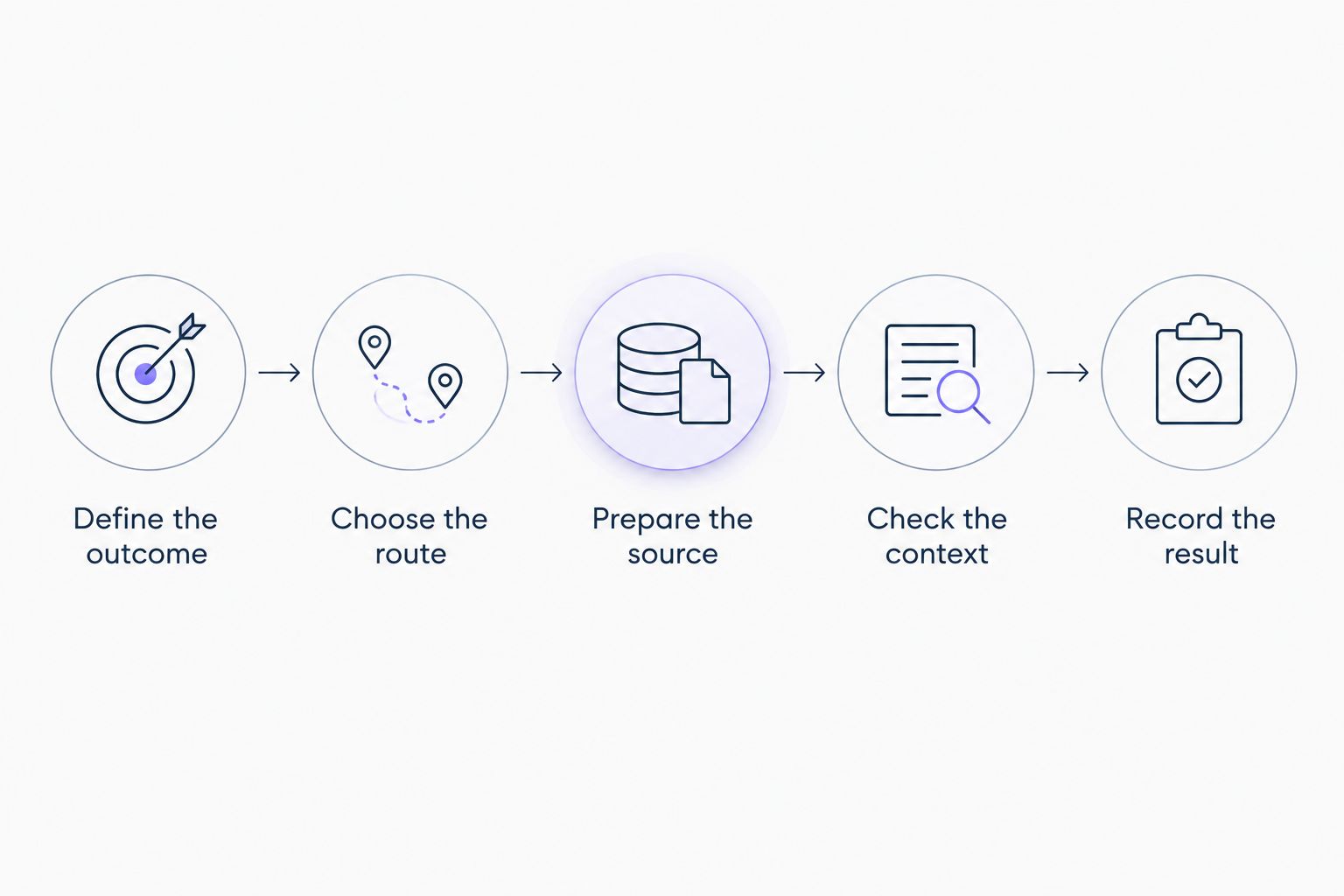
These steps also define what an agency should retain when it delegates delivery. NO-BS Marketplace provides link building and guest posting connections; your team still needs to set the campaign objective and acceptance criteria.
Can you build backlinks with no outreach at all?
Yes, independently discovered resources can earn backlinks without any direct request. That is different from guaranteeing a repeatable stream of links: writers still need to find the resource and choose to cite it.
If you rule out every form of communication, you also rule out requested contributions and relationship-led discussions. Be precise about the constraint: avoiding unsolicited email leaves more options than avoiding contact altogether.
Does outsourcing link building count as avoiding cold outreach?
Outsourcing removes cold outreach from your workload, not necessarily from the campaign. An agency or contractor can still contact publishers on your behalf, so ask how the work is delivered.
Specify whether your restriction concerns staff time, unsolicited contact, or the acquisition method itself. Those are different requirements, and a provider needs the actual constraint before proposing a process.
How should you judge backlinks earned without outreach?
Judge the link by its relevance, context, destination, and commercial status—not by whether an email preceded it. A naturally discovered citation can still come from an irrelevant page, while a disclosed sponsored placement can introduce your resource to relevant readers without providing ranking credit.
For your 2026 review, keep publication checks separate from outcome checks. A live link confirms delivery; it does not establish that the placement caused a ranking change or generated qualified demand.
Compare referral behavior and destination-page performance with the campaign objective. Record other changes, such as content revisions or technical fixes, before attributing search movement to backlinks alone.
FAQ
What's the best way to build backlinks without cold outreach?
The best method depends on what you can contribute: citable resources suit teams with original expertise, while requested contributions suit credible specialists. Neither method guarantees a link because publishers retain editorial control.
Can a new website earn backlinks without emailing anyone?
Yes, a new website can earn backlinks when writers discover and cite useful material. Publishing alone does not guarantee discovery, so use relevant owned channels and legitimate community participation to introduce the resource.
Does guest posting always require a cold pitch?
No, guest posting can begin through an existing relationship, an invitation, or a publisher marketplace. The arrangement still needs relevant content and appropriate treatment of any commercial relationship.
Are paid backlinks the same as earned backlinks?
No, paid backlinks result from a commercial arrangement, while earned backlinks reflect an independent editorial choice. Google recommends qualifying paid links with sponsored attributes and also accepts nofollow for identifying paid links.
Can NO-BS Marketplace replace manual publisher prospecting?
NO-BS Marketplace connects SEO professionals and agencies with verified publisher sites for commercial publishing opportunities. Buyers still need to assess relevance, article context, disclosure, and link qualification.
Can anyone guarantee backlinks without outreach?
Independent editorial backlinks cannot be guaranteed because publishers decide whether to cite your resource. A commercial publication arrangement is different from a guarantee of editorial endorsement or search-ranking improvement.
Should I demand exact-match anchor text?
No, choose anchor text that accurately describes the destination and fits the surrounding sentence. For independent coverage, respect the publisher's editorial choice rather than making keyword wording a condition.
One last thing
Make the destination worth citing before replacing the outreach process. If a writer cannot explain what your page adds to an article, changing the acquisition channel will not fix that weakness.
Ask someone outside the campaign to read the proposed linking sentence and destination page together. If the page fails to deliver the evidence, explanation, or resource that sentence promises, improve it before pursuing the placement.