
Yes, you can build backlinks in-house without an agency by managing research, publisher outreach, content, and placement checks yourself. The trade-off is staff time: someone must own the work and reject weak opportunities, not just send pitches. For 2026, choose in-house link building when you can support that process consistently—not because you expect agency-free work to be effort-free.
- Can you build backlinks in house without an agency? Yes—keep publisher selection, outreach, and quality checks under clear ownership.
- In-house link building gives you control but requires editorial judgment and sustained staff time.
- NO-BS Marketplace connects SEO professionals with publisher sites; your team still needs campaign standards.
- Earned backlinks and sponsored placements are different: paid links need appropriate qualification, not ranking promises.
Why this matters
Hiring an agency changes who performs link building. It does not remove your responsibility for the target pages, publisher standards, or claims made in your name. Keeping the work internal gives you closer control, but only if you assign responsibility for decisions as well as delivery.
NO-BS Marketplace is a link building and guest posting platform connecting SEO professionals and agencies with verified publisher sites. Access to publishers addresses sourcing; it does not replace your strategy, content review, or assessment of whether a placement serves your audience.
Can you build backlinks in-house without an agency?
Yes. You need an accountable owner, something worth citing, and a repeatable process—not an agency contract. Your team can approach relevant publishers, contribute useful articles, offer expert commentary, and request corrections to existing mentions.
Choose the operating model around the work you can actually perform. Do not confuse control over an outreach campaign with control over an editor’s decision to publish.
| Operating model | Best for | Main advantage | Main limitation |
|---|---|---|---|
| Fully in-house | Teams with SEO judgment and writing capacity | Direct control over pitches, content, and publisher selection | Your staff handles research, follow-ups, and verification |
| Agency-managed | Teams that need external campaign execution | Delegated coordination and production | You still need to assess the agency’s methods and output |
| Hybrid | Teams with internal strategy but limited delivery capacity | You retain decisions while assigning defined tasks externally | Handoffs need clear acceptance standards |
Treat these as operating choices, not quality labels. An internal team can make poor placement decisions, and an external provider can work to strict standards. Judge the actual process.
Fully in-house: keep decisions and delivery together
Best for teams that can assign an owner and protect time for execution. Keep research, pitching, writing, approvals, and monitoring inside your organization. This gives subject experts a direct route into the content and keeps publisher relationships with your business.
The downside is workload. Outreach stalls when the same person also owns technical fixes, reporting, and every urgent marketing request. Before starting, decide which existing responsibilities will move or receive less attention.
Write down who can approve a publisher, who checks factual claims, and who accepts the finished placement. Those decisions matter more than the job title of the person sending emails.
Hybrid: outsource a task, not your standards
Best for teams that understand their SEO priorities but lack delivery capacity. You can keep target-page selection and editorial approval internal while assigning prospect research, writing, or publisher coordination to outside support.
The advantage is a narrower commitment than handing over the entire campaign. The limitation is coordination: a writer cannot fix an unsuitable publisher, and an outreach specialist cannot rescue a pitch with no useful contribution.
NO-BS Marketplace’s link building platform is best suited to SEO professionals and agencies that want publisher access while retaining campaign decisions. Its stated role connects buyers with publisher sites; your team still needs to judge relevance, review content, and handle sponsored placements appropriately.
How do you run an in-house backlink campaign?
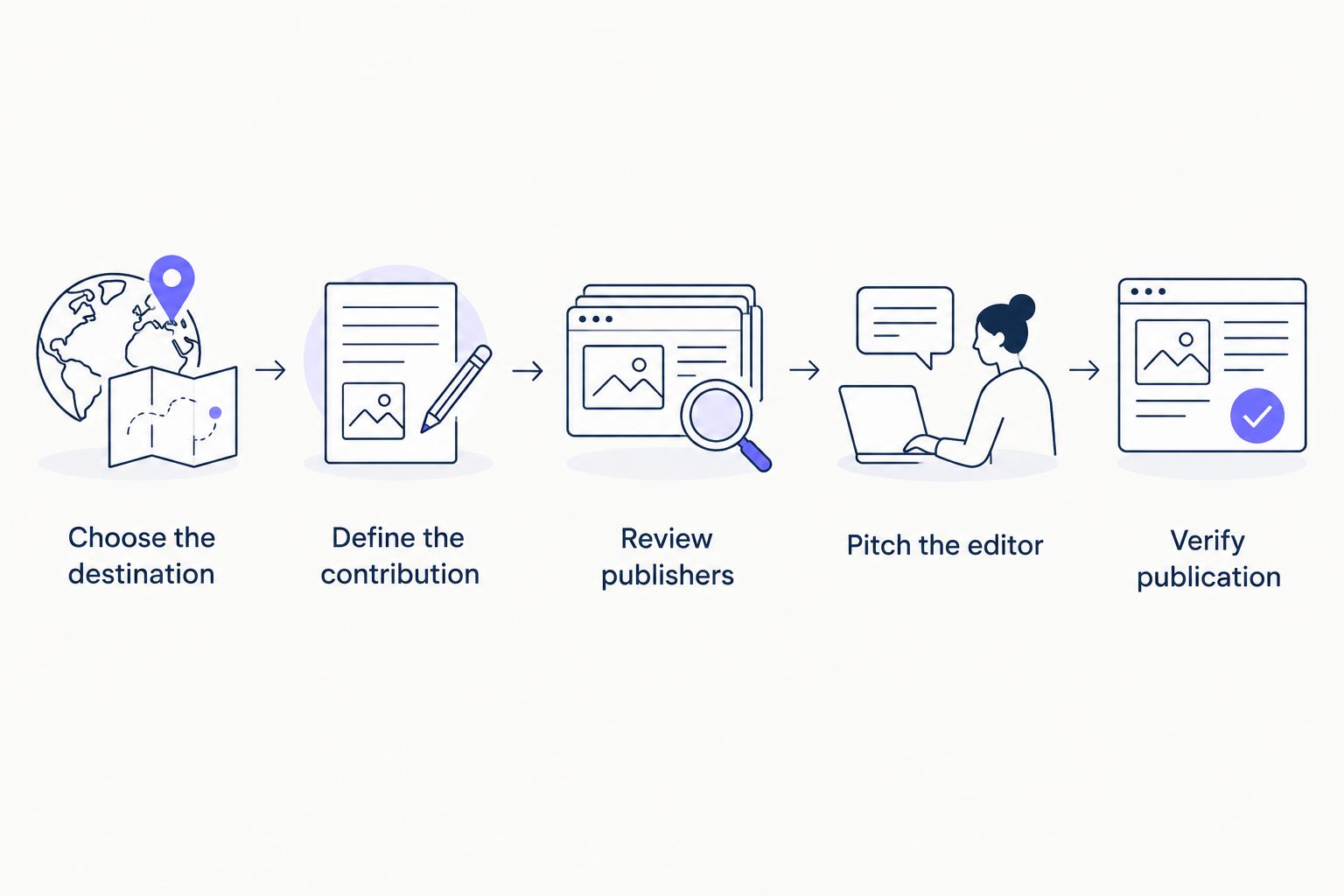
Use this sequence as your 2026 operating checklist. Each stage needs a decision before the next stage begins; otherwise, you risk producing content for publishers you should have rejected.
1. Choose the destination
Start with a page that serves a defined audience and answers a real question. Read it as an editor would: does it contain evidence, explanation, or a resource worth sending readers to?
Fix thin or outdated content before pitching it. A link request is not a substitute for a useful destination, and forcing every mention toward a sales page weakens the editorial case.
2. Define the contribution
Decide what you can offer the publisher’s audience. Options include an original explanation, a practical example, expert commentary, or information that corrects an incomplete article.
Write the contribution in plain language before building a prospect list. If the pitch only says that you want a backlink, you have described your objective—not the editor’s reason to respond.
3. Review publishers
Read the proposed publication and the section where your contribution belongs. Check subject fit, editorial quality, authorship, and whether outbound links support the surrounding text.
Use the same publisher-site audit criteria for every candidate. Do not accept a site solely because a third-party authority score looks attractive or because someone calls it verified.
4. Pitch the editor
Explain the proposed topic, its relevance to the publication, and what your team contributes. Keep the message specific enough that the editor can evaluate it without asking what you actually intend to write.
Respect submission requirements and requests to stop contact. Avoid promising reciprocal links or disguising a commercial arrangement as independent editorial interest.
5. Verify publication
Check the live article against what you approved. Confirm the destination, anchor text, surrounding context, factual accuracy, and any required sponsorship disclosure or link qualification.
Record the publication URL and the person responsible for follow-up. A delivered draft is not a published placement, and a published placement still needs checking.
Why in-house link building results vary
The staffing model alone does not determine the result. Use these factors to diagnose where your campaign needs work rather than assuming that sending more emails will fix it.
- Ownership: Assign responsibility for stalled pitches, editorial questions, and final acceptance. Shared access to a spreadsheet is not the same as accountability.
- Publisher fit: Match the contribution to the publication’s subject and readership. A recognizable domain does not make every section relevant.
- Content substance: Give editors something they can use. Rewritten general advice creates a weaker editorial case than a clear contribution grounded in your expertise.
- Approval capacity: Make subject experts available for factual review. An accepted topic still needs an accurate, publishable draft.
- Placement terms: Establish whether the arrangement is earned editorial coverage or sponsored content. That distinction affects disclosure and link qualification.
- Measurement: Separate completed activity from business outcomes. Pitches sent, articles published, referral visits, and conversions answer different questions.
For your 2026 campaign, document these decisions before evaluating performance. Otherwise, a report can show completed placements without explaining why the team selected them.
What should you track after a backlink goes live?
Keep an operational record and an outcome record. The operational record shows what happened: the publisher, source page, destination, publication date, anchor text, link attributes, and any sponsorship terms.
The outcome record shows what followed. Review referral visits and relevant conversions in your analytics, alongside target-page search performance in Google Search Console. Do not label an organic traffic increase as the result of a particular backlink simply because it happened afterward.
For 2026 reporting, separate these questions:
- Delivery: Did the approved article and link go live as agreed?
- Retention: Does the placement still exist, with the expected destination and context?
- Audience response: Did readers arrive and take relevant actions?
- Search performance: Did the destination’s visibility change during the reporting period?
Keep technical changes, content revisions, and other campaign activity in the same reporting timeline. That context prevents a placement report from turning correlation into a claim of causation.
When should you bring in outside help?
Bring in outside support when you can name the blocked task. If publisher research is delaying approved content, assign research. If drafts keep failing factual review, improve the brief and access to expertise before outsourcing more writing.
A consultant is a different choice from a delivery provider. When strategy is the gap, choosing an SEO consultant means assessing how they diagnose target-page problems, explain publisher selection, and define success—not just asking whether they can obtain links.
Ask any outside provider to explain its role in plain terms. Who selects publishers? Who approves content? Who checks the live placement? Who handles corrections? Keep those responsibilities explicit even when your team retains overall ownership.
Outsource the bottleneck, not your ability to judge the work. If nobody internally can reject an unsuitable placement, adding a supplier does not solve the quality-control problem.
Can you build backlinks without cold outreach?
Yes, you can pursue backlinks through existing relationships, expert contributions, and resources that publishers discover and cite. You can also request a link where a publisher already mentions your business and a destination would help readers.
The limitation is control. You cannot require an independent publisher to cite you, and publishing a resource does not guarantee discovery. Give the resource a distribution plan rather than assuming useful content will attract attention by itself.
Is in-house link building safer than using an agency?
No. In-house ownership does not make a tactic compliant, and agency involvement does not automatically make it risky. Judge how the link was obtained and whether the arrangement follows the relevant rules.
Google Search Central identifies buying or selling links for ranking purposes as link spam. Paid advertising and sponsorship links should be qualified appropriately, using rel="sponsored" or rel="nofollow"; disclosure to readers is a separate responsibility. Keep that distinction explicit in your 2026 process.
Can a small team manage link building itself?
Yes, if the team limits the scope to work it can review and complete. Start with a defined audience, a useful destination, and a contribution your team can support with expertise.
Do not set an arbitrary monthly backlink quota before assessing opportunities. A quota can pressure the team to accept weak publishers simply to mark the campaign complete.
FAQ
Can I build backlinks myself without hiring an agency?
Yes, you can build backlinks yourself by handling publisher research, outreach, content, and publication checks. You still need editorial judgment and someone accountable for completing the work.
What’s the best link building approach for an in-house team?
The best approach matches a useful contribution to publishers whose readers need it. Start with your expertise and target audience, then select outreach methods you can execute and review.
Do I need paid software to start building backlinks?
No, paid software is not a prerequisite for beginning publisher research or recording outreach. Tools can support the work, but they do not replace reading publications and assessing editorial fit.
Is guest posting the same as buying backlinks?
No, guest posting describes contributing an article to another publication; it does not establish whether payment is involved. Paid placements require appropriate disclosure and link qualification, and should not be sold as guaranteed ranking gains.
Can NO-BS Marketplace replace an internal SEO owner?
No, NO-BS Marketplace connects SEO professionals and agencies with publisher sites, while your campaign still needs an accountable decision-maker. Keep target-page selection, publisher acceptance, and content approval clearly assigned.
How long does in-house link building take to improve rankings?
There is no fixed ranking timetable for an in-house backlink campaign. Publication, discovery, indexing, competing pages, and changes to your own site complicate attribution, so track delivery separately from search outcomes.
What should I check before accepting a backlink?
Check publisher relevance, article quality, destination accuracy, anchor context, and link attributes. For sponsored content, also confirm the agreed disclosure and appropriate link qualification.
One last thing
Write your rejection criteria before you send your first pitch. State which publishers, editorial practices, and placement terms your team will refuse, even when accepting them would make the report look busier.
That document gives your internal owner a basis for saying no. It also gives any future agency or freelancer a standard to work against—without letting the supplier define quality after delivery.