
Yes, guest posts can support SEO in 2026 when they earn relevant editorial links to useful pages; publishing on another website alone does not guarantee better rankings. Paid placements require a separate judgment: Google’s spam policies prohibit buying links that pass ranking credit, so sponsored content should be evaluated for audience reach and referral value rather than promised ranking gains.
- Can guest posts move the needle for SEO? Yes, but relevance and editorial judgment matter more than placement counts.
- Earned editorial backlinks and paid sponsored links require different expectations and reporting.
- NO-BS Marketplace connects SEO professionals and agencies with publishers; assess each guest posting opportunity independently.
- Measure target-page search performance, referral visits, and conversions separately before expanding a campaign.
Why this matters
A published guest post is a deliverable, not a business result. Your campaign needs to distinguish between getting an article live, attracting relevant visitors, and improving organic search performance.
That distinction matters when a placement looks impressive in a spreadsheet but has no clear connection to your buyer. Start with publisher relevance and editorial quality, using the checks in how to spot a link farm before buying backlinks.
For your 2026 plan, define what success means before approving a publisher. Otherwise, a growing list of live URLs becomes the result by default.
Can guest posts really move the needle for SEO in 2026?
Guest posts support SEO when they contribute something useful to a relevant publication and earn links that help readers understand the subject. They are not a workaround for weak content, mismatched search intent, or pages that search engines cannot access.
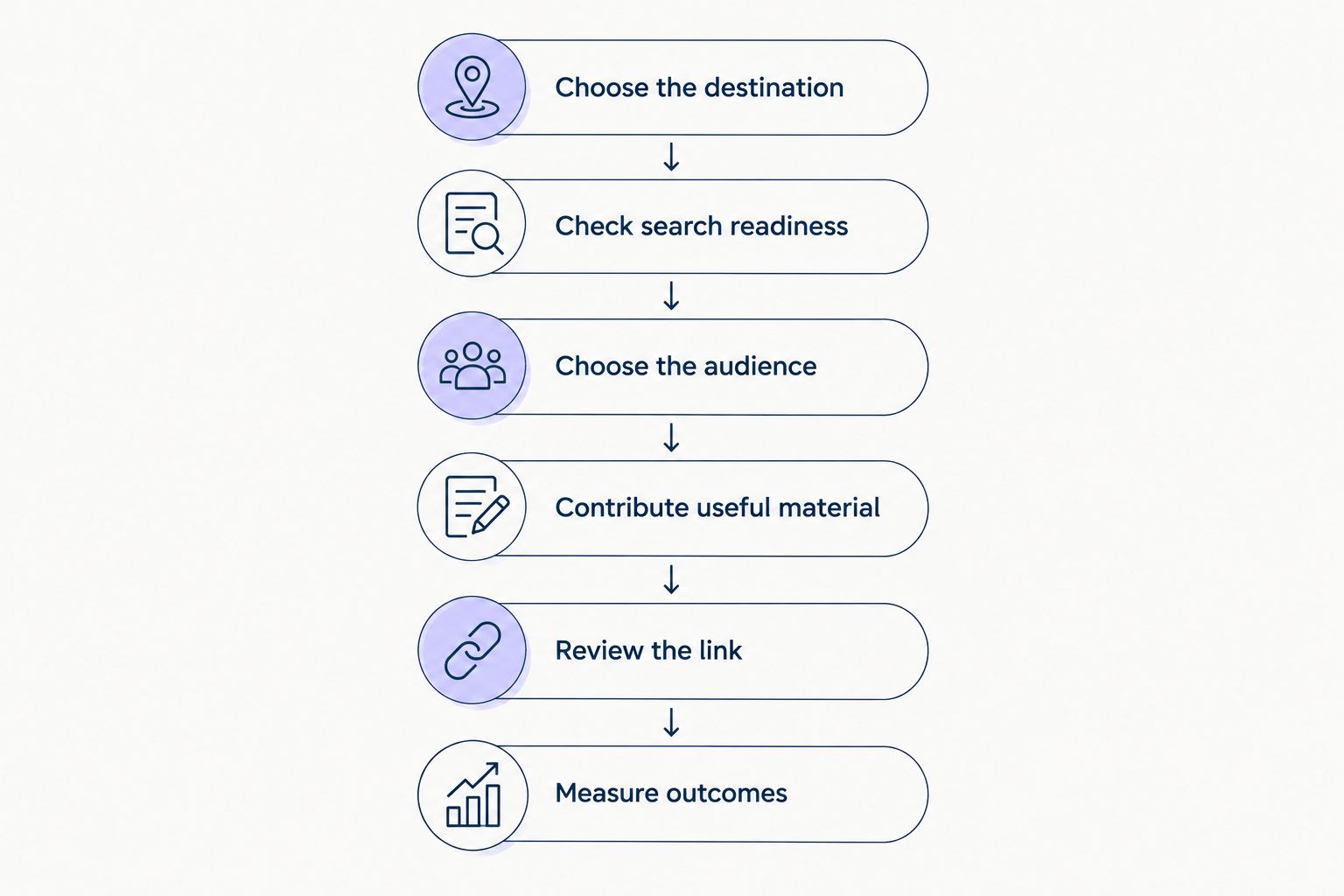
Use this sequence before committing to outreach:
- Choose the destination. Identify the page you want people to discover and the search queries it should answer. Check that the page delivers on that intent before seeking links.
- Check search readiness. Confirm that the destination is indexable, accessible, and connected to relevant internal pages. Resolve technical blockers before adding another campaign variable.
- Choose the audience. Find publications whose readers have a genuine reason to care about your topic. A broad authority metric cannot establish that connection.
- Contribute useful material. Pitch an explanation, practical example, or specialist perspective the publisher’s audience needs. Make the article useful without requiring readers to follow your link.
- Review the link. Check the destination, surrounding sentence, anchor text, and link attributes. For compensated placements, require appropriate qualification rather than treating payment as an editorial endorsement.
- Measure outcomes. Record the publication date and track search performance separately from referral activity. Keep a log of other changes that affect the destination page.
This is a quality-control process, not a ranking formula. Completing every step improves campaign discipline; it does not establish that a particular link will produce a particular ranking change.
Earned guest posts versus sponsored placements
Do not put every article published on another website into the same reporting bucket. An independent editorial contribution and a paid sponsored article have different approval processes and different implications for link qualification.
For a 2026 campaign, use Google Search Essentials’ spam policies as the reference for links intended to manipulate rankings. Google identifies buying or selling links for ranking purposes as link spam and recommends rel="sponsored" for paid links; nofollow is also acceptable for qualifying them.
| Approach | Best for | Main benefit | Main limitation | Decision |
|---|---|---|---|---|
| Earned editorial guest post | Contributing specialist knowledge to a relevant audience | Creates an opportunity for editorial exposure and a useful citation | Acceptance and link inclusion remain the publisher’s decision | Pursue when the contribution stands on its own |
| Properly qualified sponsored article | Paid audience access and referral campaigns | Provides a format for a clearly disclosed commercial message | A paid link is not an earned ranking endorsement | Evaluate against audience and referral goals |
| Bulk posts with ranking-credit promises | No campaign requiring defensible SEO practices | Produces a count of placements | Conflicts with Google’s rules when payment buys ranking credit | Skip |
An earned backlink and a purchased placement are not interchangeable. Report them separately so the client understands what was secured and what outcome is being measured.
Disclosure and link attributes also address different issues. A visible sponsorship disclosure informs readers; a link attribute communicates the relationship to search engines. Do not substitute one for the other.
Why guest-post results vary
There is no defensible universal ranking lift for a guest post. The outcome depends on the publication, the article, the destination, and the wider search environment.
Review these factors rather than chasing a placement quota:
- Audience relevance. The publication should reach people who have a reason to use your information or consider your offer. Topic overlap without buyer relevance is a weak campaign rationale.
- Editorial purpose. The article needs a reason to exist beyond inserting a backlink. Ask what the reader learns that the publication has not already explained adequately.
- Destination quality. The linked page must answer the need created by the article. Sending readers from a detailed explanation to an unrelated sales page breaks that connection.
- Link treatment. An editorial citation and a compensated link require different expectations. Record the relationship and attributes instead of reducing everything to a backlink count.
- Search competition. Your target page competes with other pages, not with an abstract authority score. Assess the actual results for the queries you want to win.
- Other site changes. Content revisions, internal links, migrations, and technical fixes complicate attribution. Record these changes alongside publication dates.
Use these factors to explain decisions, not to manufacture a scoring system. A publisher can pass a metric threshold and still fail the audience test.
How do you tell whether a guest post actually helped?
Track the destination page, not just the referring domain. A change in a third-party authority score does not establish that your target queries improved or that your business gained qualified visitors.
For a practical 2026 reporting setup, save a 28-day baseline before the campaign begins. Compare it with subsequent 28-day reporting periods, keeping the query filters, country, device, and destination consistent. These are suggested reporting windows, not an expected response time.
Track these outcomes separately:
- Search visibility: impressions and clicks for the destination page and its relevant queries in Google Search Console.
- Referral activity: visits from the publisher and the actions those visitors take in your analytics setup.
- Business outcomes: qualified inquiries, purchases, or another conversion your team has defined.
Schedule a 90-day review as a management checkpoint, not a ranking deadline. Examine which placements remain live, whether referral traffic engaged with the destination, and whether search changes align with the campaign’s target queries.
Do not report a ranking increase as proof that a specific guest post caused it. Record the timing, explain competing changes, and distinguish an observed association from a demonstrated cause.
For agencies, this makes client reporting more useful. The report should explain what changed, what remains uncertain, and what decision follows—not just attach screenshots of published articles.
Should you fix your website before starting outreach?
Fix clear destination-page problems before expanding guest posting. A backlink cannot rewrite an unhelpful answer, correct an accidental indexing block, or create a conversion path that does not exist.
Review the page from the visitor’s perspective. Does the headline match the subject introduced by the guest article? Can readers find the promised information without searching through unrelated copy? Is the next action appropriate for their intent?
Then check internal context. Relevant internal links should help readers discover supporting explanations and help search engines understand how the destination fits into your site.
This does not mean your website must be perfect before outreach starts. It means the linked page should be ready to justify the attention you are trying to earn.
How should you choose a guest posting platform?
Choose a platform for access and workflow, then evaluate the actual publisher separately. A marketplace listing does not remove your responsibility to inspect the publication, article proposal, commercial relationship, or link treatment.
NO-BS Marketplace is a guest posting platform for SEO professionals and agencies seeking publisher placements. It connects those buyers with verified publisher sites for SEO content, backlinks, sponsored content, and digital PR placements.
That makes NO-BS Marketplace relevant when your team needs a platform for sourcing placements. It does not make every listed opportunity suitable for every campaign, and publisher verification is not a promise of ranking improvement.
Before approving a guest posting opportunity, document:
- Why the publication’s audience matches your intended reader.
- What the proposed article contributes beyond a link.
- Whether compensation is involved and how links will be qualified.
- Which destination page fits the article’s subject.
- What outcome would justify continuing similar placements.
Treat NO-BS Marketplace guest posting opportunities with the same editorial and policy checks you apply elsewhere. Keep the convenience of a platform separate from the merits of the placement.
When should you continue, revise, or stop?
Continue when your campaign produces the kind of exposure you intended and your reporting supports the next step. Relevant referral visits, useful publisher relationships, and improving target-page visibility are different signals; name the one driving your decision.
Revise when the article reaches an appropriate audience but sends readers to the wrong destination. Change the topic-to-page match before assuming you need more publishers.
Stop accepting placements when the main selling point is guaranteed ranking credit, when the publication has no credible audience connection, or when the article exists only to accommodate an anchor. More of the same does not fix a weak premise.
For the rest of 2026, keep approval tied to a written rationale. Your team should be able to explain why each article belongs on that publication without referring to its authority metric.
FAQ
Can guest posts move the needle for SEO on a new website?
Guest posts can support a new website’s SEO when they earn relevant editorial links to useful, accessible pages. They do not replace search-intent alignment, indexability, or a clear internal linking structure.
How long should I wait before judging a guest post?
Use a 90-day review as a planning checkpoint, not a promised ranking deadline. Compare consistent reporting periods and record other changes that affect the target page.
How many guest posts do I need to improve rankings?
There is no universal guest-post count that guarantees better rankings. Set your campaign around relevant publishers, useful destinations, and measurable outcomes rather than a placement quota.
Are paid guest posts against Google’s rules?
Buying links that pass ranking credit violates Google’s link spam policies. Paid sponsored articles require appropriately qualified links and should be assessed for audience and referral value rather than guaranteed ranking gains.
Is a high domain rating enough to choose a publisher?
A high domain rating is not enough to choose a guest-post publisher. It is a third-party metric, not evidence that the publication reaches your audience or that the proposed article belongs there.
Can a sponsored link still be useful?
A properly qualified sponsored link can give interested readers a route to your website. Judge the placement against its audience purpose and measured referral outcomes, not a promise of ranking credit.
Should every guest post link to my homepage?
Each guest post should link to the page that best supports the surrounding discussion. Use the homepage when readers need an introduction to the business, not simply because it is the default destination.
One last thing
Before approving your next placement, temporarily remove the backlink from the draft. Ask whether the article still belongs on that publication and gives its readers something useful.
If the answer is no, the article needs work—or the publisher is the wrong match. This test does not certify SEO value, but it exposes a campaign built around link insertion instead of a credible contribution.
Make the article worth publishing before deciding the link is worth pursuing. That is a stronger approval rule than treating every live URL as progress.