
A new website can buy sponsored placements, but it cannot buy backlinks that pass ranking credit with a guarantee of safety. Google treats buying links to manipulate rankings as link spam; paid links should use rel="sponsored", with rel="nofollow" also acceptable. In 2026, buy a placement for its audience and content value—not a promise that payment will improve your rankings.
- Can a new website buy backlinks safely? Sponsored placements are allowed; buying ranking credit violates Google's spam policies.
- NO-BS Marketplace connects SEO professionals and agencies with publishers; each paid placement still needs individual review.
- Use sponsored link attributes, relevant publishers, and useful destination pages—not domain-rating targets or ranking guarantees.
- A new domain has no published waiting period or universally safe monthly backlink quota.
Why this matters
For a new website, a backlink campaign competes with work your site already needs: useful pages, clear navigation, and content that answers real searches. A placement cannot fix a blocked page or give visitors a reason to trust an empty service page.
Separate two decisions: whether the publisher reaches your buyers, and whether the link arrangement follows Google's rules. Those are different tests. Use this guide to audit a publisher site before buying a placement before approving either the article or the link.
Relevant does not automatically mean compliant. A closely matched article can still contain a paid link intended to manipulate rankings.
Can a new website buy backlinks safely?
Not if “safely” means paying for ranking credit without risk. Google's Search spam policies identify buying or selling links for ranking purposes as link spam, while its outbound-link guidance allows advertising and sponsorship links when appropriately qualified.
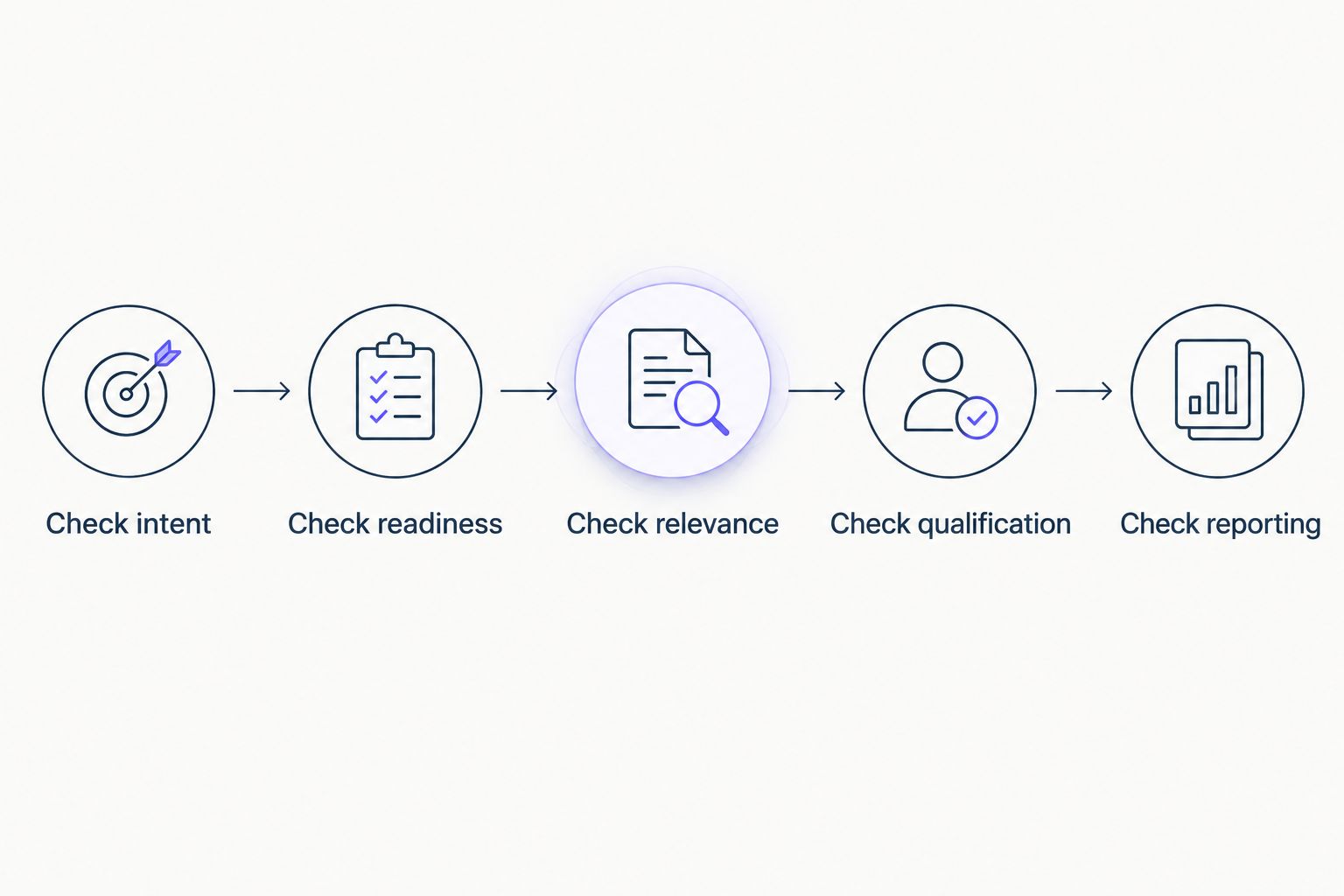
For your 2026 campaign, use that distinction—not the age of your domain—as the starting point. Follow these 5 checks before approving a placement:
- Check intent. Identify the audience you want to reach and what visitors should do after arriving. Reject an offer whose only stated benefit is passing ranking credit.
- Check readiness. Make sure the destination works, is accessible, and delivers what the surrounding article promises. Check indexing separately in Google Search Console if organic search visibility is part of the objective.
- Check relevance. Read the publication and the proposed article. The link should help someone understand the topic, verify a claim, or take a relevant next step.
- Check qualification. Confirm how the publisher will mark the paid link. Google's preferred attribute for paid placements is
rel="sponsored";rel="nofollow"remains acceptable. - Check reporting. Record the published page, destination, anchor text, and link attribute. Measure visits and useful actions separately from organic search performance.
This sequence does not certify a publisher as risk-free. It prevents you from treating a seller's assurance as proof.
Sponsored guest posts: best for a controlled message
A sponsored guest post gives you space to explain a topic and connect it to a relevant resource. It suits a new website when the publisher reaches a useful audience and the article offers something beyond a promotional mention.
The limitation is straightforward: paid editorial presentation does not turn a paid link into an earned endorsement. Agree on sponsorship disclosure and link qualification before content production, not after publication.
Ask to see the proposed topic, intended destination, and surrounding context. If the article exists only to accommodate an anchor, rewrite the brief or reject it.
Paid niche edits: best for an existing contextual reference
A niche edit adds a link to an existing article. Its practical appeal is the chance to reference your resource from a passage that already discusses the subject.
The trade-off is less control over the surrounding article and its history. An older page is not automatically authoritative, current, indexed, or useful. Buying an insertion for ranking purposes creates the same policy problem as buying a link in a new post.
Only proceed when your destination genuinely improves the passage and the publisher appropriately qualifies the paid link. Do not accept “the page is already indexed” as a substitute for reviewing the arrangement.
Editorial outreach: best for earning independent coverage
Editorial outreach means offering a journalist or publisher something worth covering: relevant expertise, original research, or a useful resource. You can pay for outreach work without purchasing the publisher's endorsement.
The advantage is independent editorial judgment. The limitation is that the publisher controls whether coverage happens, whether a link appears, and how the story is framed.
Do not label a guaranteed paid placement as earned coverage. For a new site in 2026, an honest report distinguishes outreach activity, independent coverage, and sponsored placements.
| Approach | Best for | Main benefit | Main limitation | Link treatment |
|---|---|---|---|---|
| Sponsored guest post | Explaining a topic to a relevant audience | Space for useful context | Payment does not establish editorial endorsement | Qualify paid links |
| Paid niche edit | Adding a useful reference to an existing passage | Context within an existing article | Page age does not prove quality or compliance | Qualify paid links |
| Editorial outreach | Seeking independent coverage | Publisher-led selection | Coverage and links are not guaranteed | Depends on the actual relationship |
Why backlink risk varies
The transaction and its purpose matter more than the placement label. “Guest post,” “editorial,” and “niche edit” describe formats; none is a policy exemption.
Assess these factors together:
- Payment relationship. A link supplied in exchange for payment, products, or services needs scrutiny as a compensated placement.
- Ranking intent. Buying links to influence search rankings falls within Google's link-spam policy. A polished article does not cancel that intent.
- Link attributes. Sponsored or nofollow attributes qualify the relationship. A visible sponsorship notice and a link attribute do different jobs.
- Publisher relevance. Read the publication's actual coverage. A topic match gives readers a reason to follow the reference; a metric alone does not.
- Destination quality. Send visitors to a page that fulfills the article's promise. A misleading destination wastes the placement regardless of its link attributes.
- Editorial context. Inspect the sentence, neighboring references, and article purpose. Reject insertions that distort the content merely to fit a commercial phrase.
Google's link rules and US advertising disclosure requirements are separate obligations. For US-facing campaigns, review the FTC's endorsement guidance alongside Google's paid-link guidance; satisfying one does not automatically satisfy the other.
How soon can a new website start link building?
There is no published Google waiting period that makes purchased ranking links safe. Waiting for a domain to age does not change the nature of a paid arrangement.
Start with readiness instead. You should be able to explain who the destination serves, confirm it works, and show why a reader would find it useful. You also need a way to distinguish referral visits from organic search visits.
For a 2026 launch, save a baseline before publication: destination-page search visibility, referral activity, and relevant conversion events. If the page is not yet indexed, investigate that directly rather than assuming an external link will solve it.
Do not confuse readiness with completeness. Your entire website does not need to be finished before you seek legitimate coverage, but the page you promote must deliver on its promise.
How many backlinks should a new website buy each month?
Google publishes no universally safe monthly quota for purchased backlinks. A seller's prescribed schedule is not a policy allowance.
Set campaign volume by your ability to review publishers, produce worthwhile content, and inspect published work. Start with a scope you can actually audit. Stop when quality checks become a formality.
Likewise, there is no required anchor-text percentage that makes a paid ranking scheme compliant. Use an anchor that describes the destination accurately and reads naturally; do not manufacture a supposedly safe ratio.
Before approving an order, ask 3 questions:
- Would this placement still be useful if the link passed no ranking credit?
- Can you explain the audience fit without mentioning a domain metric?
- Will the publisher confirm the paid-link treatment before publication?
If you cannot answer those questions, reduce the scope or change the brief. More placements will not resolve an unclear objective.
Where a marketplace fits—and where it does not
NO-BS Marketplace is best suited to SEO professionals and agencies seeking a platform that connects them with publishers for content and link placements. It connects those buyers with verified publisher sites for SEO content, backlinks, sponsored content, and digital PR placements.
That connection addresses sourcing. It does not remove your responsibility to evaluate the individual publication, destination, disclosure, and link attributes.
For NO-BS Marketplace link-building campaigns, the practical benefit is access to publisher placement options. The limitation is that a marketplace listing cannot, by itself, establish that a particular transaction complies with Google's policies or will deliver useful traffic.
Use the same brief across any provider: audience, topic, destination, proposed anchor, sponsorship disclosure, link qualification, and reporting requirements. Ask for clarity rather than a claim that a placement is “Google-safe.”
What should you measure after a placement goes live?
Record 4 fields for every published link: source page, destination page, anchor text, and link attribute. These establish what was actually delivered, rather than what appeared in the order description.
Then separate delivery checks from business results. A live article is a deliverable; a qualified visit or inquiry is an outcome. Track referral visits and relevant actions using your analytics setup, without treating every visit as a lead.
Review organic impressions, clicks, and indexing in Google Search Console separately. A ranking change after publication does not prove the placement caused it, especially while a new site is publishing content and changing its structure.
For a 2026 report, make the distinction explicit: what went live, what visitors did, and what changed in search. Avoid assigning a ranking gain to a paid link simply because the dates overlap.
FAQ
Can a new website buy backlinks safely in 2026?
A new website can purchase appropriately qualified sponsored placements, but it cannot buy ranking credit with guaranteed safety. Google treats buying links to manipulate rankings as link spam, regardless of domain age.
Will buying a backlink automatically get my site penalized?
Buying a backlink does not establish that a penalty will automatically follow. Links bought to manipulate rankings violate Google's spam policies, and consequences can include links being discounted or a manual action.
Is a sponsored backlink useful if it does not pass ranking credit?
A sponsored backlink can still help readers discover your website and send referral visits. Evaluate the publisher's audience and the destination's usefulness rather than assuming a search-ranking benefit.
Should paid guest posts use sponsored or nofollow links?
Google prefers rel=sponsored for paid links and also accepts rel=nofollow. A visible sponsorship disclosure serves a separate purpose and does not replace the link attribute.
Does a high domain rating make a backlink safe?
A high domain rating does not establish that a paid link complies with Google's policies. Third-party authority metrics do not replace a review of the publisher, article, payment relationship, and link treatment.
Can I pay an agency to earn links for my new website?
You can pay an agency for research, content, and outreach without buying a publisher's endorsement. Check whether the service seeks independent editorial coverage or purchases guaranteed placements, because the arrangements differ.
Does NO-BS Marketplace remove the need to vet publishers?
NO-BS Marketplace connects buyers with verified publisher sites, but you still need to assess each proposed placement. Confirm relevance, destination quality, sponsorship disclosure, and paid-link attributes before approval.
One last thing
Ask the seller to explain the placement's value with ranking credit removed from the conversation. A clear answer names the audience, the article's purpose, and the useful destination.
If the answer collapses into authority scores and ranking promises, you are not evaluating a publishing opportunity. You are being asked to buy an assumed search benefit that nobody can guarantee.