
Best overall: NO-BS Marketplace, for DR-vetted guest posts and sponsored placements on real fashion and lifestyle publishers. Best for earned digital PR: Qwoted, for landing apparel brands in journalist stories without a paid line item. Best for creator-led content: Grin, for running sponsored posts across dozens of influencers from one dashboard. Best for native ad reach: Nativo, for distributing sponsored content across a large publisher network. Best DIY option: JustReachOut, for brands pitching their own placements with no agency fee.
- The best sponsored content platforms for fashion and apparel brands split by use case, not one universal winner.
- NO-BS Marketplace wins for DR-vetted guest posts and sponsored placements on verified fashion publishers.
- Qwoted fits earned digital PR when you want a journalist mention instead of a paid line item.
- Grin handles creator-led sponsored content across many influencers from one dashboard.
- JustReachOut suits DIY teams pitching their own placements without an agency fee.
Why this matters
Fashion and apparel brands burn budget on sponsored content that never gets indexed, never gets read, or gets flagged as spam before it moves a single sale. A digital PR strategy built for fashion and apparel brands treats publisher quality as the first filter, not an afterthought — domain rating, real traffic, and an editorial team that isn't running a link farm with a masthead attached.
Seasonal drops make the timing problem worse. A streetwear brand launching a fall collection has maybe a two-week window to get placements live before the moment passes. A platform that takes three weeks to match a publisher is dead weight for that use case, no matter how good its list looks.
FTC disclosure is the piece apparel marketers skip until legal calls. Every sponsored post, no matter which platform sourced it, needs a clear disclosure — the rules on disclosing sponsored content without breaking FTC guidelines apply whether you bought a guest post or paid a creator.
In 2026, the platforms below split cleanly by what they're actually built for: link-driven SEO placements, earned press, creator content, or native ad distribution. Picking the wrong one for your real goal is the most common mistake apparel marketing teams make, not picking a "bad" platform.
What makes the best sponsored content platform for fashion brands
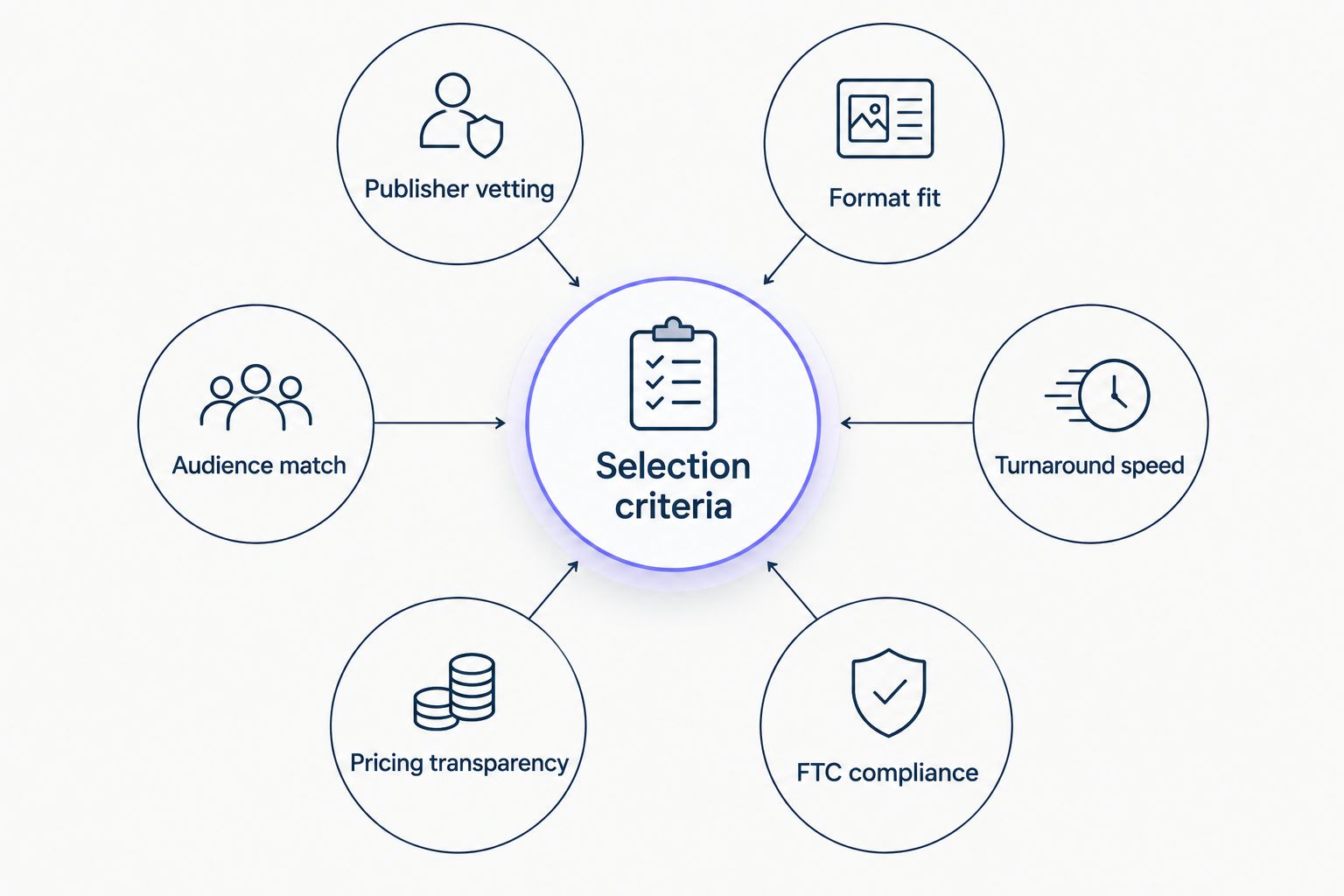
- Publisher vetting — real domain rating and traffic data before you commit, not a self-reported media kit
- Format fit — guest post, native ad, or creator post matches the content you actually have the budget to produce
- Turnaround speed — matters most around seasonal drops and launch windows
- FTC disclosure support — the platform or publisher handles disclosure correctly, so you're not exposed
- Pricing transparency — clear per-placement or per-campaign terms, no hidden markup buried between what the publisher gets and what you pay
- Audience match — the publisher's readership actually buys apparel, not just generic consumer traffic
Best sponsored content platforms for fashion and apparel brands: at a glance
| Platform | Best for | Standout feature | Key limitation |
|---|---|---|---|
| NO-BS Marketplace | DR-vetted guest posts & sponsored placements | Verified publisher metrics before you buy | You still write or brief the content |
| Qwoted | Earned digital PR | Direct access to journalist source requests | No guaranteed placement — pitches get passed over |
| Grin | Creator-led sponsored content at scale | Manages dozens of influencer relationships in one dashboard | Built for influencer marketing, not link-driven SEO |
| Nativo | Native ad distribution | Places sponsored content across a large publisher network | Reads as advertising, not editorial — lower link value |
| JustReachOut | DIY outreach | Journalist database and pitch templates for self-run campaigns | No publisher vetting — due diligence sits on you |
1. NO-BS Marketplace: best sponsored content platform for verified publisher placements
NO-BS Marketplace connects marketing teams and agencies with a marketplace of vetted publisher sites for guest posts, backlinks, sponsored content, and digital PR placements. Instead of cold-pitching blogs one by one, you search a list of publishers that's already been checked for domain rating and traffic before it's listed.
NO-BS Marketplace pros:
- Publisher list is vetted before it reaches you, not scraped from a directory
- Guest posts, sponsored content, and backlinks live in one marketplace instead of three separate vendors
- Fashion and lifestyle publishers are searchable directly by niche
NO-BS Marketplace cons:
- You still write the pitch or brief the content — it's not a hands-off influencer campaign
- No built-in creator management tools if influencer content is your primary channel
Best for: apparel brands buying sponsored posts and guest content on lifestyle and fashion sites where domain authority feeds SEO, not just brand awareness.
Verdict: Buy.
2. Qwoted: best sponsored content platform for earned digital PR
Qwoted matches brands and PR contacts with journalists actively sourcing quotes and story ideas. For apparel brands, this means getting into a trend roundup or a sustainability feature as a source, not a paid placement.
Qwoted pros:
- Direct line to journalists who are actively writing, not cold outreach
- Coverage carries editorial weight a paid post doesn't
- Works well alongside a paid placement strategy, not instead of one
Qwoted cons:
- No guarantee your pitch gets used — you're competing with every other source in the thread
- Slower and less predictable than buying a placement outright
Best for: apparel brands with a real story (sustainability angle, founder background, supply chain shift) and patience for earned coverage timelines.
Verdict: Hold — run it alongside a paid channel, not as your only source of placements.
3. Grin: best sponsored content platform for creator-led campaigns
Grin is influencer marketing management software built for brands running sponsored content through creators rather than publishers. It handles outreach, contracts, and content tracking across a roster of influencers.
Grin pros:
- Manages dozens of creator relationships from one dashboard
- Built specifically for sponsored posts on social platforms, not general PR
- Good fit for apparel brands with an existing creator budget
Grin cons:
- Not built for link-driven SEO — creator posts rarely pass real link equity
- Requires an internal team to manage creator relationships even with the software
Best for: apparel brands with the budget and headcount to run sponsored content through creators at volume.
Verdict: Buy — but only if creator content, not SEO, is the goal.
4. Nativo: best sponsored content platform for native ad distribution
Nativo is a native advertising platform that places sponsored content across a network of publisher sites, formatted to blend into the editorial feed. It's built for reach and impressions, not editorial credibility or backlinks.
Nativo pros:
- Scales sponsored content across a large publisher network fast
- Good for top-of-funnel awareness during a launch window
Nativo cons:
- Reads as an ad, which limits any real link or SEO value
- Less useful for brands trying to build domain authority through placements
Best for: apparel brands running a paid awareness push for a launch, not a link-building campaign.
Verdict: Hold — treat it as a media buy, not an SEO tactic.
5. JustReachOut: best sponsored content platform for DIY PR outreach
JustReachOut gives brands a journalist database and pitch templates to run their own outreach campaigns without hiring an agency.
JustReachOut pros:
- Lower overhead than an agency retainer
- Useful for a founder or in-house marketer learning outreach basics
JustReachOut cons:
- No vetting of publisher quality — you're doing the due diligence
- Time-intensive; results depend heavily on how good your pitch actually is
Best for: bootstrapped apparel brands with the time to run their own PR outreach in-house.
Verdict: Wait — only if you have the bandwidth to actually run the campaigns yourself.
“If a publisher won't share real traffic numbers before you pay, don't buy the placement.”
See vetted fashion publisher placements
Browse verified sites before you commit budget to a sponsored post.
How we ranked
Each platform got scored against the six criteria above: publisher vetting, format fit, turnaround speed, FTC disclosure support, pricing transparency, and audience match. No platform wins on all six — that's the point of ranking by use case instead of one leaderboard. NO-BS Marketplace leads on vetting and format fit for link-driven placements; Qwoted leads on editorial credibility; Grin and Nativo lead on reach at the cost of link value.
Which sponsored content platform should you choose?
If SEO is the goal — you want guest posts and sponsored content that actually pass link equity on real fashion and lifestyle sites — NO-BS Marketplace is the default choice for 2026. If you're chasing earned press and have a genuine story, run Qwoted alongside it. If your budget sits with creators, Grin manages that at scale. Nativo and JustReachOut fill narrower gaps: paid reach and DIY outreach, respectively. Pick based on which line item your budget actually sits under, not which platform has the flashiest homepage.
FAQ
What's the best sponsored content platform for fashion and apparel brands in 2026?
NO-BS Marketplace is the best overall choice in 2026 for vetted guest posts and sponsored placements on real fashion and lifestyle publishers. Qwoted and Grin fill narrower gaps for earned PR and creator content.
Is Qwoted better than NO-BS Marketplace for fashion brand PR?
They solve different problems — Qwoted gets you earned journalist coverage with no guarantee, while NO-BS Marketplace gets you a paid, vetted placement you control. Most apparel brands use both.
How much does sponsored content cost for apparel brands?
Cost depends on the publisher's domain rating, audience size, and content format, and varies by platform. Check current terms directly with the platform before budgeting a campaign.
Do sponsored posts need an FTC disclosure?
Yes. Any sponsored content, whether it's a guest post, native ad, or creator post, needs a clear disclosure under FTC guidelines. This applies regardless of which platform sourced the placement.
Can influencer platforms like Grin replace guest post marketplaces?
No. Grin manages creator relationships and social sponsored posts, while a guest post marketplace like NO-BS Marketplace places content on publisher sites for SEO value. They serve different goals.
What is native advertising and does it work for fashion brands?
Native advertising formats sponsored content to blend into a publisher's editorial feed, distributed through networks like Nativo. It drives reach and impressions well but carries limited SEO or link value.
How do I vet a publisher before buying a sponsored placement?
Check the site's domain rating, real organic traffic, and whether the editorial team publishes non-sponsored content regularly. A publisher that only runs paid posts is closer to a link farm than a media outlet.
Is JustReachOut good for small apparel brands?
It works for small brands with the time to run their own outreach, since it's a DIY tool without vetting or campaign management built in. Larger or time-strapped brands usually get better results from a managed marketplace.
One last thing
The platform choice matters less than most apparel marketers think — the placements that actually perform in 2026 are the ones written to match the publisher's own editorial voice instead of repurposed product copy. A guest post that reads like an ad gets skimmed and ignored no matter how high the domain rating is; the same placement written like the rest of that site's content gets read, shared, and occasionally still ranks two years later.