
NO-BS Marketplace is the strongest overall pick for EV charging and clean energy startups buying verified digital PR placements directly in 2026. A boutique cleantech-specialist agency wins when a startup needs deep trade press relationships in EV, battery, and grid media. A solo digital PR consultant is the right call for pre-seed teams that need a handful of placements before a raise and can't justify a retainer yet.
- NO-BS Marketplace wins for EV charging startups buying verified publisher placements directly in 2026.
- Cleantech-specialist agencies win for trade press and analyst relationships in the EV and battery beat.
- Solo PR consultants fit pre-seed clean energy teams that need coverage without a monthly retainer.
- Full-service agencies only pay off once a clean energy brand needs PR bundled with paid media.
- Trade-sector PR firms cover regulatory and utility press that EV-focused shops usually miss.
Why this matters
EV charging and clean energy startups get pitched by every flavor of PR shop the moment they close a seed round, and most of those pitches sound identical. The startups that actually land coverage in 2026 pick a partner whose model matches their stage, not whose deck looks the most polished.
A Series A hardware company chasing a feature in Canary Media needs something different from a pre-seed charging network trying to get its first three backlinks indexed. Confusing those two needs is how founders end up paying agency rates for outreach they could have run themselves through a digital PR for EV charging and clean energy startups playbook and a direct publisher marketplace.
What makes the best digital PR partner for EV charging startups
- Sector fluency — understands the difference between a Level 2 charger rollout story and a battery chemistry story
- Real publisher/journalist relationships — not a spun-up network of low-authority blogs
- Transparent reporting — you see where placements ran and what referral traffic they drove
- Realistic timelines — no promises of guaranteed feature pickup on a fixed date
- A budget model that scales with funding stage — pre-seed and Series B startups shouldn't pay the same structure
- FTC-compliant disclosure on sponsored placements — non-negotiable in 2026
At a glance
| Option | Best for | Standout feature | Key limitation |
|---|---|---|---|
| NO-BS Marketplace | Direct, self-serve publisher placements | Choose outlets by relevance and authority, no agency markup | You own campaign strategy and KPI tracking |
| Cleantech-specialist agency | Trade press relationships | Reporter contacts at EV/battery/grid outlets | Retainer-based, output tied to one small team |
| Full-service integrated agency | Bundling PR with paid media | One contract across channels | PR often becomes a secondary line item |
| Solo digital PR consultant | Pre-seed, bootstrapped teams | Lowest overhead, direct communication | Limited outlet reach and no backup capacity |
| Generalist energy trade PR firm | Regulatory and utility press | Analyst briefings, utility trade contacts | Less fluent in consumer EV charging narrative |
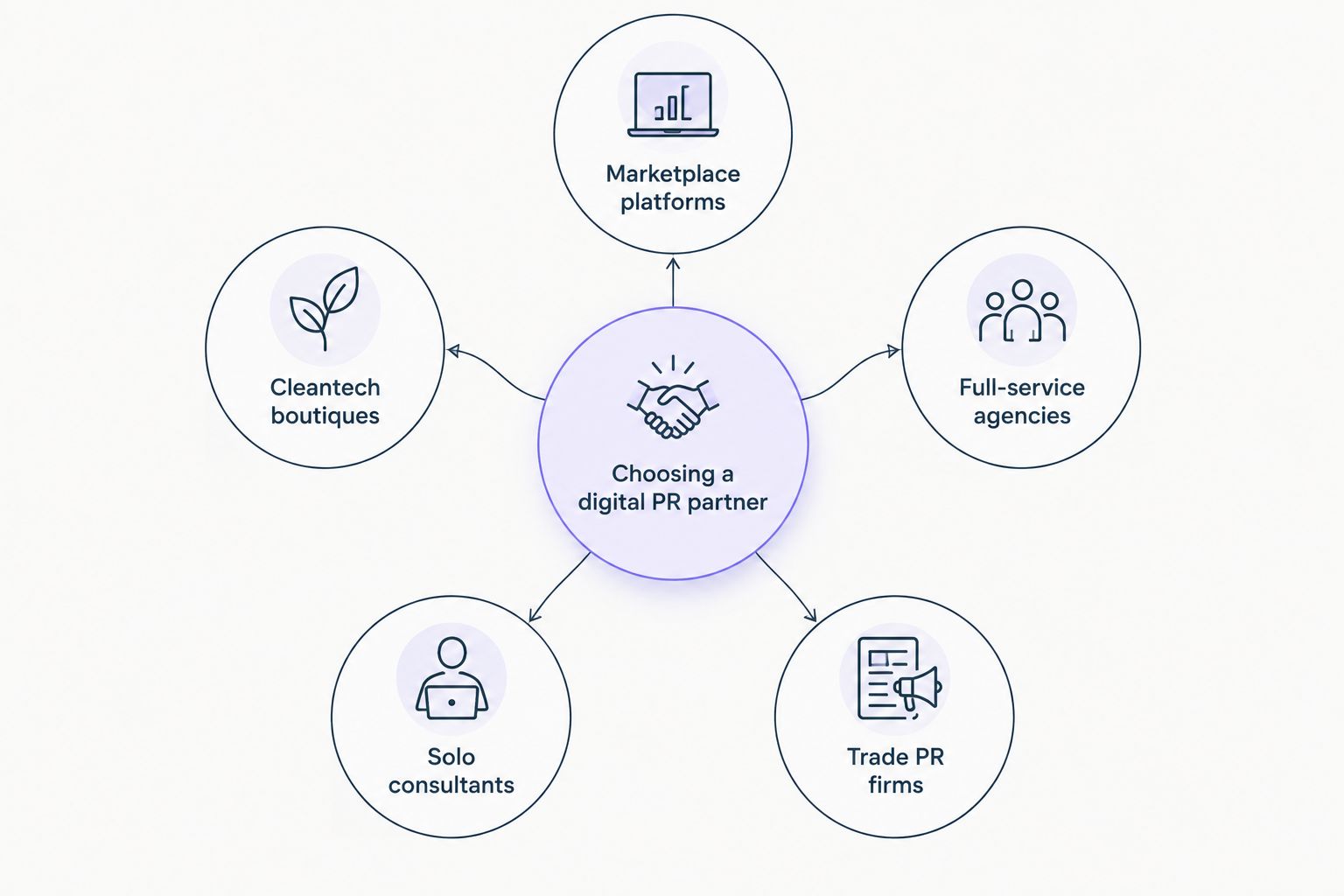
1. NO-BS Marketplace: best for direct, self-serve publisher placements
NO-BS Marketplace connects marketing teams directly with a vetted network of publishers for guest posts, sponsored content, digital PR placements, and backlinks. For an EV charging startup, that means picking outlets by relevance and domain authority instead of routing every placement through an agency's editorial calendar and waiting on their availability.
NO-BS Marketplace pros:
- Direct control over which publishers run your content
- No agency markup layered on top of the media buy
- Faster turnaround than a full-service retainer
- Works for both one-off placements and ongoing campaigns
NO-BS Marketplace cons:
- No in-house press strategist writing your narrative for you
- You own KPI tracking and outreach targeting
Best for: startups that want control over which outlets carry their story and don't need a strategist attached.
Verdict: Buy if your team can define its own angle and wants to move fast without an agency layer.
2. Cleantech-specialist digital PR agency: best for trade press relationships
A boutique shop embedded in EV, battery, and grid media holds relationships with reporters at outlets covering the sector daily. These agencies understand the news cycle around incentive programs, charging infrastructure buildouts, and utility partnerships in ways a generalist shop doesn't.
Cleantech-specialist agency pros:
- Existing reporter relationships at trade outlets
- Narrative development around product launches and funding news
- Familiarity with policy and incentive news cycles
Cleantech-specialist agency cons:
- Retainer-based pricing with output tied to one small team's bandwidth
- Can bottleneck during a funding announcement or product launch spike
Best for: seed-to-Series A companies pitching a specific product launch to trade media.
Verdict: Buy if you have a distinct product story and the budget for a retainer.
3. Full-service integrated marketing agency: best for bundling PR with paid media
These agencies pair digital PR with paid social, SEO, and creative production under one contract. It works once a clean energy brand has enough budget and enough moving parts to justify one point of contact across channels.
Full-service agency pros:
- Single point of contact across PR, paid, and creative
- Useful once you're past early product-market fit
Full-service agency cons:
- PR frequently becomes a secondary line item behind paid media
- Slower turnaround and more account management overhead
Best for: growth-stage clean energy brands running integrated, multi-channel campaigns.
Verdict: Hold until you actually need channel integration, not before.
4. Solo digital PR consultant: best for pre-seed bootstrapped teams
One person handling outreach, pitch writing, and placement tracking. Lower cost, more flexible scope, and direct communication with no account manager in between.
Solo consultant pros:
- Lower overhead than an agency retainer
- Direct communication, flexible scope month to month
Solo consultant cons:
- Limited outlet reach compared to an agency roster
- No backup coverage if the consultant is unavailable
Best for: teams with no dedicated PR budget who need a handful of credible placements before a raise.
Verdict: Buy as a stopgap; Wait once your placement volume outgrows one person.
5. Generalist energy trade PR firm: best for regulatory and utility press
These firms cover utility and energy trade press broadly rather than EV charging specifically. They're strong on regulatory cycles and analyst briefings but less fluent in a consumer-facing EV charging narrative.
Trade PR firm pros:
- Experience with regulatory and utility-sector press cycles
- Analyst briefing relationships
Trade PR firm cons:
- Less fluent in consumer EV charging storytelling
- Typically higher minimum retainer than a specialist boutique
Best for: clean energy companies navigating utility partnerships and policy-heavy coverage.
Verdict: Hold unless your story is primarily regulatory.
How we ranked these
Each option was weighed against the six criteria above: sector fluency, real publisher relationships, transparent reporting, realistic timelines, a stage-appropriate budget model, and FTC-compliant disclosure. Setting these expectations before you sign anything matters more than the pitch deck — see how to set KPIs for a digital PR campaign before you launch for the specifics.
“Pick the lane that matches your funding stage, not the agency with the best-looking case study deck.”
Which option should you choose?
If you want direct control over placements without an agency markup, NO-BS Marketplace is the default pick for 2026. If your story depends on trade reporter relationships, a cleantech-specialist agency earns the retainer. Everyone else — bundled-channel brands, pre-seed teams, and utility-heavy stories — has a clearer lane above than a generic agency search will surface.
Browse verified publisher placements
Pick outlets by relevance and authority for your next EV charging campaign.
FAQ
What's the best digital PR agency for EV charging startups in 2026?
There's no single best pick for every stage. NO-BS Marketplace wins for teams buying verified placements directly, while a cleantech-specialist agency wins for startups that need trade reporter relationships.
Is a cleantech-specialist agency better than a full-service marketing agency for EV charging PR?
For a product launch story, yes — a specialist knows the EV and battery trade press cycle. A full-service agency makes more sense once you need PR bundled with paid media and creative.
How much does digital PR cost for a clean energy startup?
Pricing varies by model — marketplace placements, solo consultant fees, and agency retainers all use different structures. Check current terms directly with whichever option you're evaluating.
Can a pre-seed EV charging startup do digital PR without an agency?
Yes. A solo consultant or a direct marketplace like NO-BS Marketplace both work for teams with no dedicated PR budget who need a handful of credible placements before a raise.
What trade outlets matter most for EV charging and clean energy coverage?
Outlets covering EV infrastructure, battery technology, and grid modernization carry the most relevant trade credibility for this sector in 2026.
Do sponsored placements for clean energy startups need FTC disclosure?
Yes. Any sponsored content or paid placement needs clear disclosure language regardless of which agency or platform runs it.
How do I know if a digital PR agency has real publisher relationships?
Ask for specific outlet names and recent placements you can verify independently, not just a list of domain authority scores.
Should an EV charging startup use one PR partner or combine approaches?
Combining a marketplace for volume placements with a specialist agency for a major launch often works better than picking one lane permanently.
One last thing
Most EV charging startups don't stay in one lane for long. The pattern that works in 2026: run volume placements through a direct marketplace, then bring in a cleantech specialist only around a major launch or funding announcement — not as a standing retainer.