
Well, not really. But it would be nice, though.
As mentioned in my post about pursuing an SEO career, SEO isn’t something you can learn at school or university. Search engines change way too fast for a textbook on the subject to stay relevant for years. That said, the classroom can equip students with knowledge of the basics to help them learn SEO later in life.
Nevertheless, I already have a pretty good idea of how I’d teach modern SEO. Anyone can be a student, regardless of educational background (of course, they need computer skills). Also, it’ll adopt the standard curriculum consisting of four core subjects: English, science, mathematics, and social studies.
So settle down, students. Class is in session.
English: Content Creation and Comprehension
Let’s start with the most apparent of the four: English—and in this case, content.
A business can have the best SEO strategy in the industry, but it’ll have nothing to show for without content. It’s the all-important meat of any website, be it the run-of-the-mill article or the accompanying image or video. Your approach to SEO determines the kind of content you need to produce to rank (or, in today’s times, get cited by AI).
This class would naturally be about reading and writing content but with the added step of doing so for search. The good news is that, unlike in years past, content writing is no longer limited to inflexible metrics like keyword volume. Search engines have evolved to the point that they can recognize entities in vague queries.
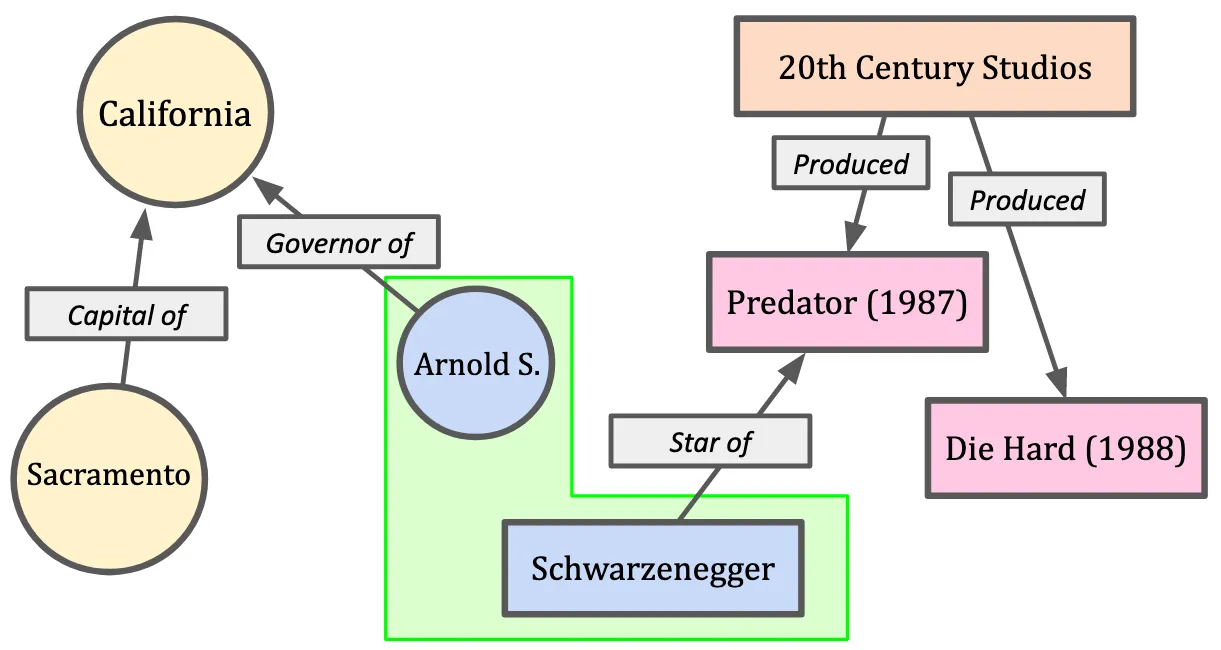
Source: CarpenterAnt (via Wikipedia)
Key to this evolution was the knowledge graph, which Google introduced to search in 2012. Think of it as six degrees of separation, but the connection between entities stretches more than six degrees. To give you an example, if I asked Google if:
“Did the lead actor in Predator become the governor of California?”
Google was more than glad to answer. It even provided an extra tidbit that I didn’t know.
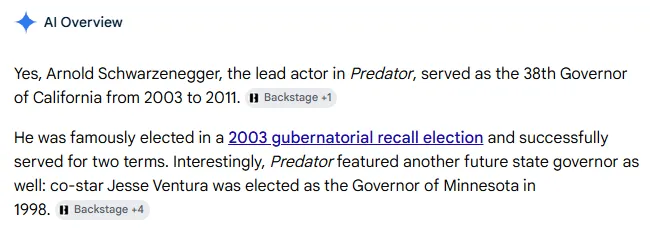
The knowledge graph allowed search engines to break free of the confines of word-for-word search. There’s no need to mention “Arnold Schwarzenegger” so much that it gives readers keyword fatigue. Google already knows who the query is referring to.
The later shift to entity-based SEO has allowed content to lean more towards human than machine. And as SEMrush recently discovered, human-written remains the choice of most.
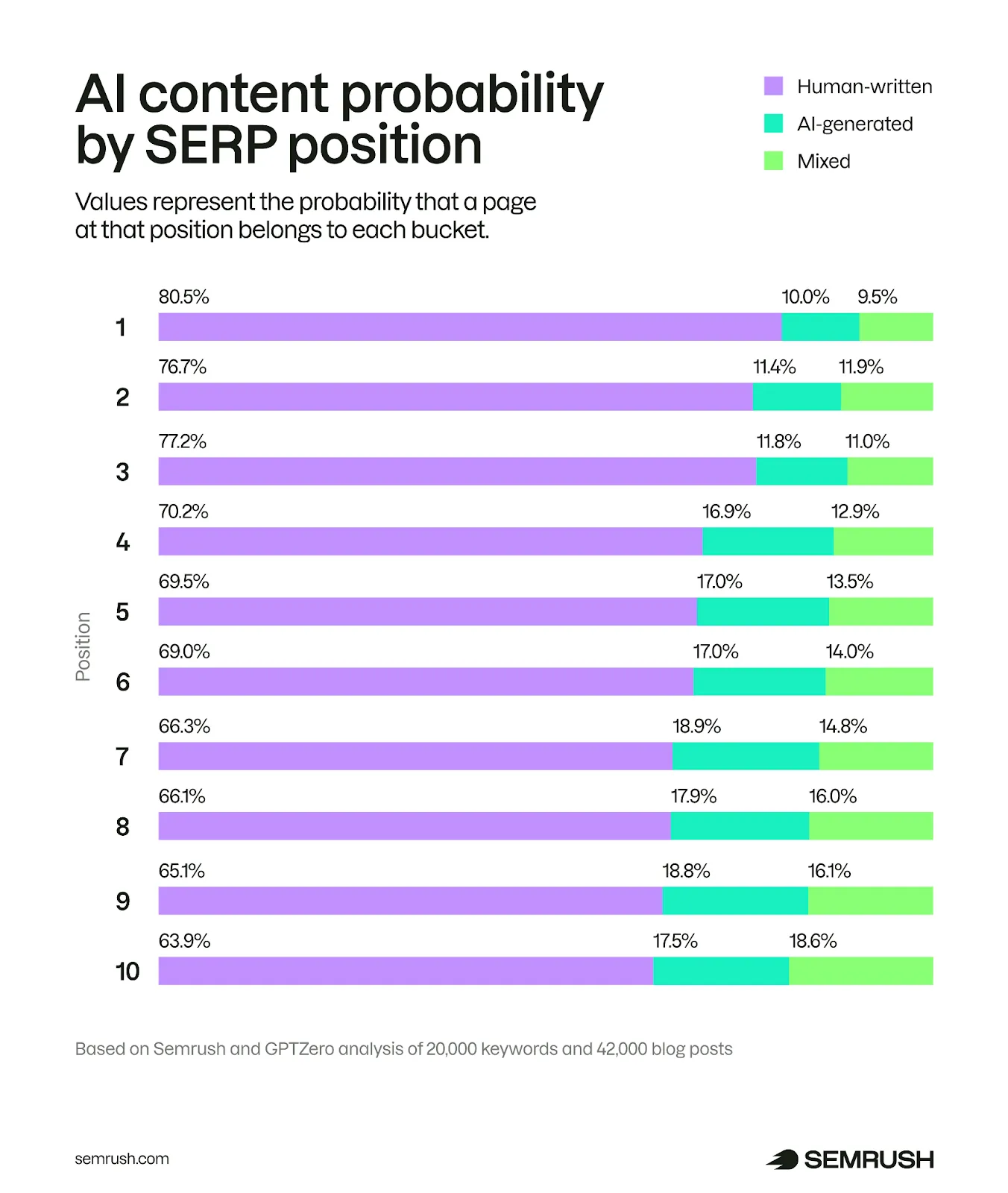
Source: SEMrush
Because of this, it’s still important to train people to write high-quality content. AI tools and features can help hasten the process, but they shouldn’t be the ones writing. And if I were a teacher, I’d slap a big F (with a “See me after class” note) on AI slop.
Science: AI Search Fundamentals and Prompt Engineering
No matter where you stand on the great AI debate, it’s hard to deny the investment search engines are putting into it. Google is arguably the most apparent—and aggressive—having announced a sweeping AI overhaul during the latest I/O conference.
As such, the science class would discuss the basics of AI search and techniques to boost the chances of AI citation. To start with, AI search isn’t one system but a network of state-of-the-art technologies working together. Without getting too technical: (1)(2)
Natural language processing (NLP): This element is in charge of understanding the context behind a query. It finds out if the query “apple” refers to the fruit or the multi-billion-dollar tech giant.
Vector representation: This element is tasked with converting text and other forms of input into “vectors” that establish links between concepts. It enables AI search to return sports shoes for the query “athletic footwear,” even if the words aren’t exact.
Transformer-type LLM: This element analyzes sentences and phrases, as opposed to individual words in traditional search. It’s a step up because the model lets users enter longer queries—even full questions—and still get accurate results.
Retrieval-augmented generation (RAG): This element enables LLMs to retrieve info beyond their knowledge base. Think of this as the fact-checking part of AI search, as the model verifies what it knows by asking an independent source.
Understanding how search works has always involved studying the algorithm, and that’s still the case in today’s AI-powered world. As you’ve probably noticed over the years, the rules have changed. It’s no longer about matching but rather intent.
For this, it’s important to know the prompts that get people to search. While some prompts are short, others are longer and contain more nuance.
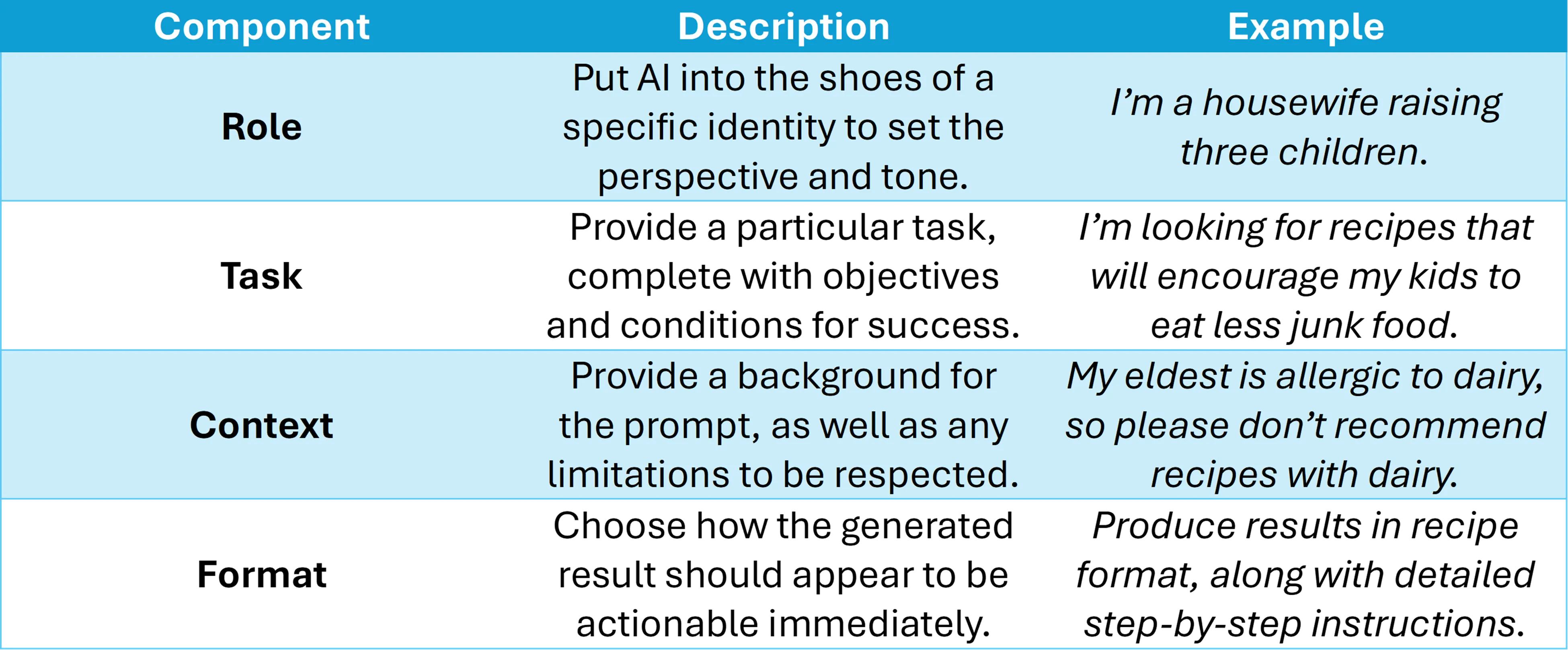
Source: John Chiwai
The prompt may be long, but that’s easy for AI. Using the technologies mentioned earlier, AI search can return results in seconds. But while faster than delving deep into webpage after webpage, it’s far from infallible.
Mathematics: Measuring Return on Investment
For all the changes SEO has undergone, one truth still holds. SEO is a means to an end.
Being the top result or getting mentioned by AI may get your brand a step closer to success, but it isn’t success itself. The consumer has the final say on whether the content they read is worth the time and trouble. That’s why SEO has since shifted focus away from keyword-based metrics to entity-based ones.
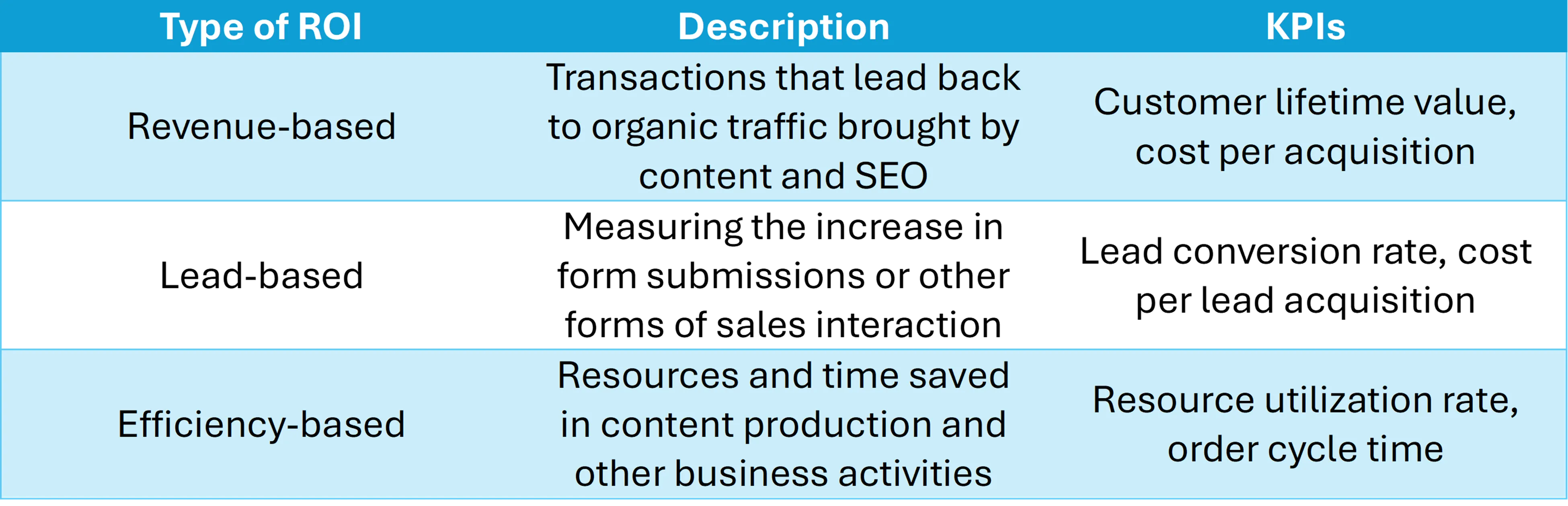
This still boils down to a dozen key performance indicators (KPIs) such as engagement time and conversion rate. But if there’s one KPI that measures how successful an SEO campaign is overall, it’s the return on investment (ROI). As Heather Campbell, VP of sales & marketing at Search Engine Journal, states: (3)
“The ROI of SEO gets measured by efficiency, conversions, and revenue, not by how many articles you pushed out the door.”
Experts believe an AI SEO campaign should target at least one of these three metrics. No matter the type, the endgame is always a higher value for a lower cost.
Social Studies: User Behavior and Trends
Have you ever wondered how keywords are created? You might think that it’s the algorithm at work, but it needs to work with something.
Rather, keywords reflect user behavior. If people can’t recall Lionel Messi’s name, they’ll search using the next best keyword such as “Argentina star football player” or “Argentina soccer team captain.” Search engines are advanced enough to understand the query and return pages, images, and videos related to one of soccer’s GOATs.
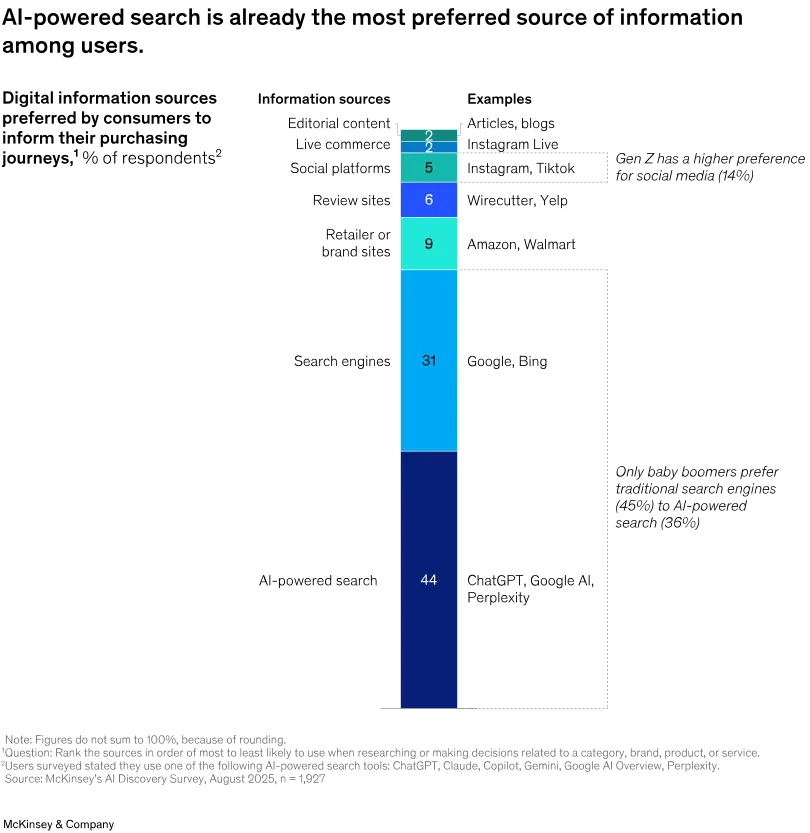
As such, anytime you conduct keyword research, you also peer into what makes people tick. Being aware of this is crucial in SEO, even if zero-click search is now the way to go.
Source: McKinsey
Even so, we can’t assume that everyone will be satisfied with the answer that AI provides. Some users, especially the younger generation, tend to be more thorough with searching for answers. As such, they still click on the citations to be really sure—and that’s a major opportunity for businesses.
Learning is a Lifelong Process—Even More for SEO
Whether or not a dedicated SEO academy pops up in the future, learning the craft doesn’t stop after getting your certification. The erratic nature of search ensures that nothing stays constant for long. Keep learning SEO in whatever form it takes to keep up with the times.
References:
1. “What is AI search Engine?” Source: https://www.geeksforgeeks.org/artificial-intelligence/what-is-ai-search-engine/
2. “What is an AI search engine?” Source: https://www.ibm.com/think/topics/ai-search-engine
3. “The 4-Layer AI Ops Playbook: From Better AI Outputs To Strong SEO Results,” Source: https://www.searchenginejournal.com/the-4-layer-ai-ops-playbook-from-better-ai-outputs-to-strong-seo-results-recap/579419/