
This post is an updated version of our post on the importance of local link building that was published in 2022. Nearly four years later, AI has overhauled the SEO playbook down to the tiniest detail. This updated post will explain how to do local link building for AI search.
Search engines let people look for anything, anywhere, anytime. If anything, their invention made the world a smaller place because they can retrieve information from all corners of the known Web in less than a second. That’s how stories and brands from one part of the world reach the other and influence public opinion.
But for the majority of users, they’re content with finding the closest clinic or the best eats in the area. Google knew this beforehand, having introduced the platforms that would later become Google Business Profile (GBP) and Local Services Ads (LSAs) in the early 2000s.
With their inception came local search—and eventually, local SEO.
Fast forward to 2026, and local search is as strong as ever amid AI revolutionizing search. After all, the need to find the nearest establishment never goes away. However, it’s worth understanding that the rules of local SEO have changed.
The Anatomy of AI-Powered Local Search
For our example, I asked Google to find the best tour packages to Hawaii.
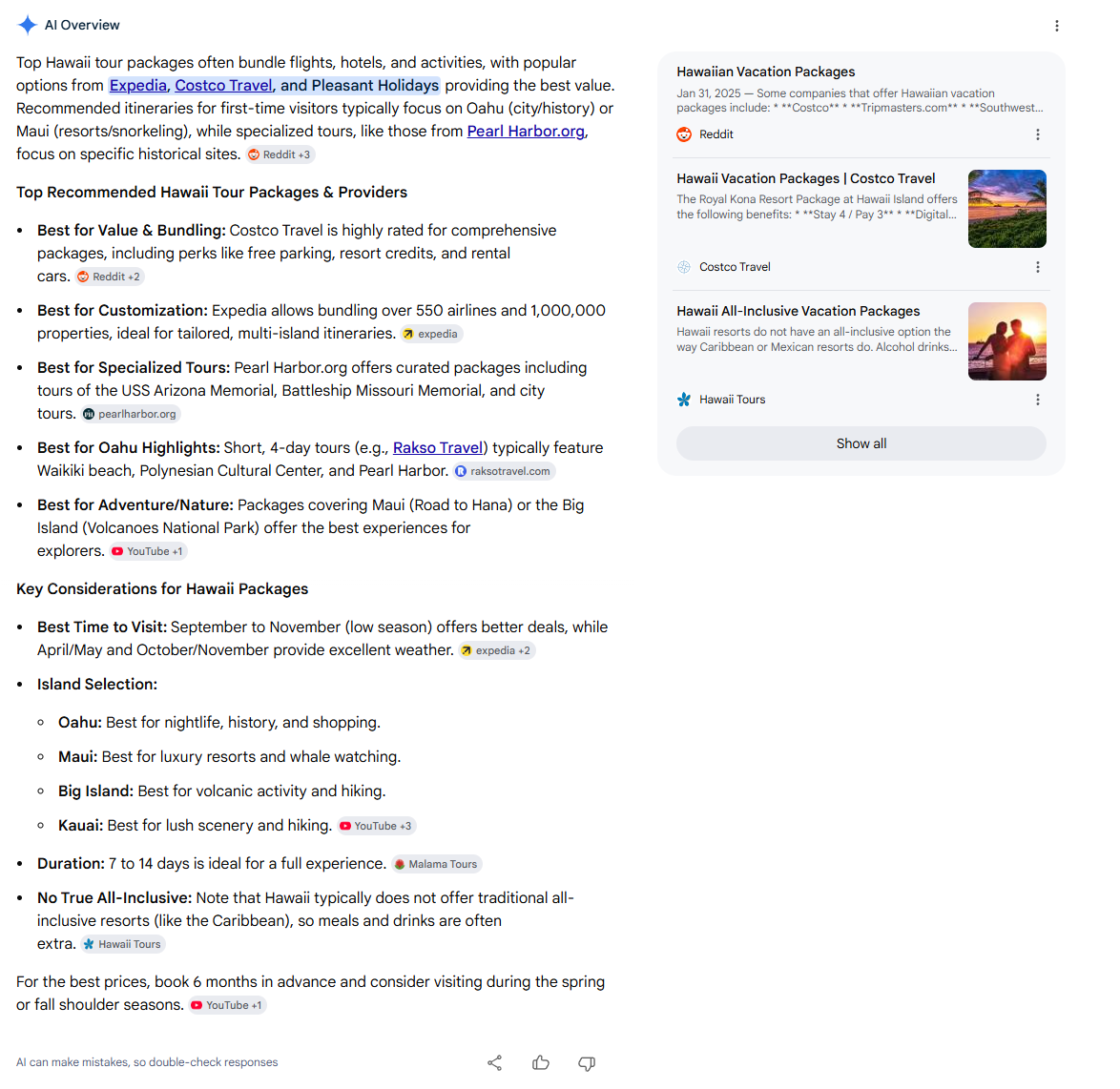
There’s more than just tour packages here. The AI also included other information such as the best time to visit, each island’s specialties, and the ideal travel duration. Technically, I didn’t ask for this information, but it helps plan my trip.
It boils down to a concrete understanding of search intent. Natural language processing (NLP) enables AI models to learn and recognize the user’s objectives behind their search query. The AI determined that the additional information is helpful based on past similar searches, something that would’ve been hard to achieve with blue links alone.
I’ll spare you the long, overly technical lecture on how AI does this since that isn’t the focus of this post. One thing you do need to know is the different types of search intent. They still work the same way for AI as they did in the age of traditional search.
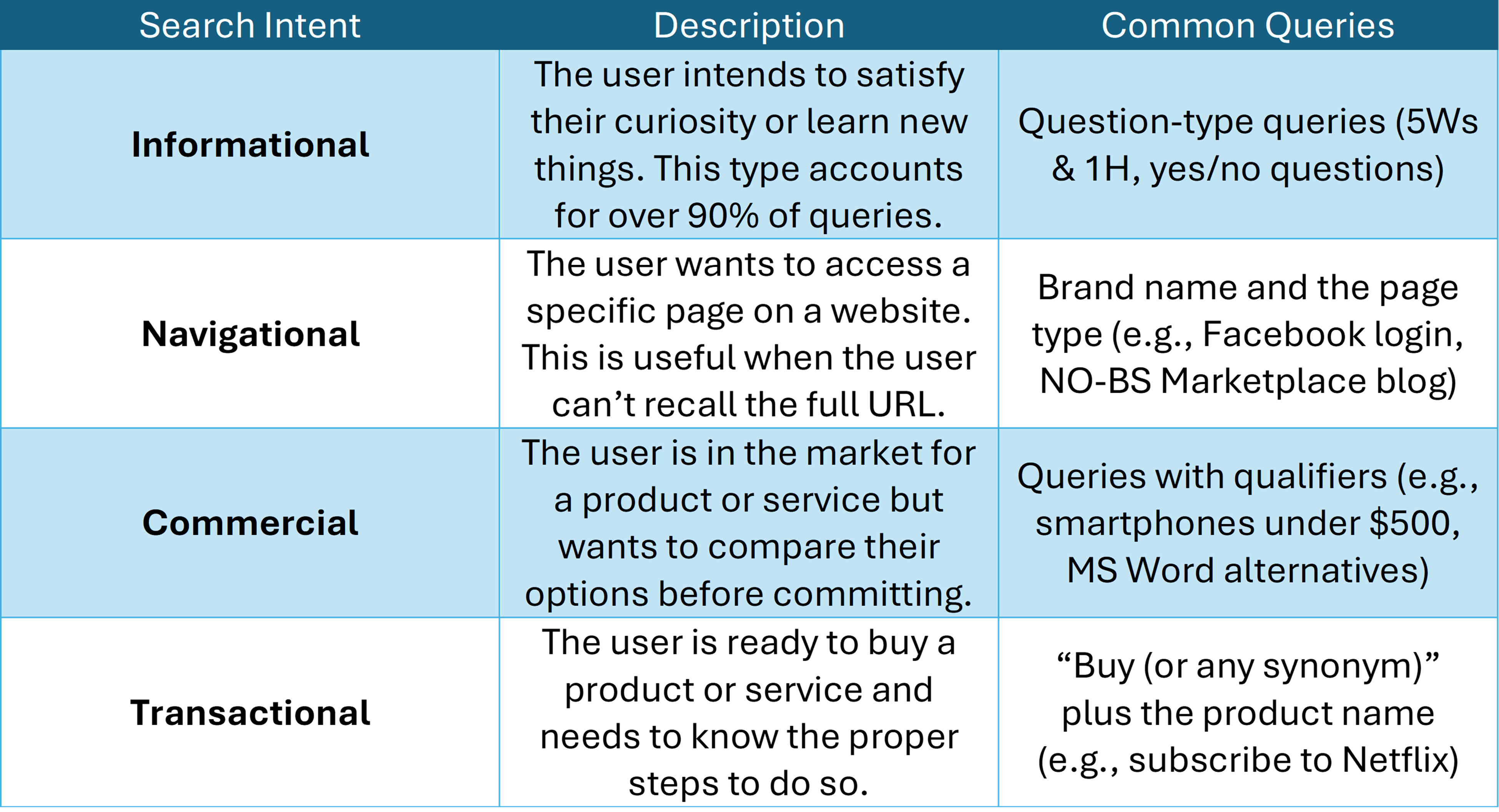
Some queries carry more than one type of intent, called mixed intent. For example, “what are good laptops under $1,000” can be both informational and commercial.
Traditional SEO doctrine stresses the importance of making content that matches search intent, and that’s still the case for AI. The difference is that the latter is smarter in retrieving relevant content. It doesn’t care if the content is not in the top 10, as long as it’s relevant.
Why Local SEO is More Important Than Ever
The reasons for local SEO’s growth in importance are more or less the same as for SEO in general. To start with, AI summaries occupy the most strategic part of the search results page: the top. Professionals refer to this as “position zero.”
Why zero? Because position one is the topmost blue link.
If there’s one thing any expert has learned over the years doing SEO, it’s that people want answers now rather than later. That’s why in traditional SEO, the top result gets the most clicks. But with AI, many will be content with just reading the summary it generates.
Don’t take it from me; the latest numbers all point to this reality. A study by Whitespark in Q2 2025 looked at over 500 queries from three major U.S. cities and found that 7 out of 10 local queries returned AI Overviews. The difference between AI Overviews and local packs is more dramatic when looking at it by location and keyword.
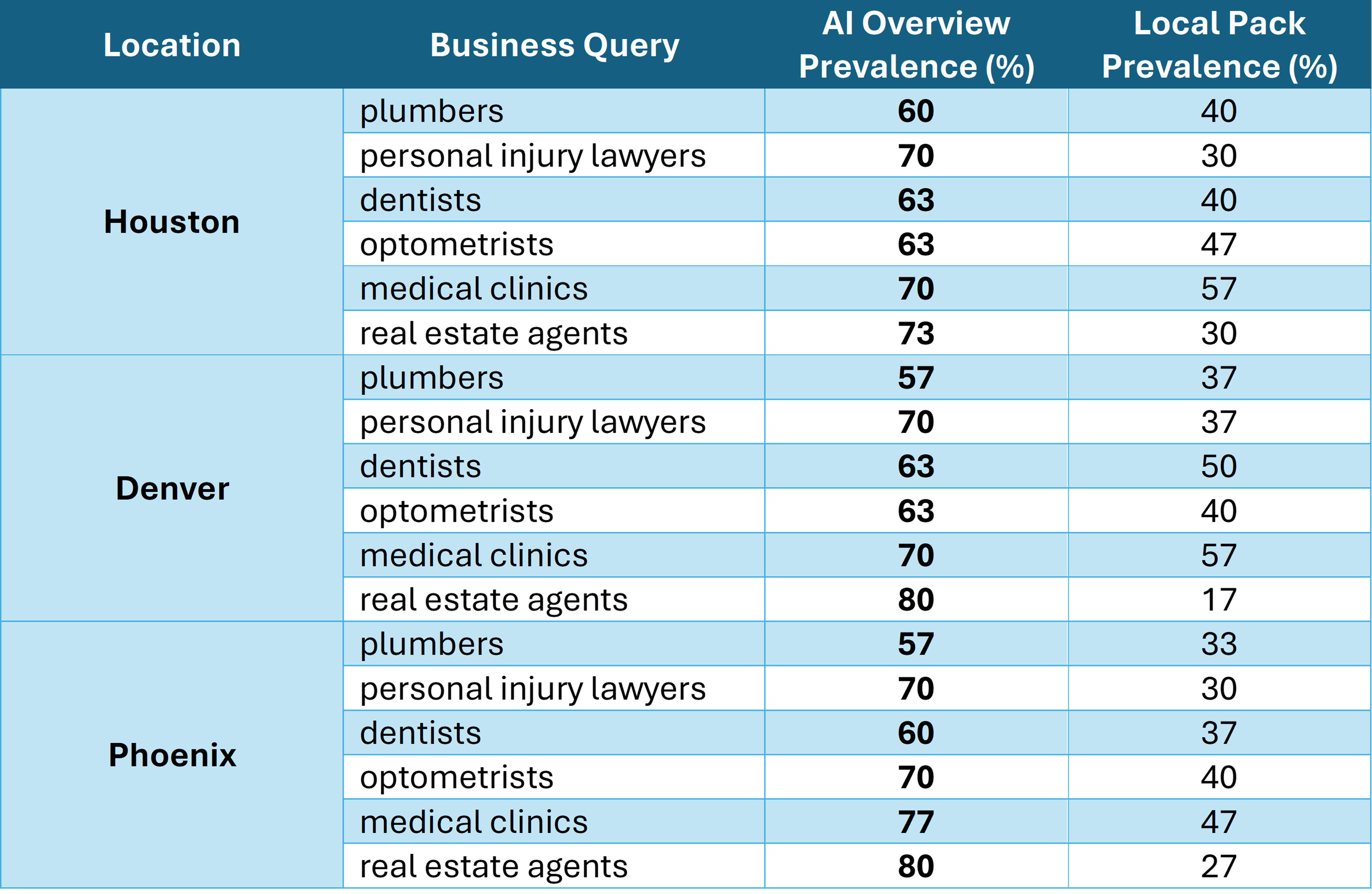
Data source: Whitespark
Does this mean local packs are on their way out? Not necessarily, but more on that later.
Of the AI Overview results, Whitespark reported that 60% retrieved information from third-party publishers. These include social media platforms like Reddit and Quora, as well as niche sites like HomeGuide, Yelp, and ZipRecruiter. This means a business can’t rely on posting content on its website alone for maximizing AI visibility.
The rise of smartphones is also a strong case for considering, if not prioritizing, local link building. With these devices enabling Internet access anywhere, people can look for any nearby restaurant or store onsite.
I’m talking about the well-known “near me” searches. Once taken too literally by search engines (i.e., looking for a business with “near me” in its name), they now understand the intent behind the key phrase.
Miriam Ellis, an independent SEO consultant who served as a local SEO expert for Moz, wrote in her Search Engine Land article:
While a complete local search marketing campaign will strive to offer content that matches all intent phases of a customer journey, it’s that final phase (transactional intent) that has the highest conversion potential because people using the “near me” modifier are on the verge of choosing a local business for fulfillment.
If I were touring an unfamiliar city and suddenly craving pasta, you bet I’d fire up Google on my phone and search for “Italian restaurants near me.” And if you run one such restaurant, you'd better hope that you’re nearby and popular enough to be most people’s first choice.
Steps to Local Link Building Success
Despite AI bringing sweeping changes to SEO, the techniques for local link building remain more or less the same. One reason is that AI models struggle with retrieving local results, especially for “near me” queries. Some of these include:
AI summaries lacking pinpoint map locations
AI citing establishments that aren’t nearby
AI being unable to detect the user’s location
But more importantly, it’s how AI in search works. Just as AI generates summaries based on search results, AI summaries for local search still rely on local packs. Returning to the Whitespark study, it shows a major disparity between AI Overviews and local pack results.
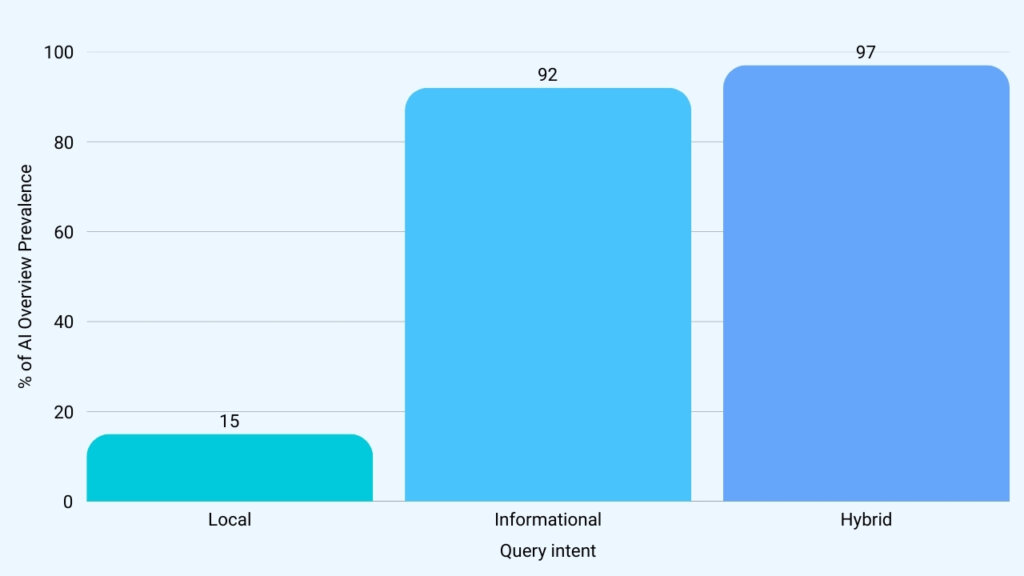
AI Overview prevalence. Source: Whitespark
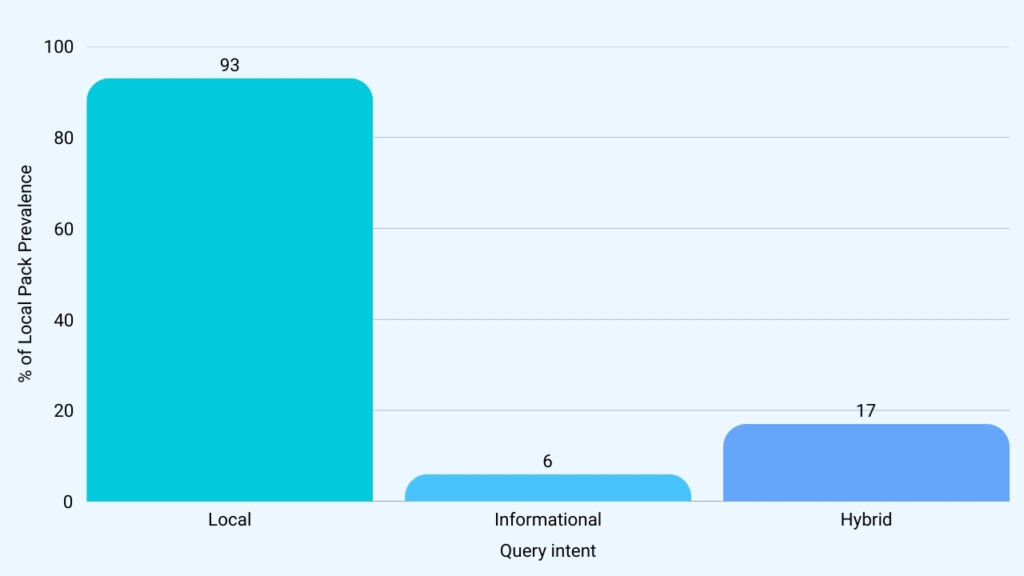
Local pack results prevalence. Source: Whitespark
This is why you can’t discount GBP and LSAs just yet. Many local queries still return a map and directory of local businesses, just as they did years ago. To that end, you need to:
Ensure Your GBP is Up-to-Date
Your GBP is the heart of your local link building efforts. It’s how Google answers questions like “Where is this business located?” or “Are there businesses like this near me?” Without a profile, your local search visibility might suffer.
Google says the first step is to ensure that your profile information is up-to-date. Details like the business’s name, full address, and contact information should be updated after any changes (e.g., moving to a new location). Other than this:
Verify your business with Google
Update regular and special store hours (if applicable)
Respond to reviews from customers
Add photos and videos to your profile
If you’re in retail, display your products in the profile
Note: The last tip is currently only possible in select countries and regions
Exercise caution in editing your GBP, as experts warn that it can cause your profile to be suspended and rendered invisible to local search. They advise against making sweeping edits at the same time, instead waiting at least a week following each change.
Research for the Ideal Local Keywords
Local search works a bit differently from general search, specifically in the type of query often used. Keywords with local intent tend to be short and locked to a specific location, such as “seo firm in delaware.” Posing the query as a question is almost unnecessary (unless in AI Mode), as search engines understand local intent.
However, know that there are other ways for a local keyword to appear.
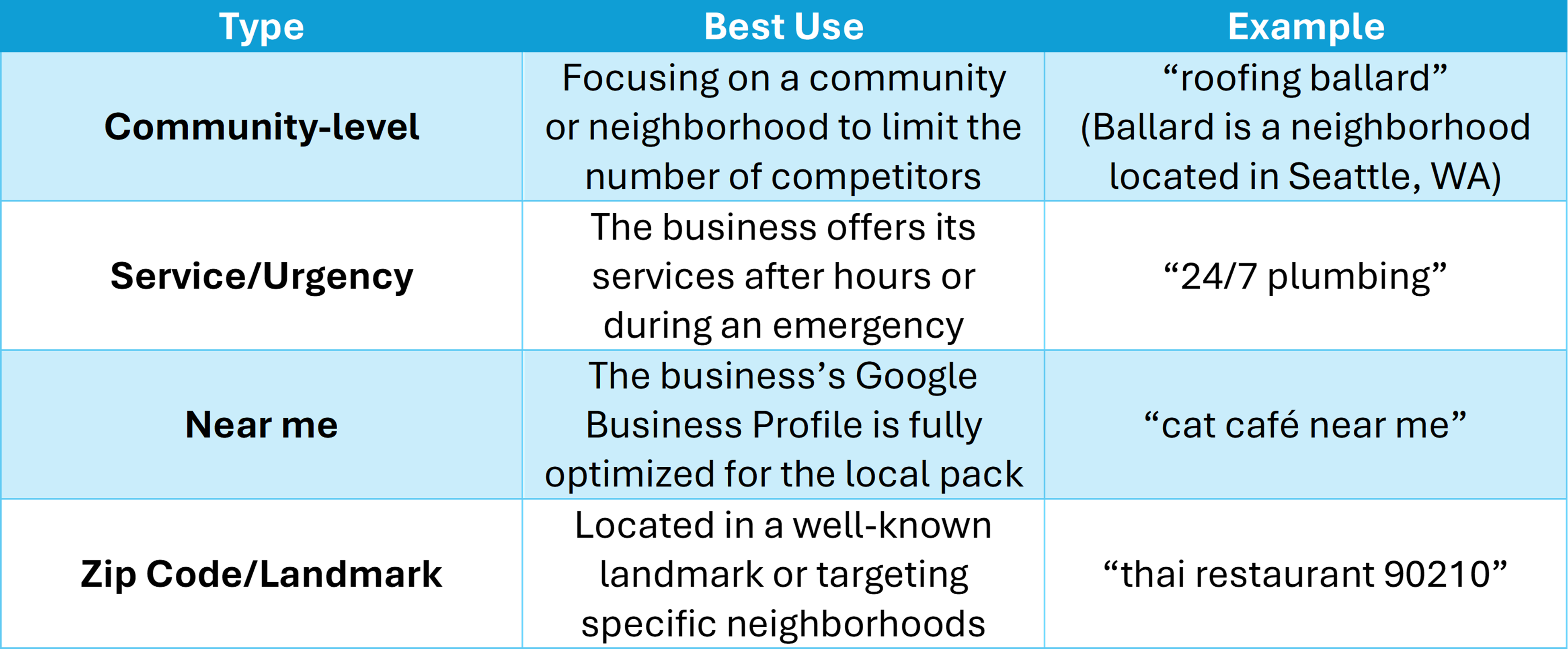
Start your research from the typical local keyword—as in the business type and location—and work your way from there. If you provide services, make sure your choice of locations are within your business’s area of operation. For retail businesses, they have to ensure their location can serve the adjacent areas or have branches in distant places.
Prioritize Local Backlinks in Your Content
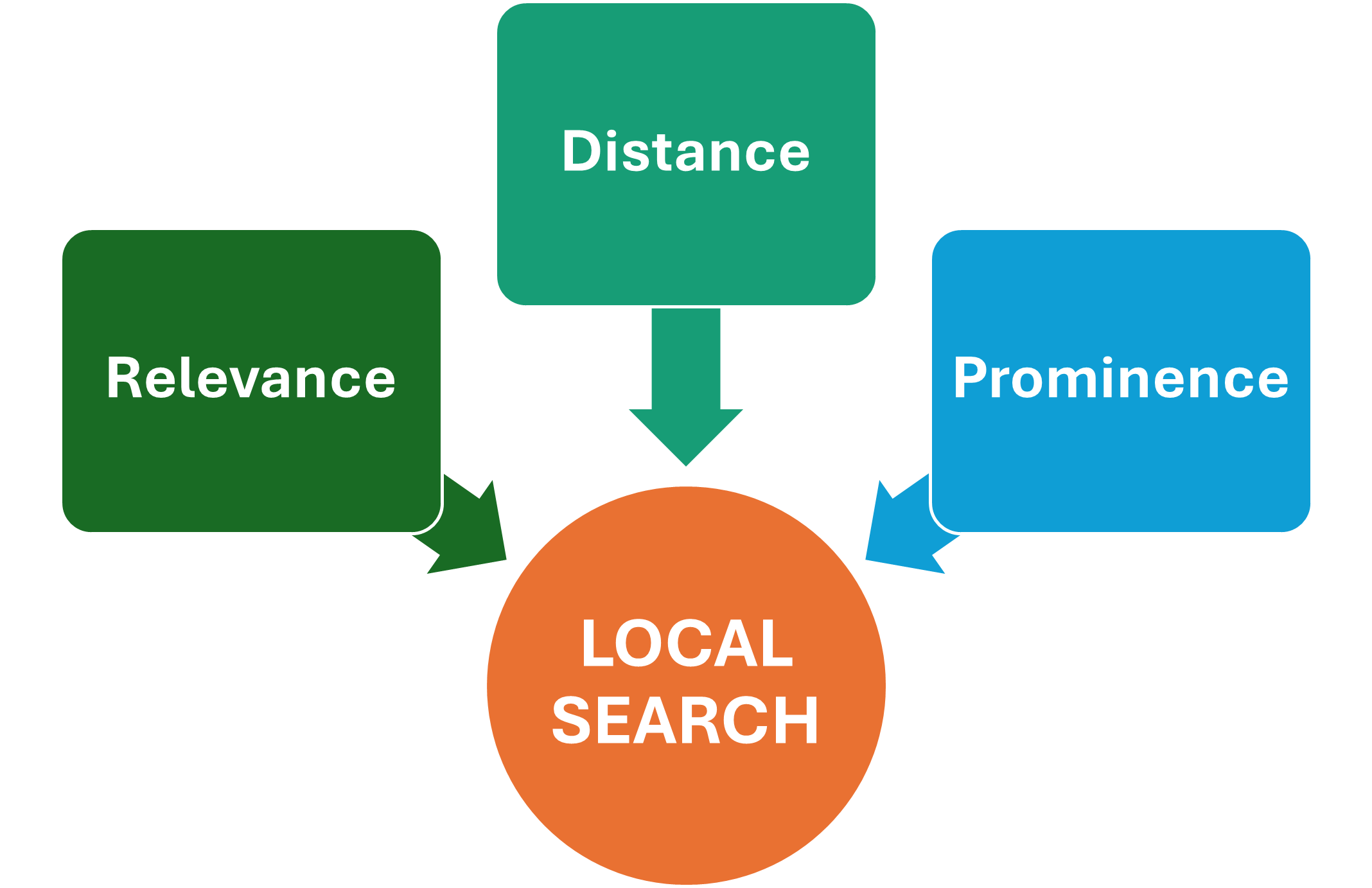
I understand that getting backlinks from the likes of Forbes or US News can be tempting. But for local SEO, it’s better to get them from local publishers like community news sites and niche blogs. While these sites may not be as authoritative, they fulfill one of Google’s fundamentals for ranking in local search: relevance.
As for content, the typical how-to and listicle-style articles can still work for local SEO. The topics, however, need to be relevant to the location you’re ranking for. If a local festival or event is just around the corner, consider making content that talks about it in some form. If possible, consider participating in said event as a sponsor for extra brand exposure.
Besides a GBP, you’d also want to build and maintain a profile in local directories, if there are any. Note that some sites may require you to become a member of a local organization.
Local Visibility Is Still Key
It’s interesting how local SEO remains the same amid AI making drastic changes in search. Keeping your GBP updated and ranking for local keywords is still as effective as they were before the rise of AI. Whether ranking in the top ten or getting mentioned in AI summaries, local SEO is still worth doing.