
Google’s latest major update finished its rollout before the end of February—and the signs are pointing toward something new for SEO.
Officially known as the February 2026 Discover Core Update, it targets content showcased in Google’s Discover platform. While not the first of its kind, reports state that it’s the first to sport the “Discover” name in such an update. Released in early February, its rollout took over a week longer than the typical Google update. (1)
As with any other updates, this one has given some websites a lot of grief. With changes to the algorithm, regardless of size, comes the struggle of adapting content to them. If you’re hit by the Discover update in some way, don’t treat it like it’s the end of the world. There are ways to get your website back up on its feet, which we’ll be talking about today.
The Scorecard
You don’t have to look far or delve deep into what the update changed. Newzdash already covered it in its analysis of 1,000 US-based domains and 3,000 US-based articles before and after the update’s release. Don’t worry, I’ll spare you the other numbers. (2)
Strongly Favoring Local Content
The update has three objectives, the first of which is to allow Discover to show more local content based on the user’s country. The data show a slight drop in international-leaning domains and a slight increase in local ones.
The same can be said about articles by state. Based on data from the top 1,000 articles in California and New York-based searches, the update displays a fivefold boost in the share of local content on the user’s feed.
‘Curiosity Gap’ Headlines Penalized
The second objective is to reduce how often sensational and clickbait content appears in the user’s feed. Unfortunately, the data show that this hasn’t been the case, as some of these still manage to slip past the net.
One thing the study can conclude with confidence is that content with “template curiosity gap” headlines is being penalized. I’ll let this 1927 copy by renowned advertiser and copy editor John Caples show what these headlines look like.
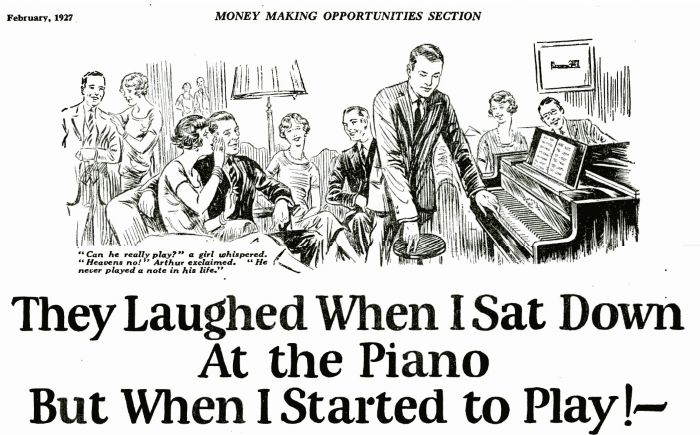
Full copy available on Swiped.co
Newzdash cited a few domains that saw such content drop from the top 100 or top 1,000 US-based articles. Yahoo, for instance, lost its presence entirely in the top 100 following the Discover update’s release.
A Load of Quality Content Metrics
The third objective is, well… I’ll let Google explain it.
“Showing more in-depth, original, and timely content from websites with expertise in a given area, based on our systems' understanding of a site's content.”
As if E-E-A-T isn’t already hard to understand, Google throws this curveball that tends to be both specific and vague at the same time. Fortunately, Newzdash has you covered there. It breaks down its findings here into the following:
More weight on news utility: The update prioritizes news and sports content, while arts and entertainment content take a backseat.
Topical reach is expanding: The update shows content on a more diverse range of topics, albeit at the cost of limiting its choice of domains.
Niche publishers have the advantage: The update empowers Discovery to choose content from niche websites over general ones.
The Workarounds
Don’t Ignore Your Local SEO
With local content poised to appear more often in Discovery feeds, it’s imperative not to forget to do local SEO. Understand your target market, especially where the majority are visiting from. That way, you can tailor content exactly to their tastes.
This is true even as AI gradually becomes the norm in today’s search. For all its promising abilities, AI is actually terrible at doing local search. AI-generated summaries still depend on local results to create satisfactory answers to prompts with local intent.
Avoid Relying on Clickbait Headlines
Given that the outcome for the update’s second objective is inconclusive, I can’t exactly advise against producing clickbait content. That said, I can certainly recommend against slapping curiosity gap headlines on your article or post.
I don’t know any instance when a person got laughed at for sitting down in front of a piano. And I sure as heck don’t know one where the laughter died down when the player proved them wrong. Instead of beating around the bush, why not get straight to the point? You can have headlines that click without the BS, such as: (3)
Using statistics to stress an emotional context
Citing a quote to prove (or disprove) a point
Citing an anecdote, yours or someone else’s
Asking a question for your readers to ponder
Making a bold statement and backing it up
Remember: write for the reader, not the algorithm.
Think Like a Journalist
You don’t have to be a journalist to write Pulitzer-worthy content, and it doesn’t even have to be Pulitzer-worthy at all. If that were the basis for quality content in search, there would be far fewer websites making content.
However, there’s no excuse for putting little to no effort into every article or post you make. Be it on Discover or Google Search, quality content should help people solve problems and make informed decisions. You don’t have to be a journalist, but it’s important to think and create great content like one.
I made a guide on tips on how to write better content by thinking like a journalist. I suggest giving it a read before you write your next piece of content.
Adapt to Updates Quickly
There’s no reason to believe that this update would be the last. It’s unclear why the Big G decided to slap it with the “Discover” name, but if I have to guess, it may be its way to get publishers’ attention. At least, we can take solace in the fact that the update is clear about some of its details.
References
1. “Google’s Discover Core Update Finishes Rolling Out,” Source: https://www.searchenginejournal.com/googles-discover-core-update-finishes-rolling-out/568413/
2. “Google Discover Feb 2026 Core Update Scorecard: Data Shows What Actually Changed,” Source: https://www.newzdash.com/guide/google-discover-feb-2026-core-update-scorecard-data-shows-what-actually-changed
3. “Why curiosity is killing the art of the headline,” Source: https://www.restlesscommunications.com/why-curiosity-is-killing-the-art-of-the-headline/