
This post is an updated version of our 2024 guide on broken link building. While that one’s still good, this new guide offers new insights into turning 404 errors into SEO opportunities (with a catchier title because “Broken Link Building: The Complete Guide” is overused).
Broken links are an inevitable part of the Internet. They’re a result of various things, such as content being moved within or between servers, or domains changing or disappearing from the Web. They also stem from human error, such as a misspell or a misplaced character.
To many, a broken link (also known as a 404 error) is an inconvenience. Imagine finding a link to the information you’re looking for, only to realize that it leads to nowhere. Although broken links don’t result in a penalty, they still negatively impact SEO by losing link equity, increasing bounce rates, and making the website appear neglected.
But where most see it as a nuisance, a few in the SEO scene see it as an opportunity. With the right techniques, you can turn broken links into working ones that lead to your website and its wealth of quality content. This makes broken link building one of the key practices of proper SEO, alongside guest posting and digital PR.
Broken Links and How to Find Them
Broken links come in various forms. The 404 Page Not Found error is the most widespread, but it’s by no means the only type of broken link to look out for.
400 Bad Request: The page doesn’t load because the server doesn’t understand the request. A common reason for this is an incorrect URL.
403 Forbidden: The page blocks the user or crawler from accessing it. Common causes include having insufficient permissions or firewall restrictions.
410 Gone: The page was intentionally deleted from the server. Unlike a 404 error, which can be temporary, a 410 error signifies that the page is gone for good.
These errors can happen to links regardless of their nature. Inbound (backlinks), outbound, internal—it doesn’t matter. Any broken link is an opportunity.
As for finding these links, going through each page of your website is impractical. Besides the risk of overlooking a few, there are also broken links worth seizing beyond the website. For this, you need to use free or paid online tools. Many SEO analytics tools, especially the Big Three, have built-in broken link checkers.
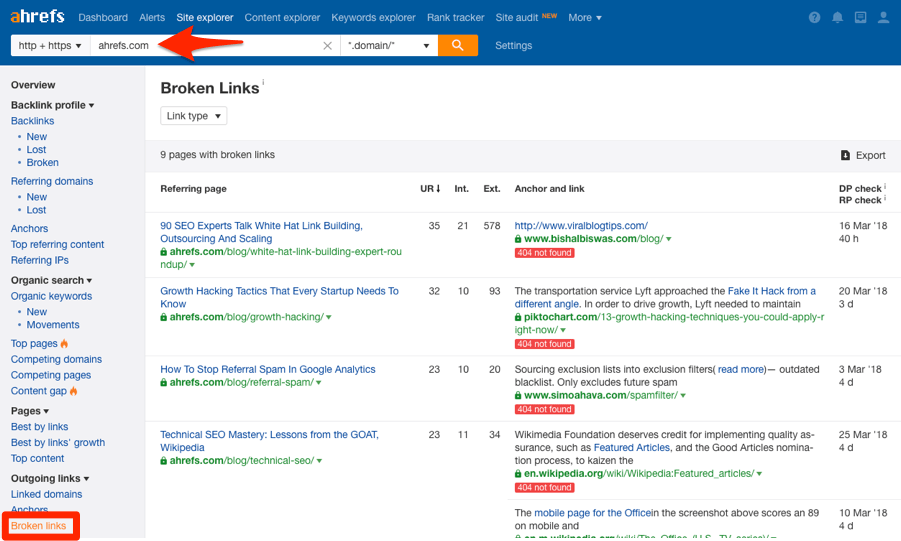
Ahrefs’ Broken Link Checker under the Site Explorer tool
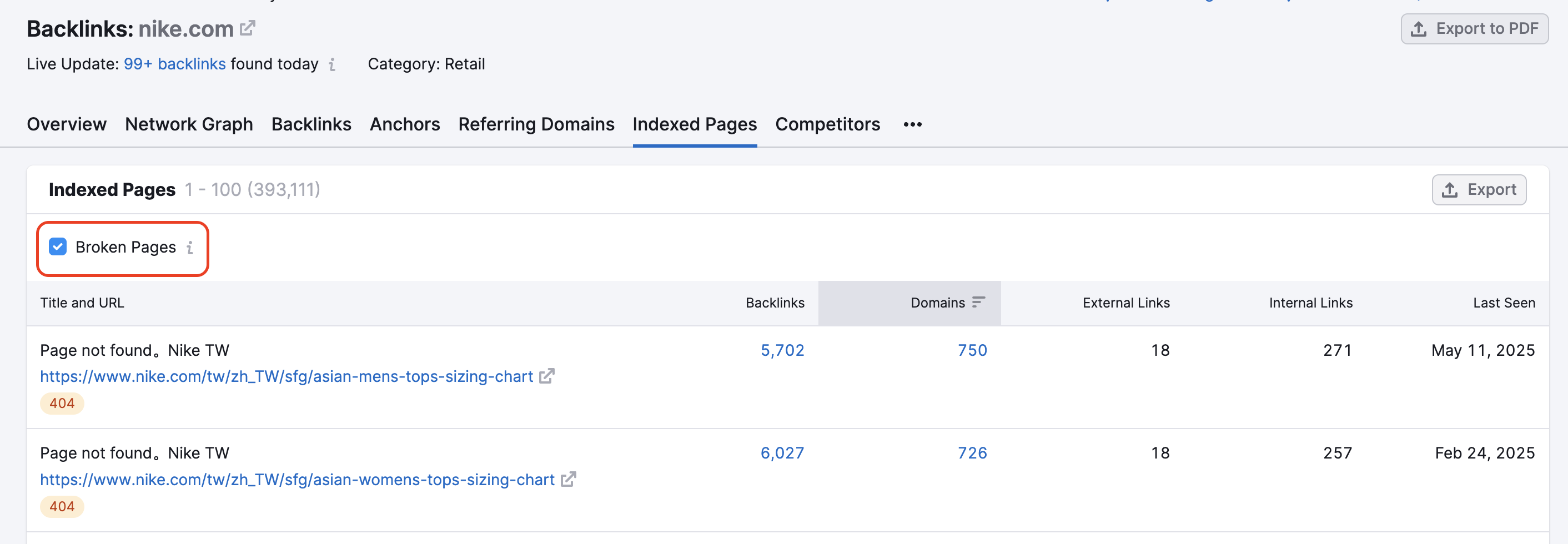
SEMrush’s Backlink Tool enables filtering for broken pages
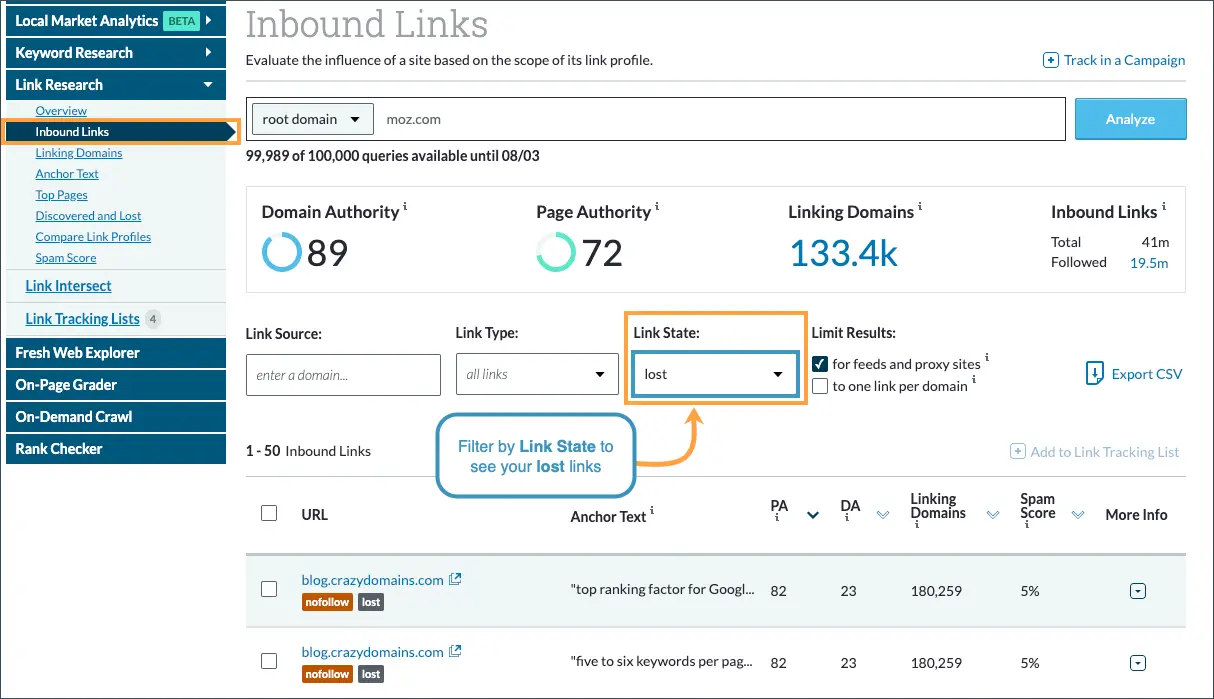
Moz’s Inbound Links Tool allows filtering for lost links
Free tools are also an option but have a limit on the number of results they can show. For example, the free version of the Screaming Frog SEO Spider tool can only crawl up to 500 links. Still, it’s a good stopgap until you can afford a paid subscription.
Strategy A: Seizing the Initiative
Broken link building can be performed in two ways, and it’s more effective to do both. The first is what we’re familiar with: replacing competitors’ broken links with yours.
The first step is to narrow down your list of link opportunities. As much as we want to use every link on the list, not all are relevant to your niche. And even if some are relevant, you might not have the right content for them. Forcing it is asking for a penalty for link spam.
According to Ahrefs, vetting a broken link opportunity is as easy as checking two things.
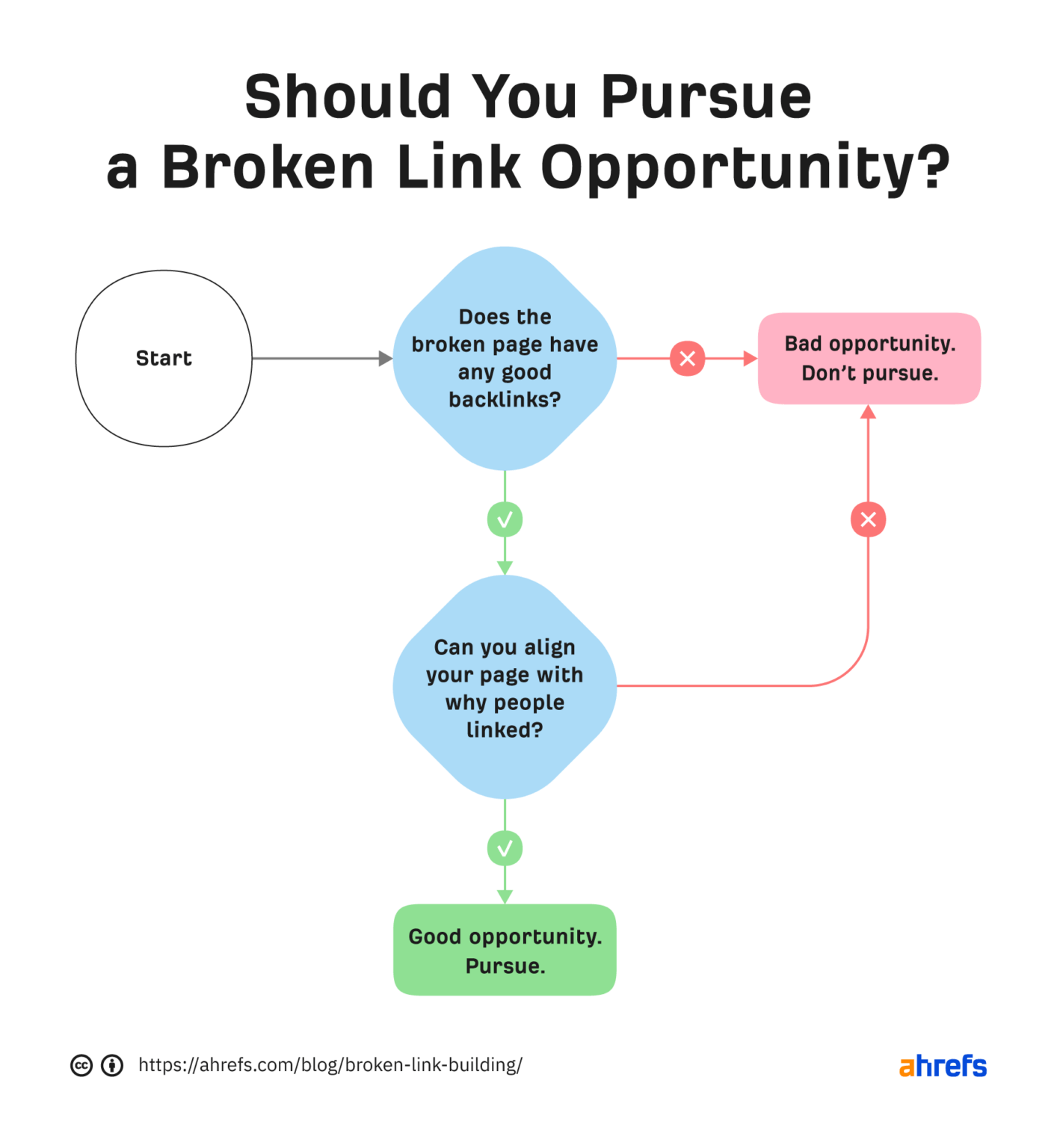
Source: Ahrefs
One is the quality of the backlinks on the broken page. There’s no point in associating your good link with a bunch of bad ones. Your preferred SEO tool can help filter and analyze the results, from including only dofollow links to setting a minimum domain traffic.
The other is the context behind the page getting linked. Understanding why people refer others to the page helps determine the ideal content to replace the old one. You can tell this by looking at the anchor text and the surrounding context. The Wayback Archive lets you access screenshots of dead pages to get a glimpse of the content.
The catch here is that such scenarios are rare. Most of the time, people share links for no deep reason other than being interesting. The good news is that you can replace the page with anything relevant, but you need to prove why it’s a good replacement.
Once the prospects have been narrowed down enough, creating the replacement content follows suit. While it doesn’t need to be a one-to-one copy, it pays to use the same outline as the previous content did. And since the old page is likely to be several years old, adding updates and new insights to the new one helps.
Strategy B: Maintain the Edge
As you scour the Web for your competitors’ dead links, expect them to be looking for dead links to your site, too. This means you’re vulnerable when deleting outdated content (e.g., decommissioned products or services, non-evergreen content) or moving to a new server. If you don’t update the affected off-page content quickly, your rivals can seize the chance.
The best way to do this is through redirects, specifically 301 redirects. Although the old link stays on the content, clicking it leads users and search engine crawlers to the new website or page. Despite some loss, the redirect can keep up to 99% of the old page’s SEO value.
A 301 redirect is necessary whether for migrating the whole website or moving content to a more optimized URL. But keep in mind that indexing redirects—even simple link changes—take time, so it’s important to have a concrete migration plan in place.
While called permanent redirects, 301 redirects aren’t made to stay in the content forever. The longer they remain, the greater the risk of redirect-related errors like chained redirects and redirect loops. Such complications are a waste of crawl budget.
During the process, consider updating the content by adding new insights and removing dated ones. Copy-pasting risks getting flagged for plagiarism, even if you wrote the basis for the updated content. Remember, the algorithm doesn’t discriminate.
The Outreach Process
Once your replacement content is ready, the last step is to notify publishers of your intent to replace the broken links. It’s in their best interest to do so, as broken links degrade user experience and, with that, traffic.
But since you’ve done off-page link building before (on your own or through a link building service), you should know that outreach to replace broken links won’t be easy. Publishers get as many of these requests as they do for guest posting. Emails that don’t stand out are doomed to be buried in their inboxes.
In sending a pitch (and in life, in general), the golden rule is to be polite and professional. Nothing good comes out of pressuring publishers to replace broken links with live ones from your website. If anything, it gives them all the more reason to double down on their refusal. It’s unfortunate, but your only recourse in this case is to move on.
However, there are ways to increase your chances of success. First, treat the publisher like a real person instead of a statistic. That means unique, personalized emails to a select few instead of copy-pasting an email for everyone.
Another tip is to include all broken links in your request, not just the ones you’re currently gunning for. You’ll be doing them a huge favor, which increases the likelihood of replacing those links with yours. This approach also works from a practical perspective, as multiple pitches can get lost in the publisher’s inbox.
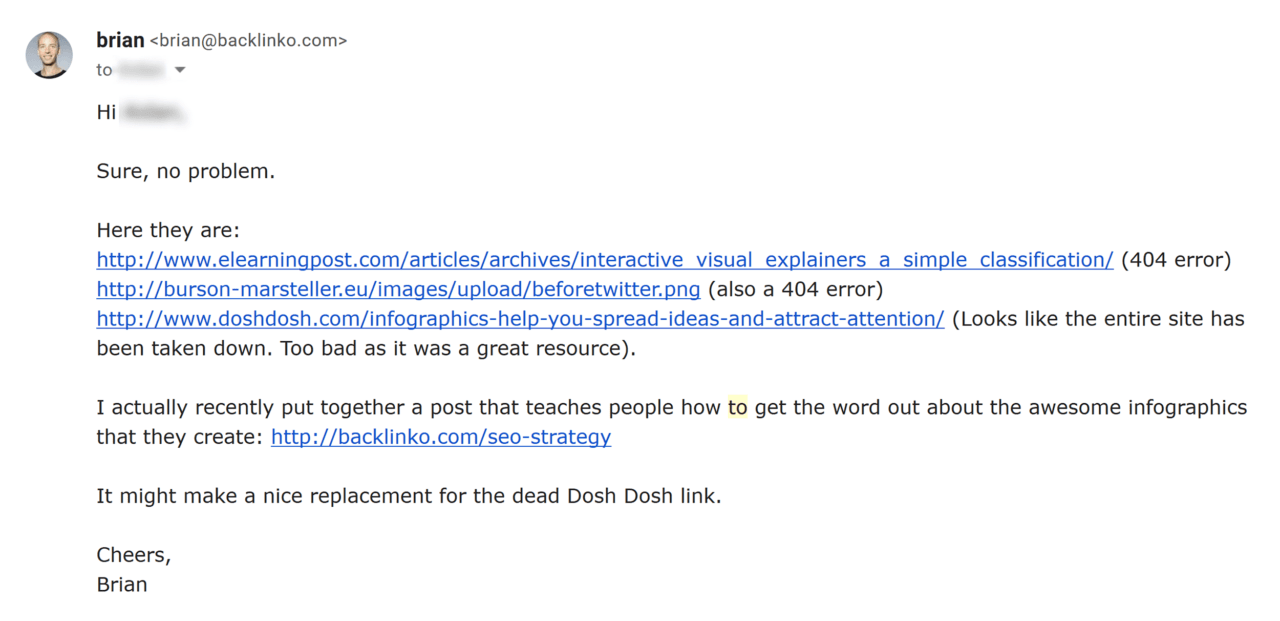
Source: Backlinko
Consider including the reason your content is the ideal replacement. For example, a car dealership may publish an updated guide on choosing fuel-efficient cars because of the massive spike in oil prices right now. The publisher will see that your expertise is worth considering and may even ask you to contribute as a guest author.
If the publisher doesn’t give a response after several days, send them a follow-up email. If there’s still no response, either they’re uninterested or the website hasn’t been updated in a long time. In that case, don’t bother sending another follow-up and move on.
Make Broken Links Your Own
Broken or dead links are a dime a dozen on the Internet. Because they’re a hassle to users, these links can make for a good SEO opportunity by replacing them with live ones coming from your site. Incorporate broken link building into your SEO strategy today.