
No discussion about SEO, from its history to best practices, is ever made without involving Google. It may not have coined the term, but its innovations paved the way for the SEO we all love—and hate—today. Say what you want about the search engine giant, but you can’t deny its contributions toward a more useful Internet.
But this piece isn’t about the world’s most popular search engine. It’s about the second.
Microsoft’s Bing may be far from being widely used, with a global market share of less than 5% (as of May 2026). That said, recent events have given it a prime opportunity to give the Big G a run for its money. It may not be able to close the gap right away, but a challenge to Google’s decades-long dominance is worth tuning in to. (1)
So, let’s put Google in the backseat for now and talk about Bing. The first question in your mind may be “What’s up with Bing?”
A Duck Offers An Alternative
Bing’s potential rise isn’t necessarily brought by changes to its search engine or its owner, Microsoft. Rather, it’s from a big break by another search engine.
Last month, DuckDuckGo posted an increase in visits to its search engine by roughly 28%. As PC Gamer reported, it rose from 22.7% to 27.7% between May 20 and 25. (2)
Meanwhile, TechCrunch reported that new installs of the DuckDuckGo mobile app were up by over 18%. The rate was highest among iOS users, with installs peaking at nearly 70%. (3)
Both reports agree that the increase comes amid Google’s aggressive overhaul to integrate AI into its search services. Users complain that Google doesn’t offer an easier way to opt out of AI search. While DuckDuckGo operates an AI-powered tool (Duck.ai), it keeps its traditional search engine (noai.duckduckgo.com) separate.
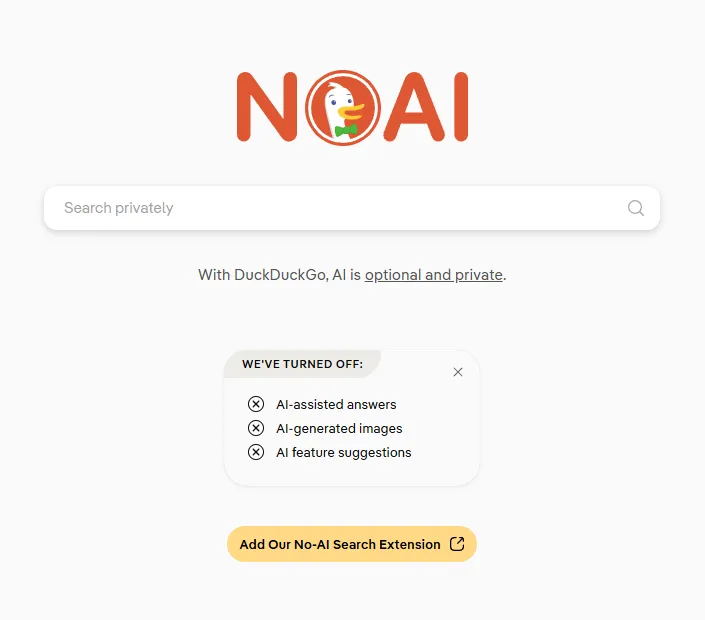
More importantly, privacy is DuckDuckGo’s selling point. According to its Privacy Policy:
“We don’t save your IP address alongside your searches, Duck.ai chats, or visits to our websites, and we never log IP addresses to disk that could be tied back to you. We also don’t save any other unique identifiers alongside your searches, chats, or visits to our website, and never log unique identifiers to disk that could be tied back to you or to your search, chat, or browsing history.”
However, this means it doesn’t keep data that analytics tools like Ahrefs and SEMrush can track. Even though we’re now taught not to rely too much on numbers, it would still be great to see what people are looking for.
That’s where Bing comes in.
DuckDuckGo derives search results from different sources, but Bing is its largest source. It depends on Bing so much that, when the latter experienced an unexpected shutdown two years ago, it, too, went down. And unlike DuckDuckGo, Bing is trackable for SEO. (4)(5)
In other words, if you want to rank on DuckDuckGo, make sure you’re ranking on Bing.
Bing’s 22-Point SEO Guidelines
The essence of SEO may be the same for every search engine, but that isn’t always the case for the approach. Bing is worlds apart from Google when it comes to the latter, starting with its dynamic ranking. Frederic Dubut, Principal AI Safety Researcher at Microsoft, stated: (6)
“The model is learning all the time, and so what it’s doing is taking into account all these different factors . . . and it’s combining all of them and it’s trying to see what are the signals that are the most predictive of relevance. That changes all the time, and the weights that it’s putting on all of these factors are also changing all the time.”
To that end, Bing’s Webmaster Guidelines summarize 22 points that websites must follow. Not doing so risks reduced visibility or, worse, delisting from search results.
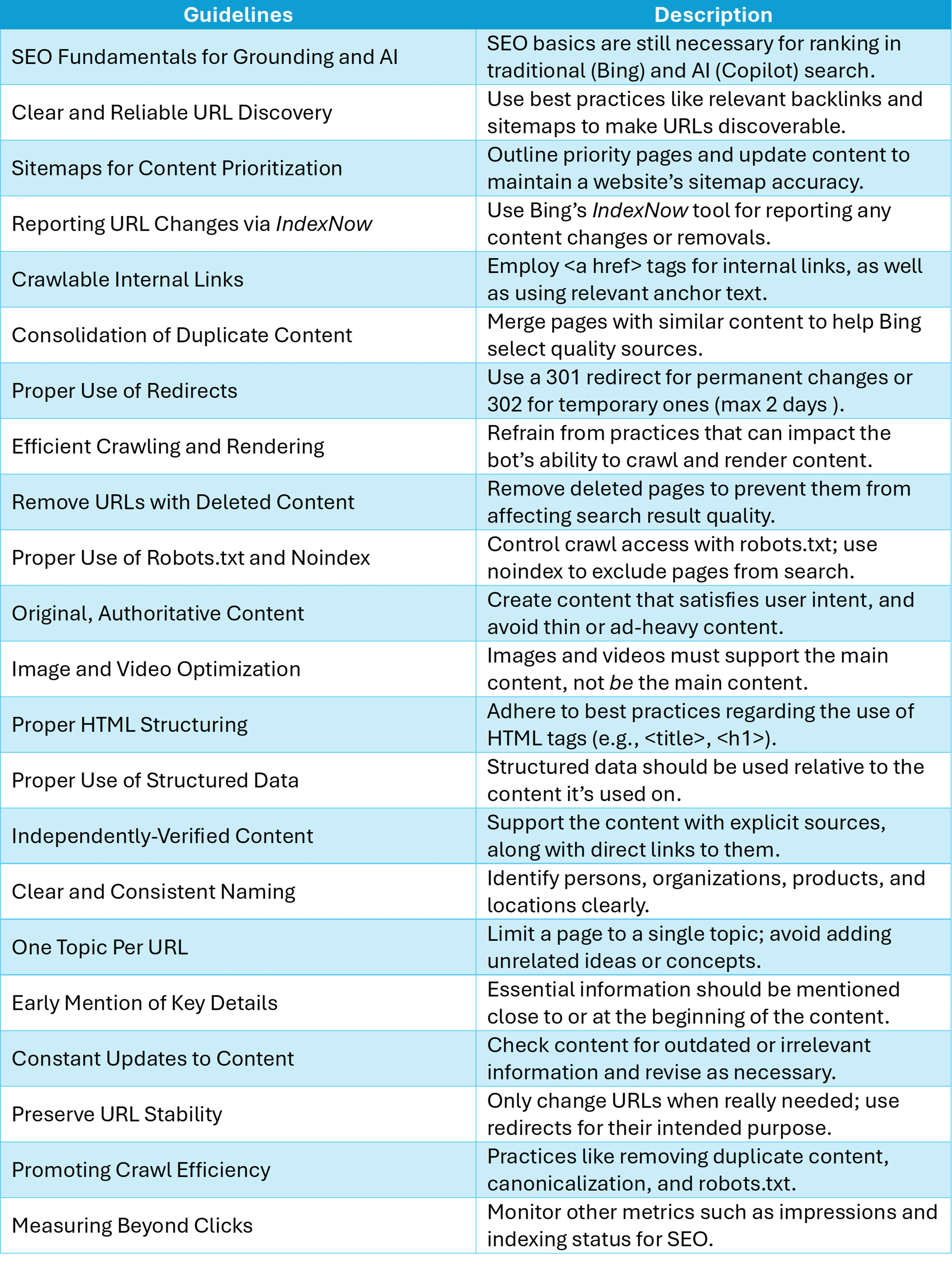
The guidelines also advise against using black-hat practices like link schemes and prompt injection. These techniques, like with Google, can result in ranking drops or content being ineligible for grounding or indexing.
Bing SEO Still a Minority…For Now
Google still dominates the search engine market, so maintaining your SEO there is still a good idea. However, recent events have shown other avenues worth considering such as Bing. Ranking in other search engines helps expand your brand’s reach.
References:
1. “Search Engine Market Share Worldwide,” Source: https://gs.statcounter.com/search-engine-market-share
2. “DuckDuckGo's AI-free search saw nearly 28% more visits in the week following Google's insistence that people love AI mode,” Source: https://www.pcgamer.com/hardware/duckduckgos-ai-free-search-saw-nearly-28-percent-more-visits-in-the-week-following-googles-insistence-that-people-love-ai-mode/
3. “DuckDuckGo installs are up 30% as users reject being ‘force-fed’ Google’s AI Search,” Source: https://techcrunch.com/2026/05/26/duckduckgo-installs-are-up-30-as-users-reject-being-force-fed-googles-ai-search/
4. “Where do DuckDuckGo search results come from?” Source: https://duckduckgo.com/duckduckgo-help-pages/results/sources
5. “Bing outage shows just how little competition Google search really has,” Source: https://arstechnica.com/gadgets/2024/05/bing-outage-shows-just-how-little-competition-google-search-really-has/
6. “Search Engine Land’s Guide to Bing SEO,” Source: https://searchengineland.com/guide/bing