
Link building is one of the linchpins of modern SEO, alongside quality content and keyword research. You can’t have a serious discussion about SEO, let alone claim that you’re doing it, without knowing about this. This is because links have been an indispensable part of the doctrine since the days of PageRank.
In fact, PageRank is responsible for introducing links as the new “votes of confidence” for a website. Keywords can be spammed to trick search engine algorithms, and Pulitzer-worthy content won’t matter if it can’t be seen. While links have their flaws, they’re a more reliable way to vouch for the content, and the website’s credibility.
That said, like everything else in SEO, link building is no walk in the park. One mistake risks a website’s hard-earned traffic plummeting to near zero, if not to zero. If you’re reading this before getting into link building, this guide will teach you everything there is to know.
The Many Ways to Build Links
One important thing to remember is that link building isn’t a single process. Much like SEO in general, it’s a system of strategies and techniques working together to deliver favorable results. So when you say, “I want to do link building,” the next question is “How?”
There are several techniques to choose from. Better yet, consider doing as many of these as possible to increase the chances of ranking or getting mentioned in AI summaries.
Guest Posting
Guest posting (also called guest blogging) is exactly as it says: create your content and get it published on a website other than your own. The publisher website can range from news sites (e.g., Forbes.com, local news sites) to niche or industry blogs.
Guest posting is an effective way of building backlinks and credibility for your site. For one, publishers uphold a standard of quality to avoid losing readers, so they screen any content before uploading. This prompts submissions to play by the rules, such as avoiding a salesy tone or prohibiting AI-generated content.
As for backlinks, few proofs of credibility hold more weight than your article or blog post being cited or published on a well-known site. That says a lot, especially in an era where misinformation is as common as the common cold. This doesn’t necessarily mean your take is right, but it’s worth considering in a serious discussion.
Not all websites offer guest posting opportunities, and some that do maintain a high bar of entry. As such, link building tip #1 is to never limit your options to well-known websites. You’ll find other sites that are just as authoritative in your industry or niche, if not more.
To find these opportunities, start by entering any of these queries into the search engine:
[niche keyword] + [“write for us”]
[niche keyword] + [“guest post]
[niche keyword] + [“contribute”]
[niche keyword] + [“submit an article”]
For example, below are the results for the query: “seo write for us.”
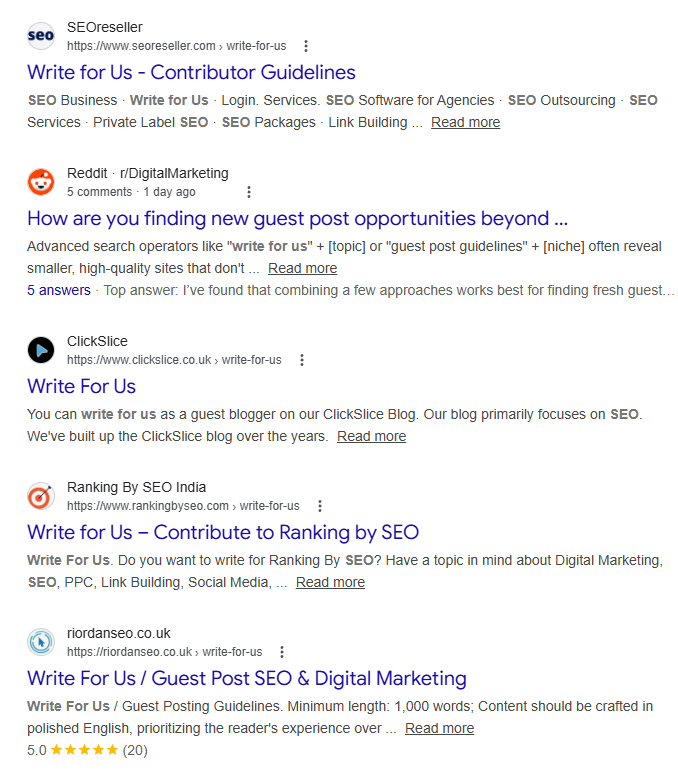
You may notice that none of the top results are from well-known publishers such as The New York Times or CNN. One reason is that SEO is a rarely discussed topic among news sites compared to, say, health and politics. All the more reason you’re better off focusing your efforts on SEO blogs and websites.
Next, you have to examine the candidates thoroughly. The last thing you want is to get your post published on a site that has no clear editorial guidelines or, worse, wears a black hat. That’s a good way to be slapped with a penalty and make recovery a pain.
There’s no limit on how many guest posts you can have. However, publishers often require content to be unique, meaning the piece hasn’t been published anywhere. The best way to approach this is to cover as many topics in the niche as possible.
Once you’ve shortlisted your publishers, you then have to write a good pitch to catch their interest. Keep in mind that there are humans behind those websites—and they’re no fans of being treated as another recipient in a mass email. Link building tip #2 is to make sure every pitch is highly personalized, which should at least include: (1)
A subject line that mentions what the publisher will get out of your content
A reference to one of the publisher’s articles and why it resonated with you
A proposition on how your content can benefit the publisher’s reader base
A few samples of your past work to further establish your credibility on the topic
An explanation of your methods of promoting your post once it’s published
Unless the publisher’s guidelines state otherwise, you don’t need to attach a working draft to your pitch email. Send the idea first, then write the post when the publisher approves it.
Content Creation
Content forms the heart of any link building strategy, and SEO in general. Without quality content to carry your links, getting your brand out there will be a steep climb.
Google defines quality content as having three characteristics. (2)
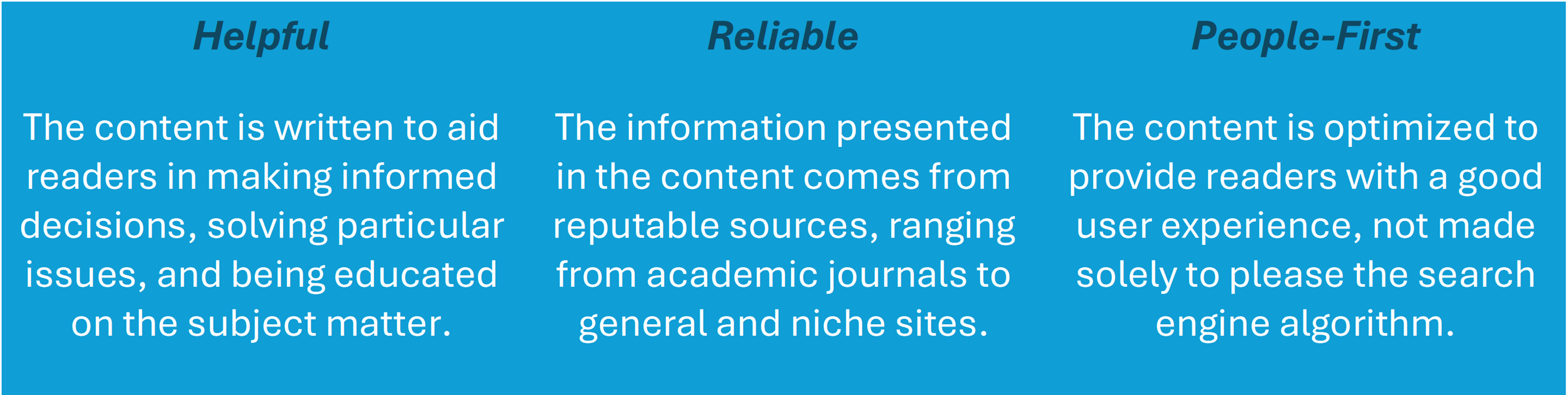
If this sounds vague, you aren’t the only one. Websites struggle to create content that gives the results they want to see because specifics are scarce. The closest we have is Google’s E-E-A-T criteria, but it’s just as ambiguous.
Because of this, link building tip #3 is to not sweat over the quality criteria too much. We can spend the whole day talking about what passes as “quality content” for search, but we won’t get any closer to the exact criteria. That doesn’t mean we can’t do something.
If search engines demand quality content, I can’t think of anything that comes closer than taking a page from journalists. After all, their profession holds them in high standard when reporting: the two-source rule, unbiased writing, and even taking responsibility for errors. Granted, not all of their rules are applicable, but many others are, such as: (3)
Prioritize original research whenever possible
Provide accessible links to all used references
Say no to plagiarism, always attribute sources
Allot time to respond to questions from readers
In addition, given the rise of AI, I’d want you to take to heart link building tip #4: Resist the urge to leave the writing process to AI. This doesn’t mean you can’t use AI writing tools, as they can make the process more efficient when used correctly. People still want to see a human speaking to them through the article or blog post.
If you aren’t confident about your writing or don’t have the time or resources, an alternative is to outsource it to a service that offers quality guest posting. There’s no shame in leaving the writing to a professional human, especially when your content impacts one’s finances, health, or safety (called Your Money Your Life content).
Link Placement
Now that you have your winning content, you need to put some links to start leading traffic to your site. Needless to say, you can’t just make every word in your article or post a link. It doesn’t just look or feel wrong—it is wrong.
While there’s no exact ideal number of links for a post, the default is usually one of each:
Link from your own website
Link from the publisher’s site
Link from a high-authority site
You can afford to be flexible with this setup, adding more links as the content calls for it. However, keep in mind that link equity (also known as “link juice”) dilutes with every link added. Think of it like pouring a pitcher full of fresh juice into glasses. Every glass added reduces the amount of juice each glass gets.
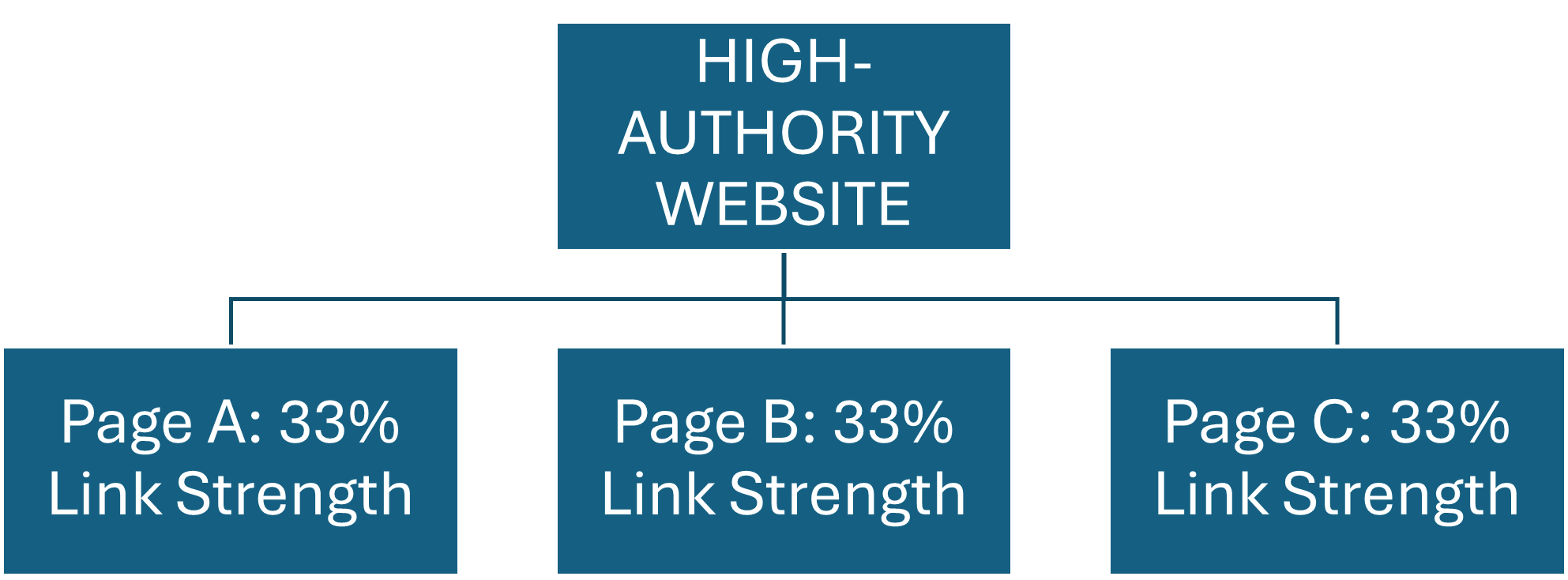
Figure A: One link from a high-authority website being linked by three pages
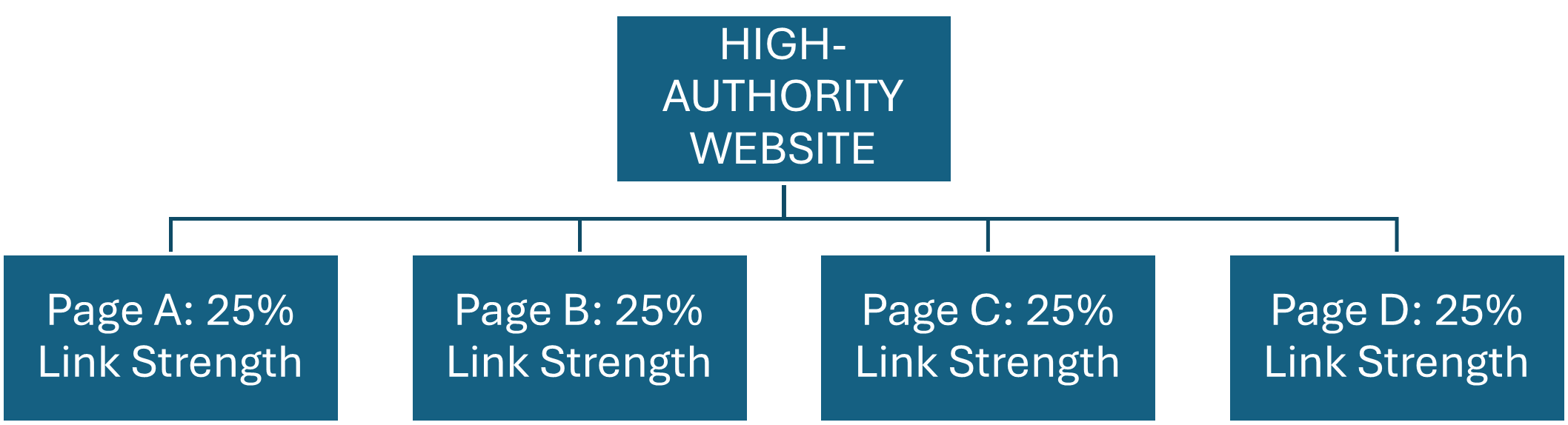
Figure B: One link from a high-authority website linked by four pages
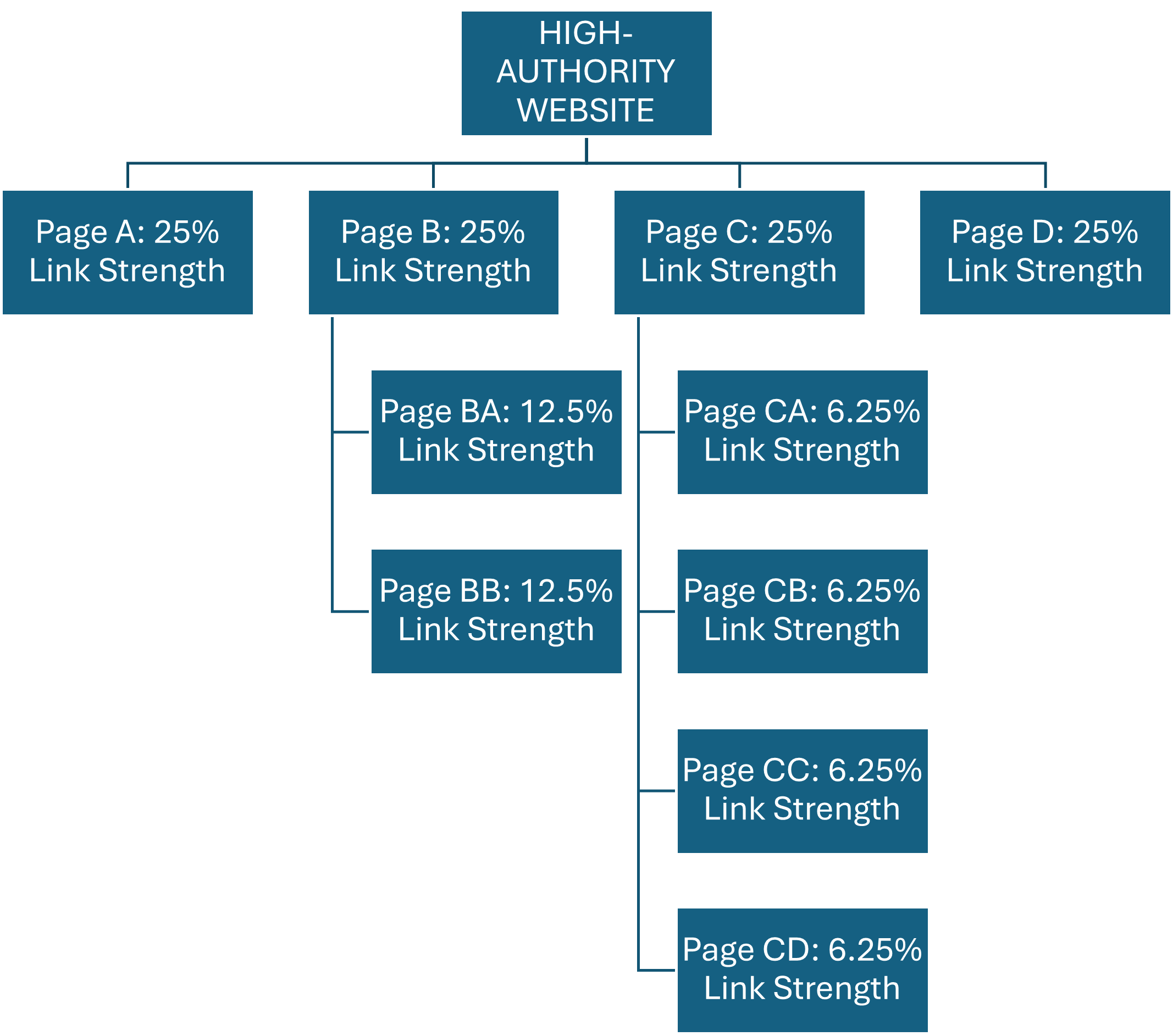
Figure C: Same as Figure B but with subpages
The diagrams above also show that using the same high-authority link for multiple pages decreases its value. For that, link building tip #5 is to diversify your links and make sure they’re relevant to your content. Otherwise, you risk your page getting flagged for spam.
As for where to place your links, Google prefers them to be surrounded by the right context to make it natural. NO-BS Marketplace is an SEO provider, so it wouldn’t make sense for it to link its pages to articles about, say, choosing the right running shoes.
Some experts advise placing links above the fold (the part of the content that renders first). While it helps with engagement, it shouldn’t be a priority unless it’s the right place for your link. Even then, you’d want to spread your other links across the body to make it look more like a genuine read and less like an old-fashioned link scheme.
Link Reclamation
Link building doesn’t end with your content going live. Over time, links may become broken or lead to a different page for reasons like the domain expiring or the content being deleted. Sometimes, it can happen within weeks. Other times, in years.
It’s important to keep the link juice flowing to maintain your page’s ranking, which is where link reclamation comes in. As the term suggests, it involves reclaiming or recovering links lost to URL errors and other issues. The most common of these, of course, is the 404 error.
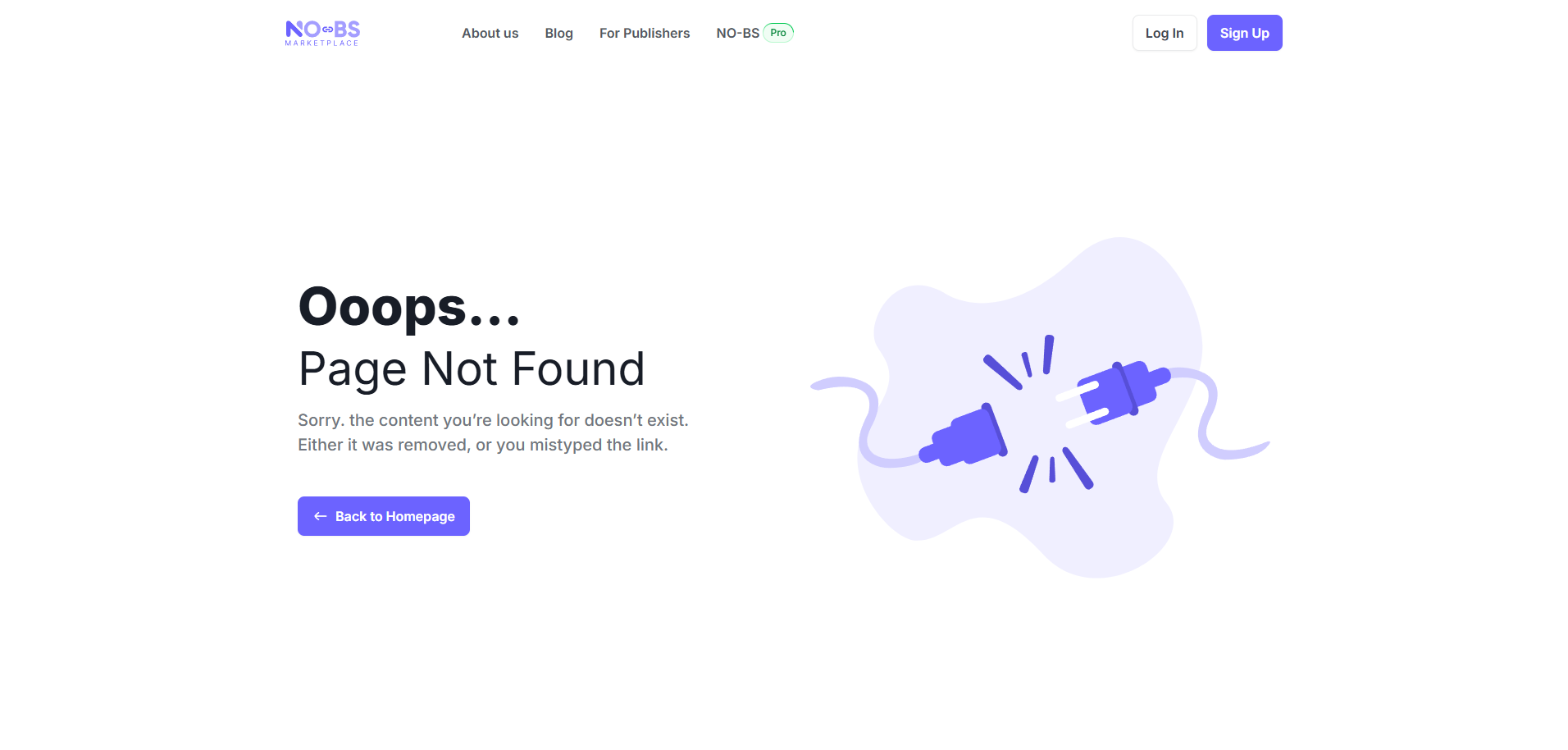
Simply put, a 404 error typically occurs when there’s a typo in the URL. In the example above, I wanted to go to the NO-BS Marketplace blog but typed too many characters.
Incorrect: https://nobsmarketplace.com/blogs
Correct: https://nobsmarketplace.com/blog
Google doesn’t penalize such errors, as they’re normal occurrences on the Web. However, too much of it can impact user experience, which is a ranking factor. Visitors can be upset when a link they expect to have the answers they need doesn’t work.
Moreover, a 404 error can be an indication that the URL might be too difficult to remember. It may be too long or contain patterns that aren’t exactly worth noting (e.g., alphanumeric combinations). Consider making the link shorter by keeping important keywords in the URL string instead of copying the content’s entire title.
Other forms of link reclamation include:
Restoring removed links: If you notice that links in your guest posts are missing, there may be issues on the publisher’s end. Reach out to the publisher and kindly ask for ways on how they can be restored.
Unlinked mentions: Some pieces of content may have attributed information to your content but lack links. You can find such posts by setting up Google Alerts to inform you as soon as it stumbles upon one.
Redirecting outdated links: A 301 redirect is valuable in leading traffic away from the outdated or deleted page to the new one. This way, the former’s ranking power gets passed to the latter.
But here’s the kicker. Joshua Hardwick, head of content at Ahrefs, said (to be accurate, his boss, CMO Tim Soulo, did) that there’s no reclaiming a link if it never had one to begin with. This is why it’s important to have links from the get-go. (4)
Digital PR
Digital PR is a step above guest posting. While it still involves creating content, the target audience leans more on journalists and editorial teams than the general public. By giving them the information they seek, your brand can get mentioned in their report.
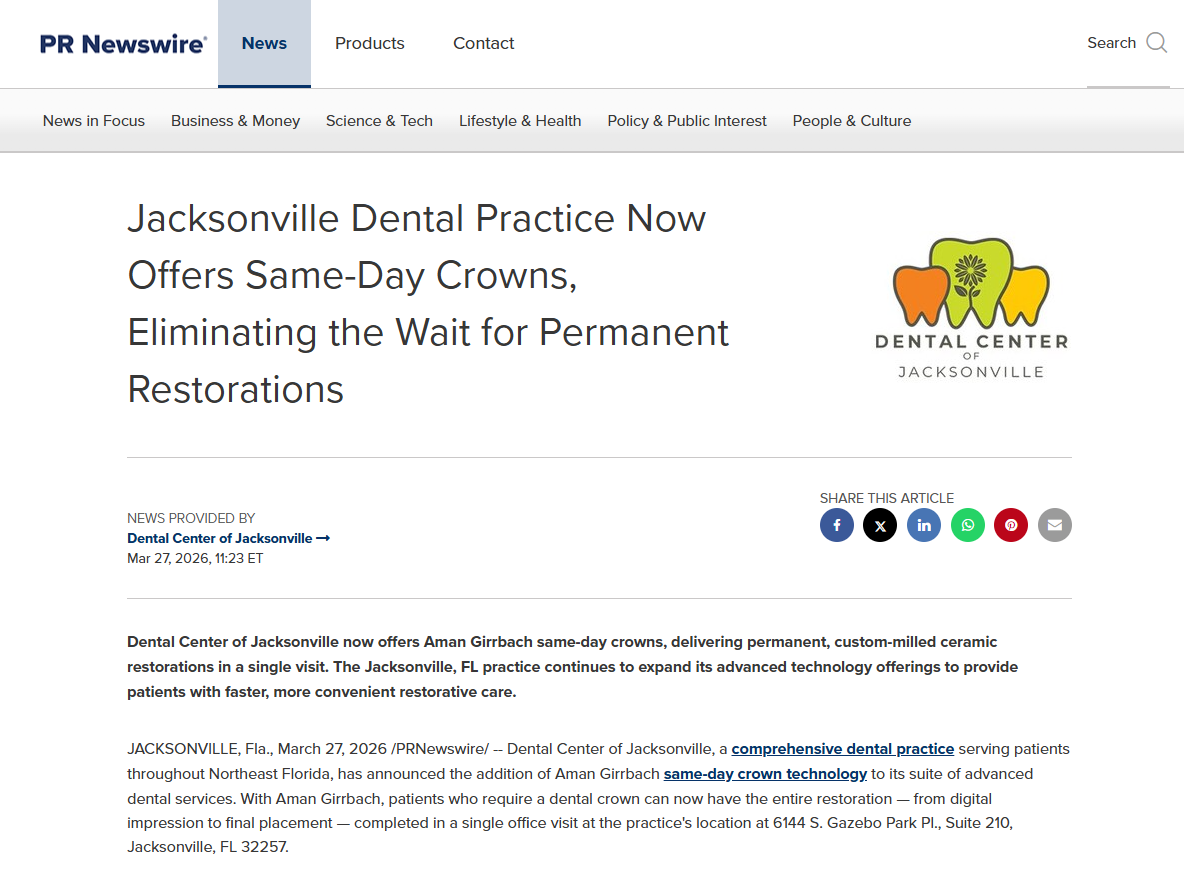
News content provided by a dental clinic in Jacksonville, FL, with links to their pages
Digital PR is different from guest posting in a number of ways. Unlike the latter, it’s more difficult to get a reporter to use your piece for their report. One reason is that journalism typically prioritizes unbiased sources, such as academic journals and statements from local or federal authorities.
This doesn’t mean they’re above using digital PR content. If your content can answer a burning question or is timely enough (e.g., dental care for kids during Halloween), it may find itself mentioned in a news article before long. Providing original research may even help increase its chances of such.
There’s more to digital PR than producing newsworthy content. Building relationships with journalists, niche experts, or influencers is just as crucial in earning high-quality backlinks.
Wrapping Up
Start your link building strategy with the following tips mentioned:
Never limit your options for publishers to well-known websites.
Make your content pitches personalized, not mere copy-pastes.
Content quality may be key, but don’t stress over it too much.
AI tools should augment your writing, not do the entire process.
Use a variety of links according to their relevance to your content.
Link building may be hard at first, but nothing stays harder as you build experience. No matter the kind of content, links are necessary for search visibility.