
It appears the next four years are shaping up to be the age of “chatbot advertising.”
MediaPost reported that ad spending on ChatGPT is projected to reach USD$3.4 billion this year and almost USD$20 billion by 2030. This is in light of OpenAI’s beta test of the feature, with participating advertisers committing at least USD$1 million to the program. This figure was lowered to USD$200,000 for the next wave of beta this February. (1)
ChatGPT ads have been the talk of the online community since late last year. While mostly speculation at the start, leaked new code in a ChatGPT app update last November finally had people buzzing. Analysts believe it’s OpenAI’s way to diversify its revenue stream, given that subscriptions remain its main source of revenue.
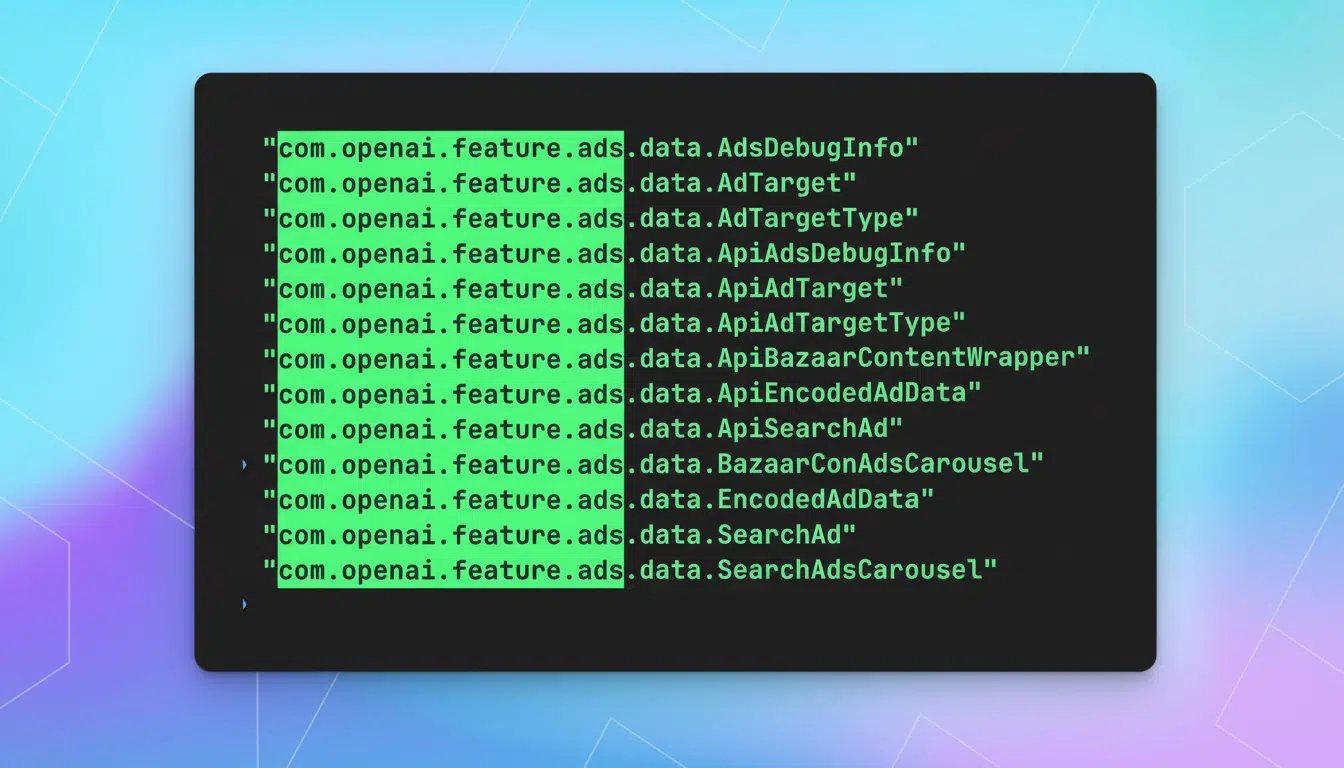
Source: Tibor Blaho (on X)
A new feature is usually bound to have as many ayes as nays, and that goes without saying for chatbot ads. The next few months will determine whether it’ll be the norm (to either the consumer’s delight or chagrin). For now, it pays to know what these ads probably look like and how they’ll probably work.
ChatGPT’s Approach
In its official statement released in January, OpenAI announced its intention to introduce ads into both free and paid subscription tiers. It aims to align its advertising features with five fundamental principles: (2)
Mission alignment: Mentioning its mission to ensure artificial general intelligence (AGI) benefits humanity, OpenAI aims to tailor its advertising features to support it without compromising accessibility.
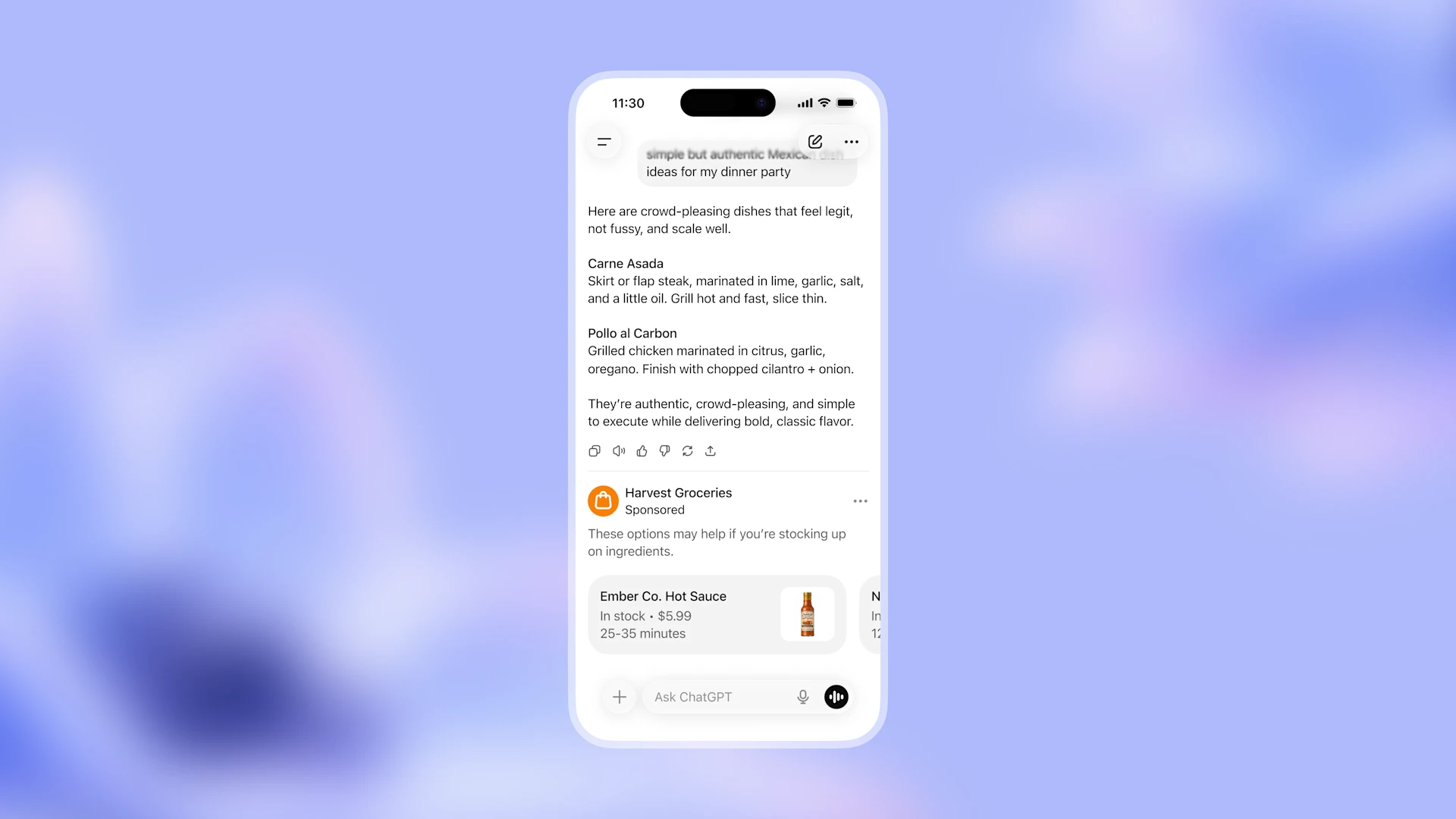
Answer independence: The ads will be optimized based on the user’s inquiry, but OpenAI insists that they’ll never influence ChatGPT’s generated answers. It’ll also ensure that the ads are clearly labeled and separate from the AI-generated answer.
Conversation privacy: To protect users’ conversations with ChatGPT, the company promises it will never sell user data to advertisers.
Choice and control: Users will have full control over how they manage their data, including personalization and data clearing. OpenAI will also offer a paid, ad-free experience. There’s no explicit mention of free users getting the same treatment.
Long-term value: OpenAI vows to prioritize user trust and experience over revenue. As such, it says that ChatGPT usage time won’t be a factor in optimizing the ads.
The first ad formats, according to the statement, may look something like this.
Source: OpenAI
You can expect the Internet to be in an uproar once the feature goes live, though some experts have already expressed their concern. Doug Stephens, a bestselling author on retail futurism, posted on LinkedIn:
“The initial appeal of ChatGPT was that shoppers could get unbiased and objective advice on what to buy. Now, the company says it’s embarking on including ads on the platform and while it says this won’t impact the responses ChatGPT delivers, it will undoubtedly prompt skepticism. When the financial incentive comes from the advertiser and not the user, the shift in power is inevitable and irreversible.”
However, others said it was only a matter of time. Despite steady growth, the company has been facing pressure from rising operational costs beyond what its current revenue model can shoulder. Last July, it was reported that only 5% of ChatGPT’s user base pays for the service. This reality will hardly change, even with a projected increase to 8.5% in 2030. (2)
Gemini’s Approach
Google’s Gemini is expected to be a major contender, having recently rolled out the latest Gemini 3. Yet, the search giant seems content to let ChatGPT test the waters first.
Speaking with Axios, DeepMind CEO Demis Hassabis stated that his team didn’t feel the urgency to respond immediately. If anything, he was surprised that OpenAI decided to go down this route so early. While clarifying that ads can be useful if done right, he also said that the industry has yet to figure out how to fit ads into a chatbot model effectively.
This stance comes amid initial reports that Google was also testing ads for Gemini, which the company vehemently denied. The target of their pushback was a report by Adweek in December, citing that Gemini ads were targeted for a 2026 rollout. (3)
The closest we have to Gemini ads right now are AI Overview ads, which rolled out in May last year for both AI Overviews and AI Mode.
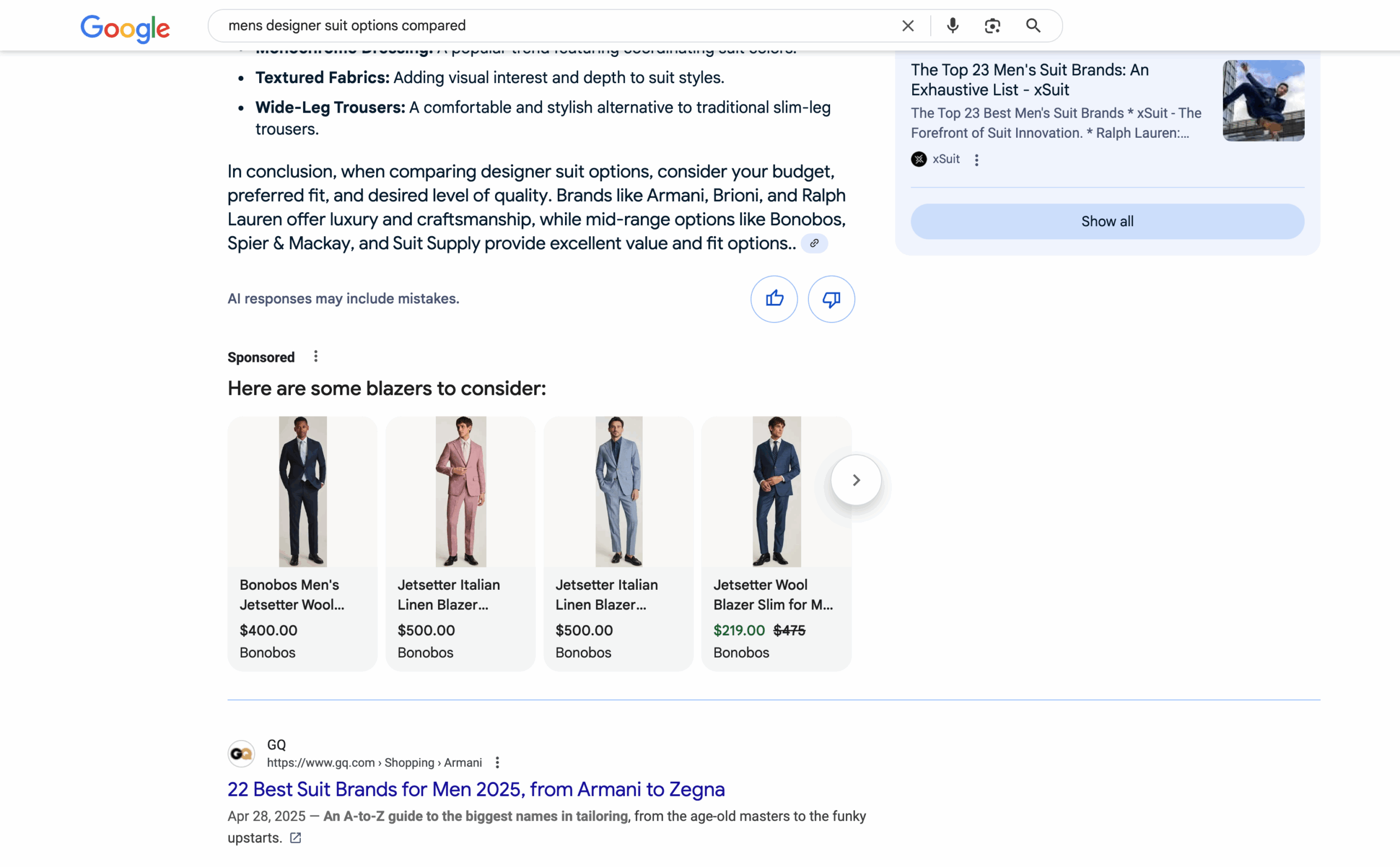
Source: Brodie Clark Consulting
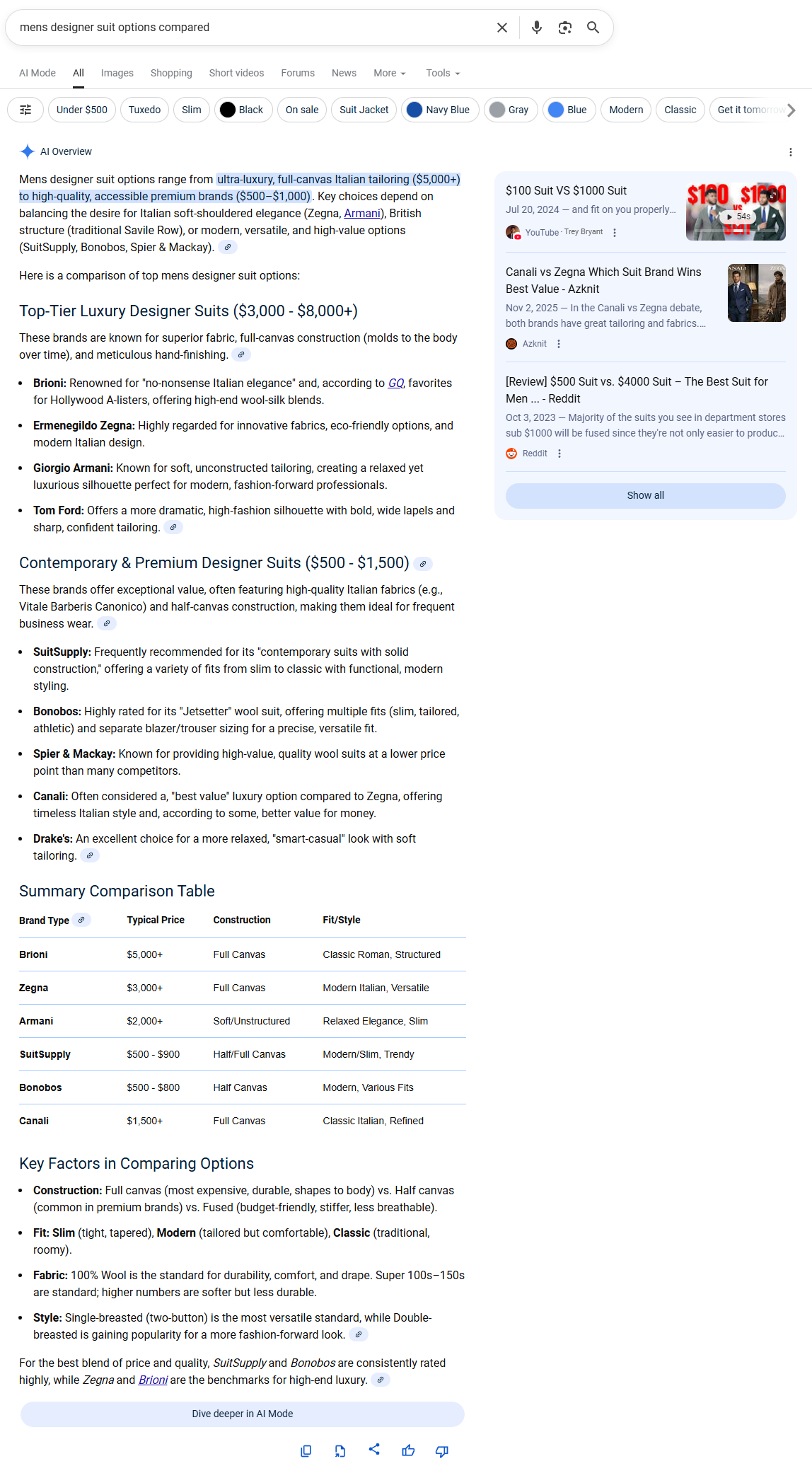
For accuracy’s sake, I tried entering the same query. What I got didn’t have the sponsored section; instead, it integrated the options into the AI-generated answer. Relevant product ads were given their own section a bit further down (not displayed in the image below).
Perplexity’s Approach
ChatGPT may be the most active in its pursuit of chatbot advertising, but it’s by no means the first one. Perplexity entertained the idea as early as late 2024. Similar to ChatGPT, the startup clarified that ads won’t influence the AI-generated answers in any way.
That said, its approach is somewhat distinct from the other two. Instead of displaying ads below AI-generated answers, Perplexity will encase sponsored content within the Related queries section, as shown below.
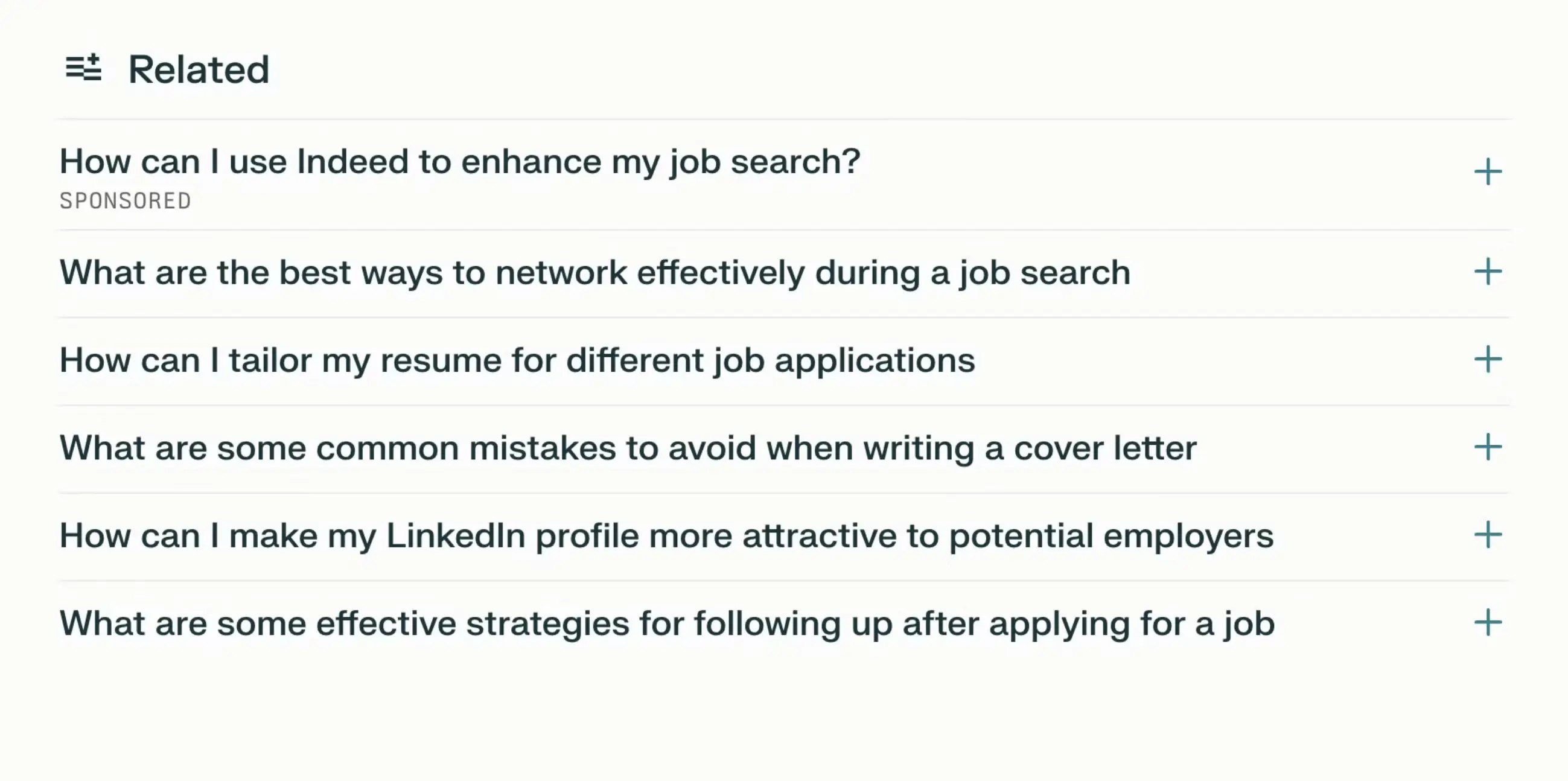
Source: Perplexity
Perplexity took this approach to ensure the “utility, accuracy, and objectivity” of its answers. Even the sponsored questions are AI-generated, not made by advertisers.
However, a series of events last year had forced the company to postpone its advertising venture. One major blow was the departure of its sales head, Taz Patel, in August. One ad executive told Digiday—on the condition of anonymity—said that only Patel had an idea of Perplexity’s ad vision. (4)
It’s unclear if or when Perplexity will jump back on the chatbot advertising bandwagon. The feature has yet to be implemented in the current version of the tool.
Copilot’s Approach
Microsoft has been nurturing its chatbot, Copilot, since 2024, adding new features. After a refresh of its design interface, it introduced two new ad formats last year.
The first is Showroom ads, a format patterned after a physical showroom where users can view products on display and ask Copilot questions. The options displayed can change as the user refines its queries.
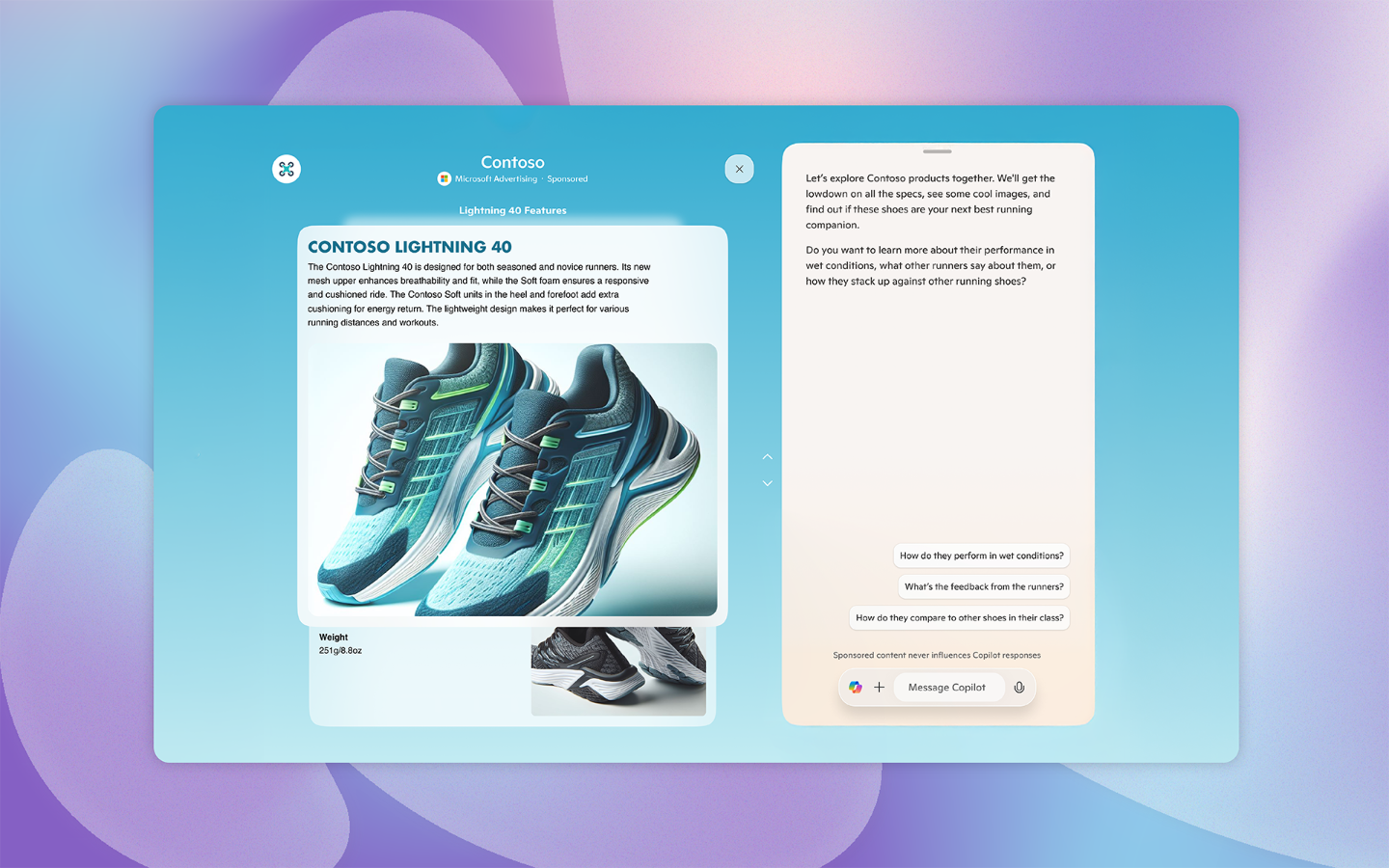
Source: Microsoft Advertising
The second is dynamic filtering, a system that refines a user’s search without further user input. Results can be further narrowed by author, date, and even file type (only supports Word, Excel, PowerPoint, and PDF files). Both features are still in beta as of this writing. (5)
Data from Microsoft claims that Copilot ads drive 73% higher click-through rates and 16% higher conversion rates than traditional search. They also shorten customer journeys by around 33% compared to traditional search.
Not Yet Here, But Just Around the Corner
Bits and pieces of chatbot advertising have shown themselves, but the main body has yet to arrive. Would your business be ready to adapt to this new reality when it happens? Now that you have an idea of what they may look like, it pays to prepare now.
References:
“EXCLUSIVE: OpenAI Confirms $200,000 Minimum Commitment for ChatGPT Ads,” Source: https://www.adweek.com/media/exclusive-openai-confirms-200000-minimum-commitment-for-chatgpt-ads/
“OpenAI projects 220 million paying ChatGPT users by 2030, The Information Reports,” Source: https://www.reuters.com/technology/openai-projected-least-220-million-people-will-pay-chatgpt-by-2030-information-2025-11-26/
“Google Pushes Back On Adweek Report About Gemini Ads In 2026,” Source: https://www.searchenginejournal.com/google-disputes-report-claiming-ads-are-coming-to-gemini-in-2026/562831/
“When it comes to Perplexity’s ad business, the platform is at a crossroads,” Source: https://digiday.com/marketing/when-it-comes-to-perplexitys-ad-business-the-platform-is-at-a-crossroads/
“How to refine your search results with filters in the Microsoft 365 Copilot app,” Source: https://support.microsoft.com/en-us/topic/how-to-refine-your-search-results-with-filters-in-the-microsoft-365-copilot-app-6368fd2c-18ea-4723-a4e3-cc94720428e8
“73% higher CTRs: Why advertisers need to pay attention to conversational AI,” Source: https://about.ads.microsoft.com/en/blog/post/august-2025/73-higher-ctrs-why-advertisers-need-to-pay-attention-to-conversational-ai